






 Portuguese
  Spanish
  5 min of reading
  0 comments


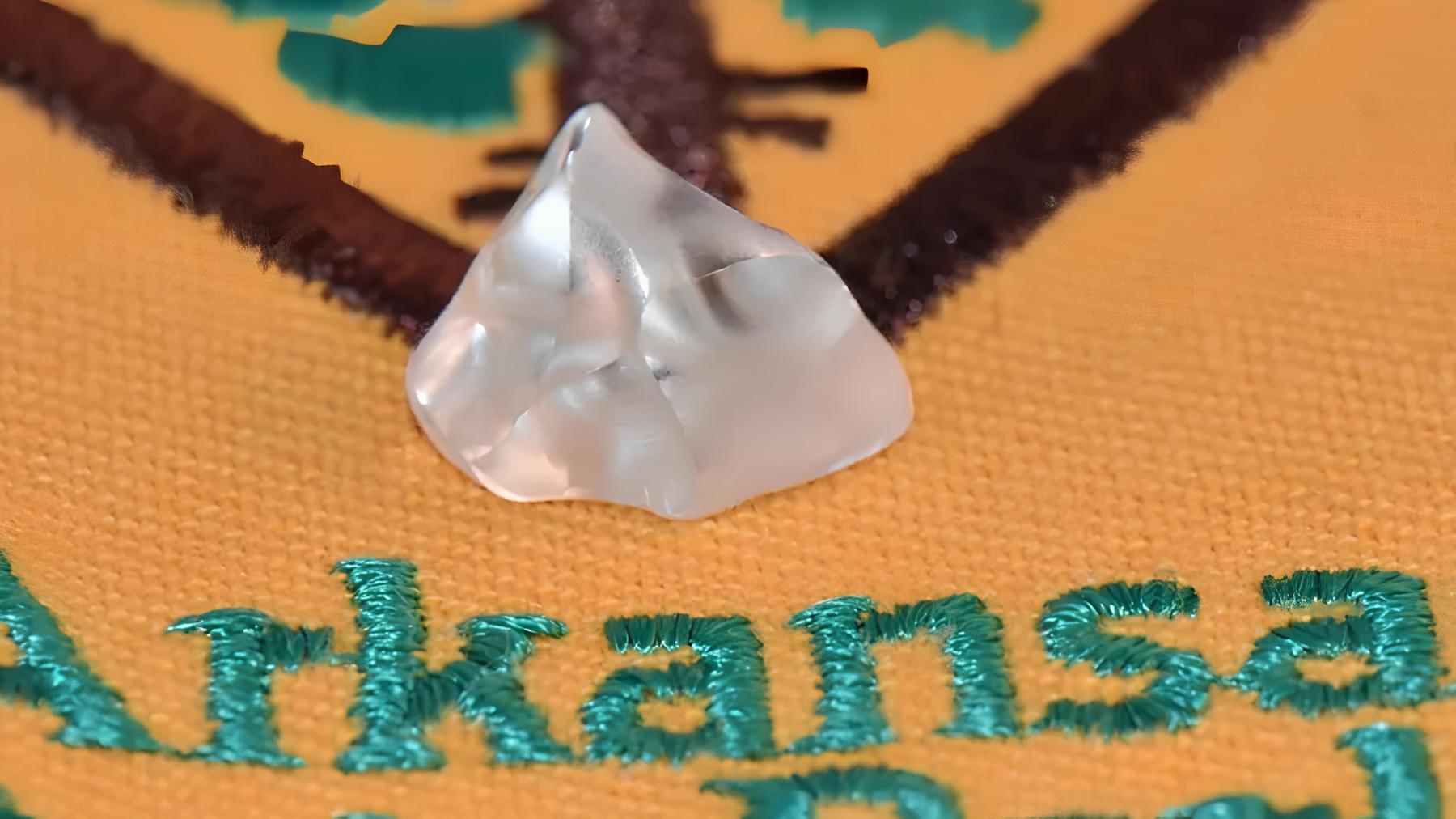
During a simple walk in a public park in Arkansas, in the United States, a man found a 3.81-carat diamond, one of the largest stones discovered by a visitor in recent years, valued in hundreds of thousands of dollars and officially recognized at the end of 2024.
On April 30, 2024, a simple stroll turned into one of the most surprising finds of the year. A man from Minnesota, identified as James Armistead, was visiting Crater of Diamonds State Park in the state of Arkansas (USA), when he noticed an unusual sparkle in the clayey ground of the site. When he bent down, he found a dark brown stone that, at first glance, seemed just like a common rock.
But what he held in his hands was actually a 3.81-carat diamond, one of the largest ever discovered by a visitor in the recent history of the park and the largest find recorded in 2024 so far. The discovery was officially recognized by the park administration on the same day. The diamond was named “Duke Diamond”, chosen by the discoverer himself in honor of his family and the state where he lives.
The Only Park in the World Where the Public Can Find Real Diamonds
The Crater of Diamonds State Park, located in Murfreesboro, Arkansas, is a unique place on the planet.
It is the only public park in the world where any visitor can enter, explore, and take home the diamonds they find without paying royalties or additional fees.
-
Abandoned Building in Brazil’s Vitória to Be Transformed into 44 Affordable Housing Units with Government Funding

-
Brazil Launches First National Registry to Identify Millions of Gifted Children Hidden in Classrooms, with Only 56,000 Officially Recognized So Far
-
17-Year-Old Julia Leguiza Wins Brazil’s Only Gold at Major International Women’s Math Olympiad, Achieving Best Latin American Performance
-
Facing high living costs, 33-year-old man converts VW Transporter into a camper van to travel with elderly dogs, saving £1,550 monthly.


Since 1972, when the Arkansas government transformed the former mining area into a state park, more than 35,000 diamonds have been officially discovered by visitors. The stones range from small gems to legendary finds, such as the “Uncle Sam Diamond”, weighing 40.23 carats, found in 1924, the largest diamond ever found in the United States.
The park covers an area of about 15 hectares, and the volcanic soil is rich in kimberlite, the type of rock where diamonds form. According to the park’s geologists, visitors find on average one or two diamonds per day, usually after heavy rains when the soil is disturbed and the gems are exposed.
A Rare Sparkle Under the Sun
James Armistead told the park staff that he was “just walking” when he noticed a sparkle reflecting in the sunlight, about 30 minutes after he began his search.
“I thought it was just a common stone, but the sparkle wouldn’t leave my mind. When I handed it in for analysis, I realized I had changed the course of my day — and perhaps my life,” the visitor told local press.
The diamond, measuring about 2.2 centimeters long, has a caramel brown color and an irregular shape. After analysis in the park’s laboratory, it was classified as a natural “brown diamond”, with no immediate need for polishing, due to its purity and internal sparkle.
The initial assessment, made by gemology experts, estimates that the stone’s value could exceed US$ 150,000, depending on the cutting and final color after polishing.
From the Soil of Arkansas to Global News
The story of the “Duke Diamond” quickly gained attention in the American media. Networks like CNN, Fox News, and The Guardian reported on the find, highlighting the unusual nature of the park — a place where anyone, regardless of experience, can leave with a million-dollar gemstone.
The Arkansas Department of Parks even issued an official statement confirming the authenticity of the diamond and congratulating Armistead on his discovery:
“The 3.81-carat find reinforces the tradition of Crater of Diamonds as one of the most unique places in the world for observing and discovering natural gems,” said the park superintendent, Caleb Howell.
The diamond was recorded under the official code #2024-AR-D3.81, being the largest found by a visitor since 2020.
Stories That Make Arkansas Shine
The “Duke Diamond” adds to a list of legendary finds that have made Crater of Diamonds a world tourist destination.
In 1975, a visitor discovered the “Amarillo Starlight”, weighing 16.37 carats, later sold to collectors for an undisclosed amount.
In 1990, a woman named Shirley Strawn found the famous “Strawn-Wagner Diamond”, weighing 3.03 carats, considered the most perfect diamond in the world after analysis by the Gemological Institute of America.
These cases helped consolidate the park as a symbol of luck, patience, and perseverance, attracting more than 200,000 tourists per year. Each visitor can explore the area on their own, using screens, shovels, and buckets, and the park’s motto is simple:
“You Keep What You Find.”
Geology and Formation: The Secret Behind the Rarity
The soil of Crater of Diamonds was formed by a volcanic eruption about 100 million years ago, which brought to the surface fragments of rock rich in crystallized carbon — diamonds. The kimberlite, the type of rock found there, is the same found in mines in African countries like Botswana, South Africa, and Angola.
The geological composition of the site, combined with natural erosion and a humid climate, constantly exposes new diamonds. Therefore, the park never “runs out”, even after more than a century of continuous exploration.
When Chance Becomes Destiny
For James Armistead, the discovery completely changed his relationship with the site and the symbolic value of gems. The visitor, who worked as a maintenance technician, stated that he does not intend to sell the diamond immediately.
“It’s not just about the monetary value. It’s the story behind it. It was a gift from nature,” he said in an interview with local broadcaster KAIT-TV.
The case also inspired other visitors — the park recorded a 27% increase in tourist entries in May 2024, a record for the month, fueled by public curiosity about the discovery.
The Value Beyond the Fortune
More than just a story of luck, the find of the “Duke Diamond” reinforces the human fascination with improbable discoveries. In a world where mining is dominated by large corporations, a simple citizen finding a high-value stone is rare and symbolic — a reminder that chance can still change destinies.
The park administration even uses the episode as an example in educational programs on geology and environmental conservation, encouraging sustainable mineral exploration and respect for nature.
The 3.81-carat diamond found by James Armistead in April 2024 entered history as one of the largest recent finds on American soil.
More than just a mineral sparkle, the discovery represents the convergence of luck, curiosity, and preservation and makes Crater of Diamonds State Park a reminder that nature still holds valuable secrets, waiting for those who can look closely.


-

-

-

-

-

-

19 people reacted to this.