Portuguese
  Spanish


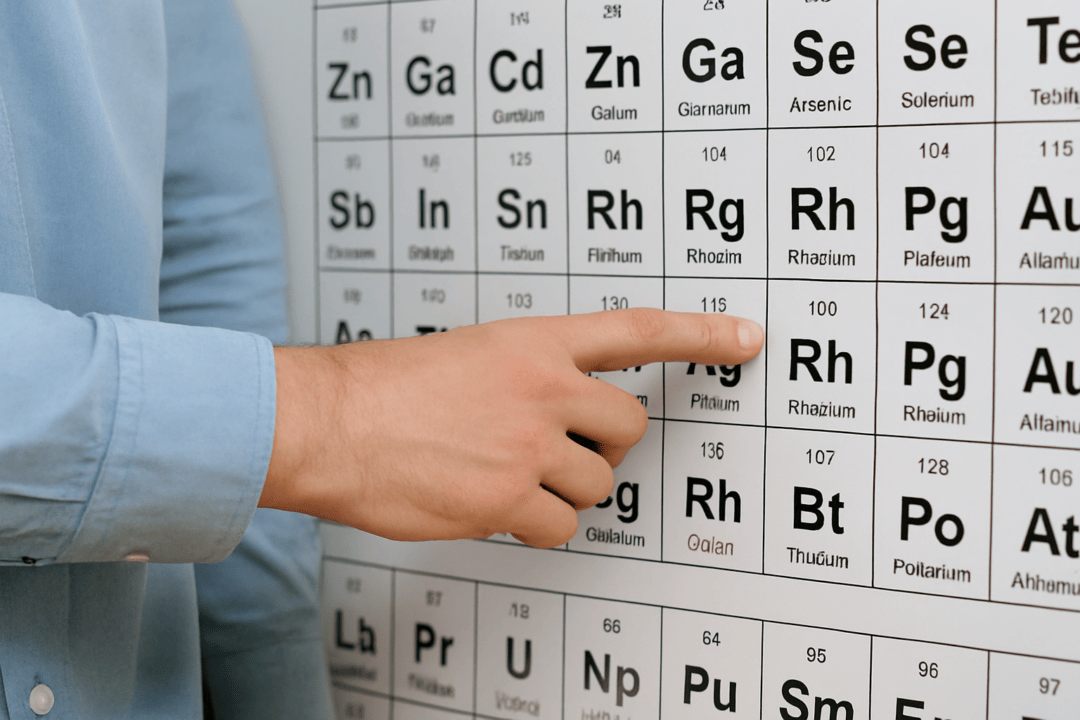

Gathering all the elements of the periodic table may seem like a fascinating scientific challenge — but it is also extremely dangerous. A man discovered this the hard way when trying to build his own collection and ended up involving himself with highly controlled substances, like uranium and cesium. The case almost cost him 10 years in prison and sparked discussions about the boundaries between amateur science and public safety.
An Australian young man could face up to 10 years in prison after attempting to complete an unusual collection: gathering all the elements of the periodic table, including the radioactive ones.
The Australian Emmanuel Lidden, 24, escaped criminal conviction after pleading guilty to importing nuclear materials into Australia.
Instead of serving a sentence, he received a suspended sentence for good behavior. The decision was made by Judge Leonie Flannery in the Downing Centre District Court in Sydney. In other words, the judge found him guilty but does not believe he poses a threat and that there are mitigating circumstances.
-
Brazilian University Tests Recycled Plastic Component for Homes, Aiming for More Sustainable Single-Family Housing Construction

-
Apple, Samsung, and Sony Warn: Wet Bluetooth Earbuds Can Be Damaged if Stored Before Fully Drying
-
Brazil Develops AI-Driven Technology to Measure Brain Pressure Non-Invasively, Detecting Nanometric Deformations in Real Time to Aid Early Medical Intervention
-
Exceptionally Rare 3rd Century AD Discovery Unveils Bronze Surgical Tool for Bladder Stone Surgery Near the Temple of Hercules in Ancient Roman City Heraclea Sintica


In 2023, Lidden had ordered small samples of uranium and plutonium over the internet. The items were delivered to his parents’ apartment in the Australian capital.
The package delivery triggered a large-scale operation with agents from the Australian Border Force, firefighters, police, and paramedics, who isolated the area and treated the situation as a hazardous materials incident.
Chemical Elements Collector
The defense attorney, John Sutton, argued during the proceedings that Lidden did not act with malice.
He described his client as a “science nerd”, passionate about collecting elements of the periodic table. According to him, the young man had no malicious intent or knowledge of the legal rigor associated with the importation of nuclear materials.
“It was a manifestation of self-control, retreating into the collection; it could have been anything, but in this case, he clung to the periodic table,” Sutton said. In March, during the sentencing hearing, the lawyer already argued that the crimes were committed out of pure naivety.
The judge agreed with this view and pointed out that Lidden had mental health issues. She highlighted that, despite the seriousness of the acts, there was no intent to cause harm or pose a threat to public safety.
Criticism of the Authorities’ Actions
After the decision, the attorney harshly criticized the conduct of the Australian Border Force.
He stated that the operation was disproportionate and poorly handled, considering the small quantities involved. “It was a terrible investigation for a number of reasons,” said Sutton. “We could eat them and still be perfectly fine.”
He also questioned whether taking the case to court was, in fact, in the public interest. According to him, scientists from various parts of the world expressed surprise at the charges.
In response, the superintendent of the border force, James Ryan, defended the operation. He stated that the investigation was “extremely complex and sensitive” and reaffirmed the agency’s commitment to community safety.
Unique and Educational Case
Lidden is the first person to be prosecuted under Australia’s nuclear non-proliferation laws. These regulations were created to prevent threats such as weapons of mass destruction and acts of terrorism. According to authorities, the case should serve as an educational example for the public regarding the limits of importing hazardous substances.
The young man had ordered the materials from a scientific website in the United States. According to Australian law, it is possible to import these items legally, provided the interested party obtains prior authorization from the Office of Safeguards and Non-Proliferation.