





 Portuguese
  English
  Spanish
  3 min of reading
  0 comments


The Brazilian Government Is Considering The Return Of Daylight Saving Time. Understand The Reasons Behind This Possible Change In The Time Zone
The Brazilian government is analyzing the possibility of bringing back daylight saving time as a measure to face the current energy crisis caused by severe drought.
According to the Minister of Mines and Energy, Alexandre Silveira, this measure is being discussed as a way to alleviate the electric sector, which is facing significant challenges due to the intense heat and high energy consumption during peak hours.
The return of daylight saving time is seen as a possible solution, even though a final decision has not been made, as it depends on climatic conditions, such as rainfall levels.
-
Broken umbrellas that were destined for the trash are turned into modern clothing in Petrópolis; the entrepreneur started with R$ 400, sold everything at the first fair, and today earns R$ 200,000 per year with sustainable fashion and exclusive pieces sold online.

-
New salary for supermarket workers: agreement redefines earnings by function, creates service time bonuses, changes Sunday operations, and alters holidays, bringing changes that few expected in Goiás.

-
Russia is on the brink of collapse: reserves have almost disappeared, oil revenues have plummeted by 45%, and experts point out the detail that could put Moscow under unprecedented pressure.
-
Biodegradable sensor from USP costs only US$ 0.077, detects pesticides on leaves, peels, and stems in 3 minutes and 28 seconds, and even displays the result on a cell phone via Bluetooth.


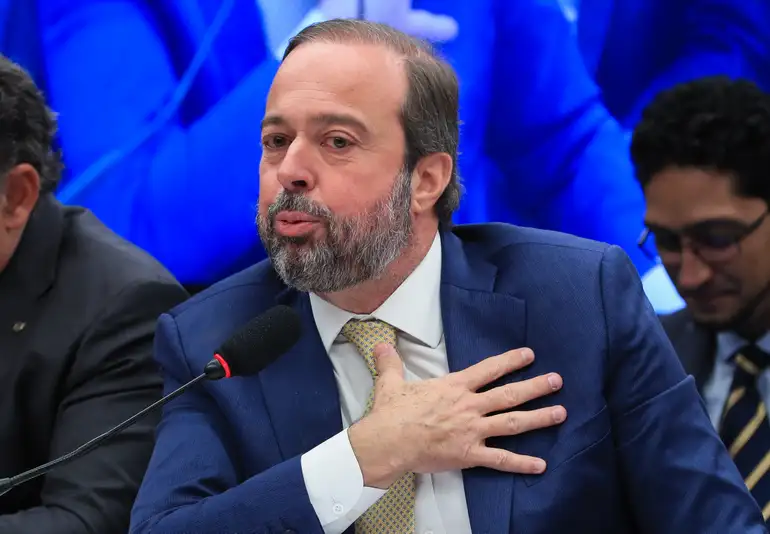
Silveira emphasizes that daylight saving time can positively contribute to the economy and help mitigate the impacts of the energy crisis. He explained that during peak hours, many people arrive home and use appliances such as air conditioning, fans, and showers, which creates a high demand for energy.
Additionally, it is the moment when intermittent energy sources are less available, which exacerbates the situation. The return of daylight saving time could relieve this pressure on the electrical system, helping the National Electric System Operator (ONS) to ensure energy supply during critical hours.
Bolsonaro Was The One Who Ended The Change
Daylight saving time was abolished in 2019, during Jair Bolsonaro’s government, but for many years, its main objective was to reduce energy consumption from late afternoon to early evening, making better use of natural light.
The idea was that by delaying the time by an hour, consumption during the evening peak would be lower, alleviating the system and avoiding the use of more expensive energy sources.
However, when the return of daylight saving time was studied previously, such as during the 2021 water crisis, the results indicated that energy savings were not as significant. What was observed was that while there was a reduction in consumption during the evening peak, this was offset by an increase in energy use at other times.
Moreover, there was no significant impact on meeting demand for power, which led the government to discard the return of the measure at that time.
Despite these studies, the current drought situation and intense heat could lead to a new scenario. Vice President Geraldo Alckmin has also spoken on the topic, stating that the return of daylight saving time could be a “good alternative” for Brazil to face the energy crisis and avoid supply issues.
He emphasized the importance of an awareness campaign to encourage the population to collaborate by saving energy, avoiding waste, and adopting more efficient practices in using electrical resources.
Although there is still no definitive decision, the debate about the return of daylight saving time is ongoing, with the government assessing the conditions and impacts this measure may bring both to the electric sector and to the country’s economy.
The proposal aims to reduce energy consumption during critical moments, which could be essential given the current water crisis and the challenges Brazil faces regarding the production and distribution of electricity.







Be the first to react!