Portuguese
  Spanish


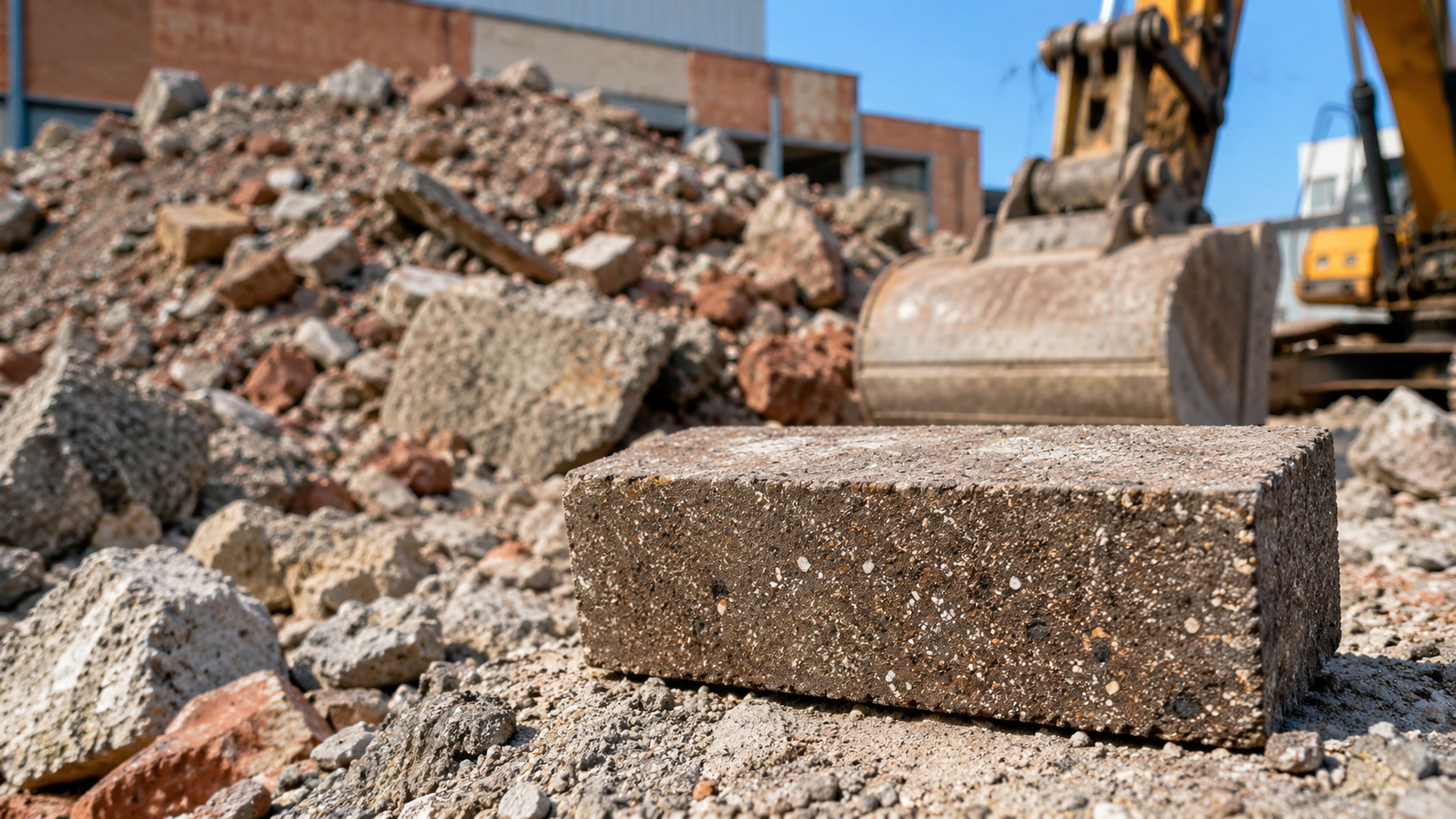

Recycled brick from Scotland uses construction debris, avoids kiln firing, and shows how construction waste can return for new walls, facades, and commercial projects, instead of just being discarded.
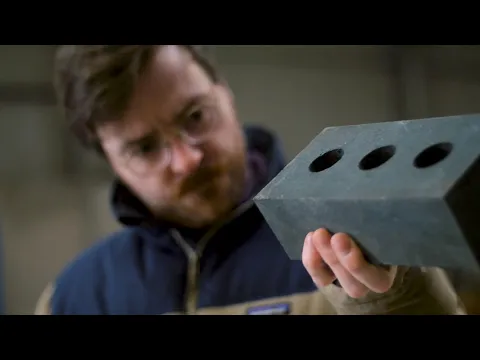
After receiving certification for use in construction in the UK in 2025, the Scottish K Briq brick placed recycled debris at the center of a practical discussion about construction, disposal, and energy. The piece developed by Kenoteq uses more than 95% recycled waste and does not undergo traditional kiln firing.
The information was released by Kenoteq, a Scottish construction materials company. The technology originated from research linked to Heriot Watt University and has advanced to a stage where certifications now allow for safer use in real projects.
The idea draws attention because the brick seems simple, but it is linked to three major problems: waste disposal, energy consumption, and extraction of raw materials from nature. Instead of treating leftover construction material as waste, the technology attempts to transform this material into a new piece for building.
-
Mexico Develops 3D-Printed Concrete from Corn Waste, Cutting Emissions by 70% and Reducing Construction Waste by 90%

-
Traditional Mortar to Decline by 2026: ACIII-E Solution for Large Porcelain Tiles Offers Better Adhesion and Reduces Risk of Loose Pieces in Floors and Facades

-
The U.S. Navy Conducts Submarine Tests in Idaho Lake to Detect Underwater Noises Hidden by the Ocean

-
72-Year-Old Man Spends Six Years Building a Rotating House for His Wife, Completing a Full Turn in 22 Seconds


The debris leftover from construction returns to building in the form of recycled brick
The recycled brick created in Scotland primarily uses construction and demolition waste. This includes leftovers from construction, renovations, and demolitions that typically require collection, separation, and proper disposal.
In practice, the K Briq transforms part of this material into a new construction piece. What previously might occupy space in disposal areas now has a second utility within the very sector that generated the waste.

This logic is called circular construction. The name may sound technical, but the idea is simple: reuse the material, reduce waste, and keep resources in circulation for longer.
For Brazilian cities, the example is easy to understand. Dumpsters, construction leftovers, and renovation waste are part of the urban landscape. The Scottish case shows that debris can stop being just a problem and become raw material.
The traditional kiln is one of the heaviest parts of common brick manufacturing
Traditional ceramic bricks undergo firing in a kiln. This stage uses a lot of heat to harden the piece and make it ready for construction.
The K Briq eliminates this phase. Without kiln firing, production avoids a stage known for high energy consumption. This difference is one of the reasons the product is presented as a low-carbon alternative.
Carbon, in this case, relates to gases released during the manufacture of materials. The lower this impact, the less environmental pressure tends to be associated with production.
The change matters because the brick is small but appears in large quantities in constructions. When such a repeated piece undergoes less heavy production, the impact can grow on a commercial scale.
Kenoteq attempts to take innovation out of the lab and bring the recycled brick to real projects
The K Briq was born from research linked to Heriot Watt University in the United Kingdom. Later, the technology began to be developed by Kenoteq, which works with low-impact construction materials.
Kenoteq, a Scottish construction materials company, presents the brick as an alternative made with waste and designed to reduce waste in the sector. This point is important because many sustainable ideas remain restricted to small tests.
In the case of the K Briq, the goal is to reach commercial projects. This means entering constructions with rules, technical requirements, and the need for regular supply.
For a construction company, it’s not enough for the material to seem interesting. It needs to have performance, standard, safety, and availability. Therefore, certifications and tests are an essential part of the process.
Certification is important because construction cannot rely solely on environmental promises
In civil construction, certification is a way to show that a product has undergone technical evaluation. For the lay reader, this acts as a layer of trust before the material is used in constructions.
A recycled brick needs to show that it is not just a good idea. It needs to meet usage, resistance, and application requirements, like any product that goes into a wall or facade.
This care avoids a wrong interpretation. The K Briq should not be seen as a handcrafted piece made from uncontrolled leftovers. The proposal involves research, industrial process, and an attempt at acceptance in the construction market.
Therefore, the debate is not just environmental. It also involves safety, scale, and the trust of architects, engineers, construction companies, and clients.
Circular construction changes the way we view construction waste
Construction debris is usually seen as something to be removed from the site. The proposal of the recycled brick reverses this logic and shows that part of this material can return as a product.
This change reduces the dependence on new raw materials. It also helps to lessen the pressure on disposal areas, provided there is proper separation, adequate technology, and a market to absorb the product.
The Scottish case does not mean that all traditional bricks will be replaced at once. The construction industry changes slowly, especially when it involves materials used for generations.
Even so, the K Briq shows a clear path. A common piece can gain a new origin, with more than 95% recycled material and without going through the traditional kiln firing.
What is needed for recycled bricks to gain more space in construction
Circular materials need to overcome practical barriers. The first is trust. The second is scale. The third is the acceptance of those who buy, design, and build.
There is also the challenge of cost and supply. A product may be environmentally better, but it needs to reach the market in sufficient quantity to meet real construction needs.
Another point is the construction culture. The common brick is known, easy to find, and already part of the routine on construction sites. A recycled alternative needs to prove it delivers results without complicating the work.
Even so, Scotland’s experience shows that innovation can start with a simple piece. The brick does not need to change its shape to change its origin and impact.
The creation of the brick made with more than 95% recycled debris shows that construction can reuse part of its own waste. Without kiln firing, the K Briq also puts the energy of manufacturing at the center of the discussion.
The case does not solve the problem of debris in cities on its own, but it raises an important question for the future of construction: are discarded materials still waste, or can they return as part of new constructions?
Do you think recycled bricks could gain space in Brazilian construction, or will the construction industry take longer to trust materials made from debris?