






 Portuguese
  Spanish


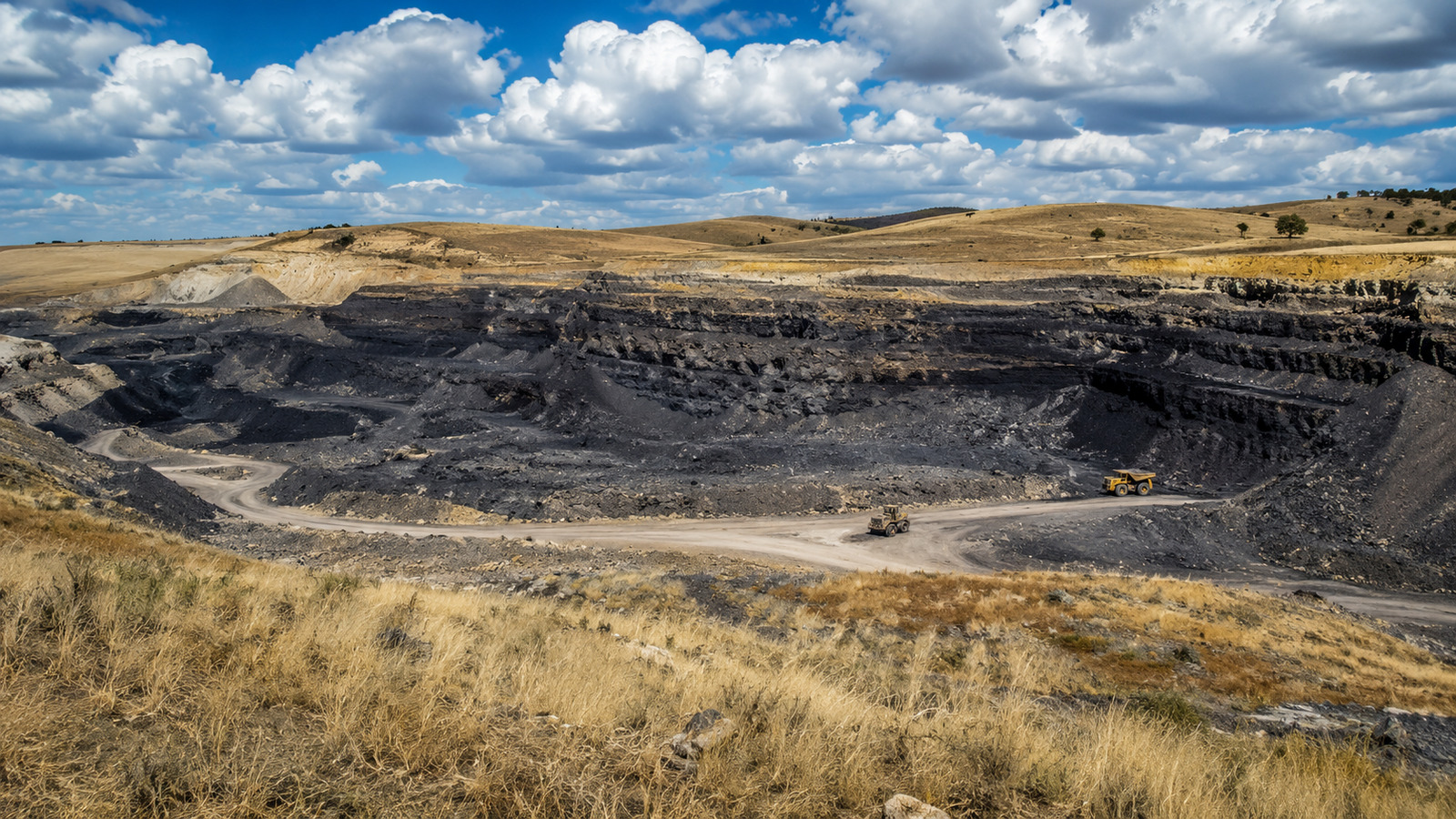

Purchased for about $2 million, the Brook Mine gained prominence after analyses indicated rare earths, but technical evaluation, shareholder action, and extraction costs place limits on the disclosed billion-dollar value
An old coal mine purchased for about $2 million in Wyoming made headlines after analyses indicated the presence of rare earths at the site. The case involves Randall Atkins, founder of Ramaco Resources, the Brook Mine, billion-dollar estimates, strategic interest from the United States, and a shareholder class action in New York.


Mine purchased for coal became seen as a source of rare earths
Randall Atkins bought the Brook Mine, near Sheridan, in the state of Wyoming, in 2011. The initial intention was to mine coal, but the project’s direction changed after analyses conducted in partnership with a U.S. Department of Energy laboratory.
These studies indicated the presence of rare earths at the site. The group includes elements such as neodymium, praseodymium, dysprosium, and terbium, used in the manufacture of magnets, electric cars, wind turbines, electronics, and defense systems.
-
Brazil to Issue “Panda Bonds” in China, Aiming to Raise Up to 5 Billion Yuan at Lower Interest Rates Than Dollar Debt
-
NATO Faces Internal Tensions as U.S. Pushes for Increased Defense Spending, Targeting 5% of GDP by 2035, with Warnings for Countries Near 2% Level

-
Brazil to Introduce B16 Diesel with Increased Soybean Oil Content for Trucks by 2026
-
Brazil’s July Bolsa Família Payments May Include Extra $150 and $50 for Families with Children, Pregnant Women, and Updated CadÚnico Registration


The discovery gave new dimension to an abandoned mine that had been acquired for about $2 million.
The Brook Mine began to be presented as a relevant project for the United States in a strategically considered area.
Interest grew because alternative sources of rare earths outside China have economic and geopolitical weight. According to the base material, China dominates most of the global market for these elements.

The $37 billion figure that went viral does not represent cash in hand
The most striking part of the story was the estimate that the mine could be valued at up to $37 billion, about 31.5 billion euros. This number spread across various publications and fueled the narrative of a billion-dollar discovery.
But the value requires careful reading. According to the consulted material, it represents a gross estimate of the ore that would be in the ground, disclosed from an evaluation by the company itself.
This does not mean profit, available money, or effectively extracted value. It also does not equate to the consolidated economic value of the project, as there are still technical, operational, and financial stages involved.
A preliminary economic analysis conducted by Fluor Corporation’s engineering presented another level. The estimated net present value for the project was around $1.2 billion.
The difference between the two numbers is central to understanding the case. While $37 billion refers to the gross potential in the ground, $1.2 billion appears as a more technical economic assessment of the project.
Project gained strength, but also became the target of a class action
Ramaco Resources began facing a class action lawsuit from shareholders filed in New York at the beginning of 2026. Investors claim that the company made misleading or exaggerated statements about the discovery and its prospects.
The lawsuit also cites a report that questioned the real progress of the work at the mine. This point changes the tone of the story because the narrative of the “billion-dollar treasure” began to be contested by investors.
The existence of the lawsuit does not mean that the discovery is false. The base material states that the elements are in place and that the project had a symbolic milestone by officially starting its operations in 2025.
The Brook Mine was presented as the first new rare earth mine in the United States in decades.
Even so, the grander numbers need to be treated as estimates, not as guaranteed financial results.
Why the Wyoming mine interests the United States
Even with caveats, the case has practical importance for the United States. Rare earths are used in sensitive sectors such as defense, technology, and clean energy.
Therefore, a deposit on American soil draws the attention of the government and investors. The possibility of reducing external dependency makes the project strategic, even though its definitive economic potential depends on future stages.
The consulted source also emphasizes that the extraction of rare earths is technically complex, expensive, and environmentally sensitive. Between discovery and large-scale production, there is a long path.
The story of the Brook Mine, therefore, combines a real fact with an exaggerated reading of some of the figures. There was an important discovery in an old coal mine purchased for a relatively low value.
But the jump to $37 billion belongs to the realm of gross potential, not to that of financial statements.
This article was prepared based on the information from the source material provided by the user, with data, numbers, and statements preserved as per the consulted material.





