






 Portuguese
  Spanish


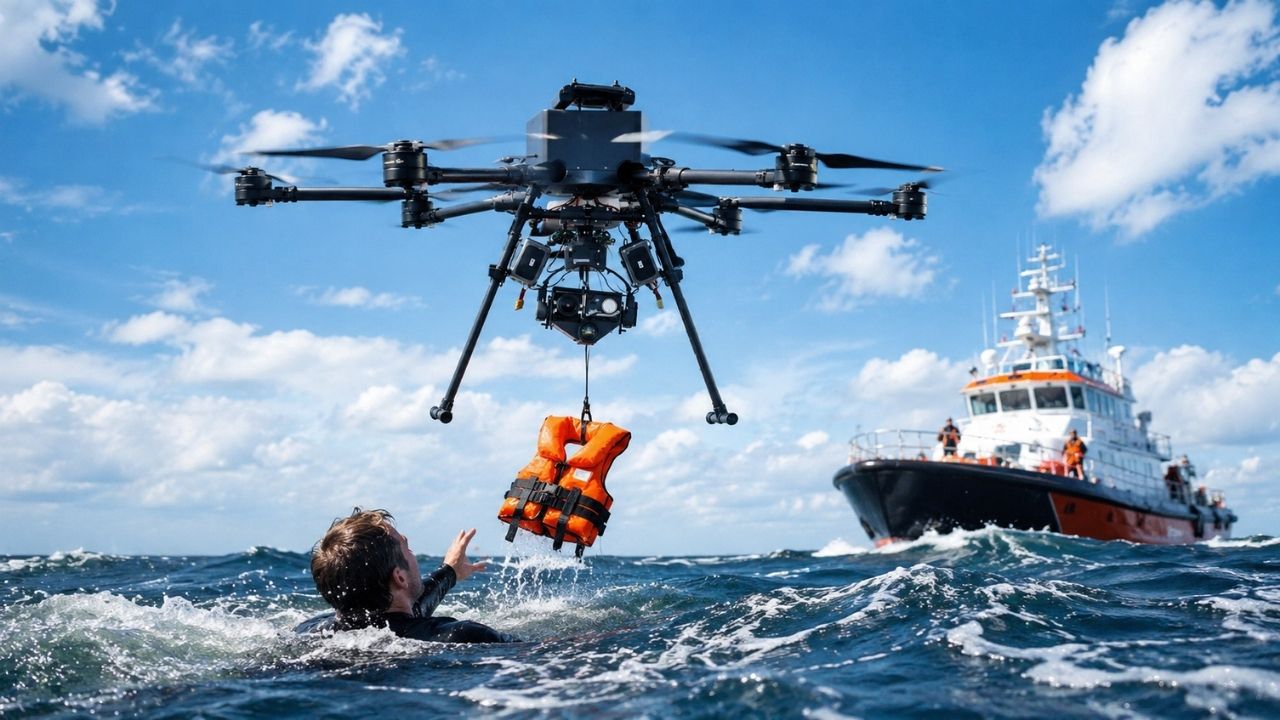

Prototype from Denmark uses thermal cameras, algorithms, and wind data to locate man overboard. The rescue drone measures 2.4 meters, targets ships, flies for 30 minutes, can carry a life jacket with GPS, and aims to reduce the critical time between fall, search, and survival in future maritime operations.
A rescue drone developed in Denmark uses thermal cameras and algorithms to respond to man overboard cases on ships, searching for people in likely drift areas. The prototype was featured in a report by Tech Xplore, published on June 8, 2026, and may carry a life jacket in future phases.
The project is led by PhD student Dimosthenis Angelis from the Technical University of Denmark, addressing a critical issue: when someone falls into the sea, every minute increases the risk of drowning, extreme cold, and exhaustion. The proposal combines cameras, algorithms, and real-time data to locate the victim and, in the future, deliver an inflatable vest with a GPS signal.
Fall into the sea becomes a race against time
When a person falls from a ship, the rescue does not begin under ideal conditions. The vessel needs to slow down, stop, launch a boat, and start searching in an area that changes rapidly with wind, current, and time elapsed since the fall.
-
NASA Rover Captures “Tired Face” on Mars, Highlighting Human Brain’s Tendency to See Faces in Rock Formations

-
Ancient Stone City in the Desert, Once Home to 30,000, Puzzles Scientists with Nabateans’ Water Mastery 2,000 Years Ago

-
Ancient Creature Thought Extinct Since Dinosaur Era Reappears, Baffling Scientists
-
India Deploys Giant Fabric Tubes Filled with Sand to Combat Coastal Erosion and Rebuild Disappearing Beaches





During this interval, the person may drift far from the initial point. The situation is even more severe in cold waters, where exhaustion and hypothermia quickly reduce survival chances. Therefore, response time is one of the most important factors in a maritime emergency.
Rescue drone was designed to act before the boat
The idea of the rescue drone is to take action immediately after the confirmation of a man overboard event. Instead of waiting only for the lifeboat, the equipment could be automatically dispatched from a moving ship to initiate the aerial search.
With an elevated view, the drone can observe the sea surface differently from a low vessel. This can expand the sweep area and reduce time lost in less likely regions, especially when the victim is no longer near the exact point of the fall.
Prototype is 2.4 meters and 24.8 kilograms
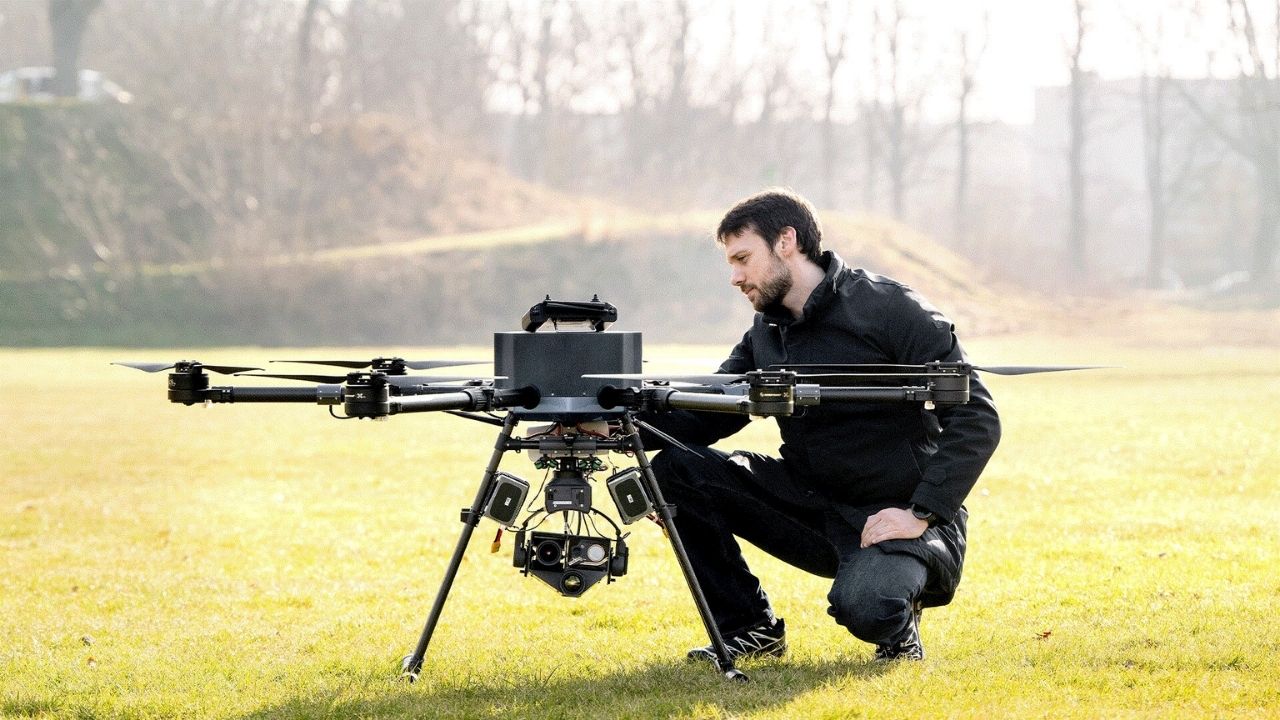
The current version of the equipment measures 2.4 meters in diameter and weighs 24.8 kilograms. The prototype has a flight autonomy of 30 minutes and can carry up to an additional 20 kilograms of cargo, depending on operating conditions.
According to project data, it can scan an area of up to 1 square kilometer, varying according to weather, wind, and transported weight. These dimensions show that the system was not designed as a technological toy, but as a search tool in a real maritime environment.
Three cameras help to see day, night, and body heat
The rescue drone has three types of cameras: RGB, infrared, and thermal. This combination allows observing the environment in different conditions and identifying signals that could go unnoticed to the naked eye.
The thermal camera is especially important because it can detect body heat in the water. In maritime searches, this capability can make a difference at night, in low visibility, or when the person appears only partially on the surface.
Algorithms calculate where the person might have ended up
Angelis’s work involved building the drone from scratch and developing algorithms capable of choosing search routes based on the most probable trajectories. The system considers uncertainties of the maritime environment and the time elapsed since the fall.
The methodology combines data from the vessel, wind, and currents in real-time. The goal is to prevent the drone from searching twice in the same area and wasting battery in less likely points. This logic increases search efficiency and can speed up the victim’s location.
Tests indicate more than 80% success in location
The results of the tests conducted so far indicate that the drone would be capable of locating more than 80% of people in danger. This number is noteworthy because traditional rescues face severe limitations when the person is distant, tired, or difficult to see.
The rescue drone was tested on land and also over the Kattegat, the maritime area between Denmark and Sweden. In the tests, it searched for a humanoid mannequin using a heated vest, allowing for the evaluation of its detection capability under controlled conditions.
Life jacket can prolong survival
When fully developed, the drone is expected to carry an inflatable life jacket capable of emitting a GPS signal. The proposal has two objectives: to keep the person alive longer and to facilitate the arrival of the lifeboat at the correct point.
According to the Life Jacket Association cited in the report, in waters between 4 and 10 degrees Celsius, a jacket can increase survival time from 30 to 60 minutes to up to three hours. In a real emergency, this extra time can separate a successful rescue from a tragedy.
Landing on a ship is still a technical challenge
One of the obstacles to using drones on ships is landing on a moving platform. Generally, the equipment needs to calculate how the landing area tilts and moves before safely touching the deck, which can consume precious battery minutes.
Angelis and his colleagues are working on a method for the drone to land using only what the cameras see in real-time. The goal is to reduce the landing to about three seconds, instead of waiting up to five minutes to complete the maneuver.
Technology still needs to undergo more tests
Despite promising results, the rescue drone is still under development. The maritime sector is highly regulated, and any equipment used on passenger ships needs to undergo extensive testing before widespread adoption.
The ideal scenario envisioned by Angelis is that ships carrying people have such a system to enhance safety. Meanwhile, a possible application would be use by coast guards, especially to quickly deliver life jackets to people in danger.
Drones can change the logic of maritime rescue
The biggest differential of the project lies in speed. Instead of relying solely on a vessel that needs to maneuver, stop, and launch a boat, the drone could reach the probable area of the victim in a few minutes.
The search would no longer start only at water level and would include aerial vision, sensors, and automated calculation. This combination can change the way maritime emergencies are faced, especially on cruise routes, ferries, and passenger ships.
The question now is whether commercial ships and maritime authorities will adopt this type of technology on a large scale. Do you think every passenger ship should have a rescue drone on board, or does this still depend on many tests before becoming a rule? Leave your opinion in the comments.




Ότι καλύτερο ναιμπρρπρο να μπει σε πλοία μεταφοράς όλων των ειδών
Ανθρωπων