






 Portuguese
  Spanish
  5 min of reading
  0 comments


Hospital Invests in Renewable Energy, Reduces Electricity Costs, and Reinforces Environmental Commitment in the Public Health System
In recent years, the debate about sustainability and conscious consumption has gained traction in various areas of society. Especially in public health, the changes have been significant. For this reason, investment in renewable energy has emerged as a strategic response that combines cost savings and environmental responsibility.
A relevant example is the Regional Hospital of Litoral Norte – Francine Maia França (HRLN) in São Paulo, which adopted wind energy to power its facilities.
Since July, the hospital has been operating on energy from renewable sources. As a result, the unit estimates a reduction of up to 20% in electricity expenses. Additionally, this transition represents a shift in how public institutions understand and manage their resources. In other words, the decision strengthens a culture of efficiency and innovation.
-
Brazilian scientists are simultaneously advancing two research projects on clean hydrogen and driving solutions that could transform the energy matrix, enhance industrial competitiveness, and accelerate large-scale emission reduction targets.

-
Advancement in renewable energy: A R$ 150 million project launched by Petrobras and Finep aims to create state-of-the-art electrolyzers for green hydrogen, strengthening national research and preparing Brazil to compete in a billion-dollar energy market.
-
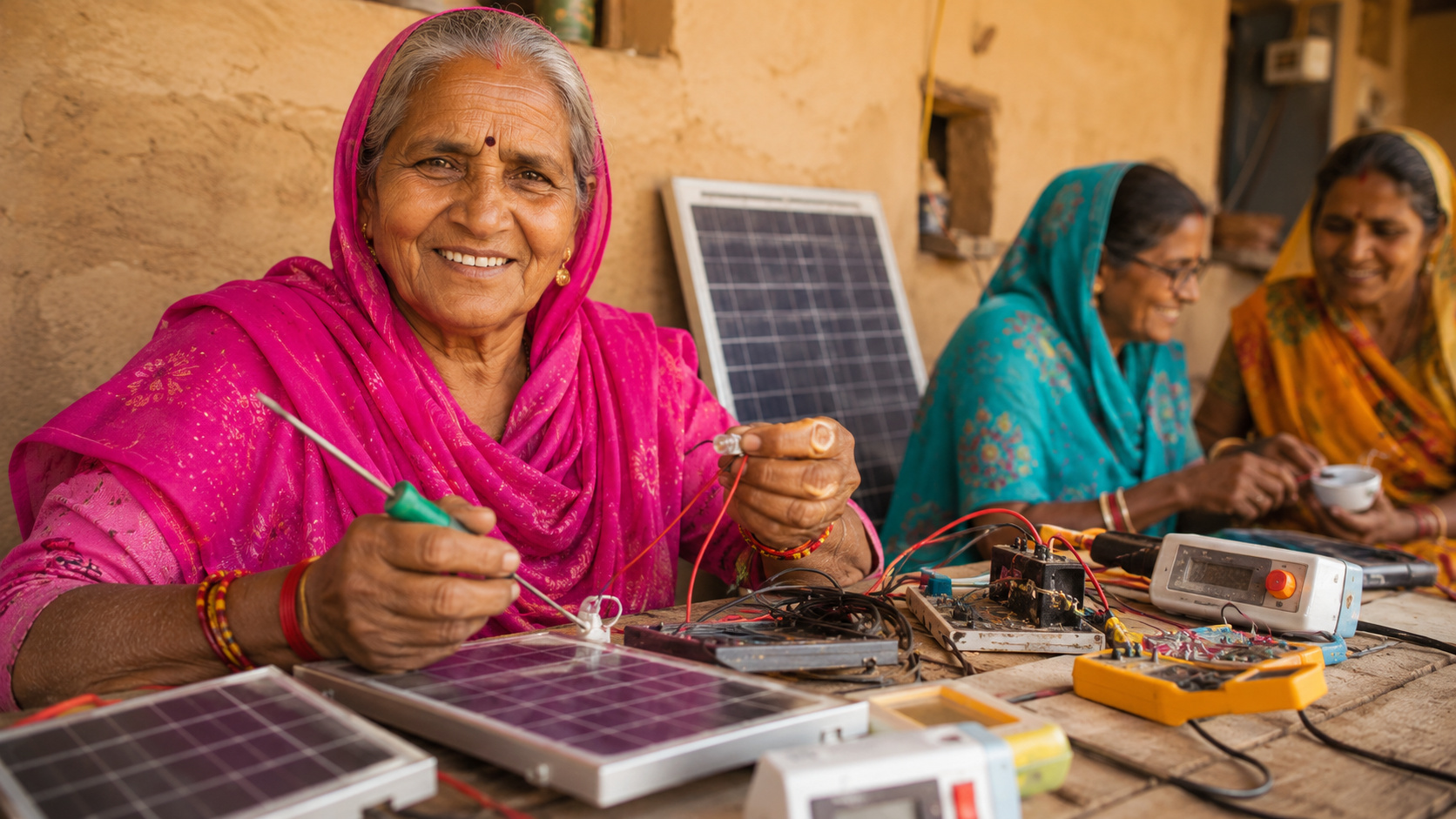
Illiterate or semi-literate grandmothers were trained to repair solar systems, open rural workshops, and light up homes that still depended on kerosene.
-
The world has bet on green hydrogen as the fuel of the future, but now faces the side effect: producing 1 kilogram requires about 9 liters of ultrapure water, and the largest projects on the planet are precisely in the driest regions of the Earth, where water is already scarce for people.




Similarly, the positive impact extends to suppliers and partners, who are also encouraged to reconsider their models.
For this reason, the Sócrates Guanaes Institute (ISG), responsible for managing the HRLN, has developed a comprehensive energy efficiency plan. Currently, this project is already functioning in units such as Caraguatatuba and Itanhaém.
Through this expansion, the Institute aims to implement the model across its entire network, promoting sustainability, technological innovation, and responsible management.
Energy Transition in the Hospital Sector and the Role of Brazil
In a similar manner, the use of clean energy sources, such as wind energy, represents a historic turning point in health institutions. For decades, hospitals demanded large volumes of electricity. This occurred because they operate 24 hours a day and use heavy equipment, continuous air conditioning, and robust lighting.
However, as costs increased and environmental concerns intensified, this model began to be rethought.
Furthermore, Brazil significantly increased its investments in renewable energy starting in the 2000s. Until then, the national energy matrix heavily depended on hydropower. However, water crises and environmental pressures led the country to invest in alternatives like solar, wind, and biomass.
In this context, Brazil’s natural potential, combined with favorable climatic conditions, positioned the country as a global leader in clean energy.
Moreover, the international context has contributed to accelerating this transition. The signing of the Paris Agreement, for example, reinforced the strategic role of renewable energies. As a consequence, Brazil has come to be seen as a key player in the global climate agenda.
In this sense, the national biodiversity and the already relatively clean matrix have increased the country’s responsibility to the international community.
Thus, the investment in renewable energy made by the Regional Hospital of Litoral Norte confirms a clear trend towards modernization.
According to the executive director of HRLN, Gustavo Cursino, the change goes beyond cost savings. As he explains, the initiative reflects the hospital’s commitment to the responsible use of public resources.
Therefore, it is a measure aligned with modern and sustainable management.
Technical Planning and Adaptation of Hospital Structure
According to engineering coordinator Gabriel Santana, the implementation of renewable energy required a rigorous technical planning. For this, the team needed to study the electrical structure, make adaptations, and analyze the feasibility of the project.
Thus, the adoption of the new energy source did not happen haphazardly, but rather with organization and strategy. As he emphasizes, the long-term benefits outweigh the effort involved.
In addition to promoting efficiency, the choice of wind energy strengthens the social role of the hospital. As public institutions influence the entire surrounding community, actions like this serve as examples.
In this way, HRLN shows that it is possible to offer quality services without compromising the environmental future.
Additionally, it is important to note that the hospital sector is among the highest energy consumers. Therefore, any energy efficiency measure brings significant gains.
From this perspective, the investment in renewable energy emerges as an intelligent, economical, and sustainable solution. In this way, it becomes a fundamental part of a strategy for modernizing hospital management.
On the other hand, the hospital also reaps benefits in terms of predictability. In general, the maintenance of renewable systems tends to be simpler and cheaper.
For this reason, there is greater budget stability. This favors investments in other essential areas, such as professional training and equipment modernization.
Sustainability as Part of Institutional Reputation
Currently, society values institutions committed to the environment even more. Thus, companies and public entities that adopt sustainable practices gain public trust.
As a result, the decision of the Regional Hospital of Litoral Norte reinforces its institutional reputation. In other words, sustainability becomes part of the unit’s image, not just an isolated action.
Similarly, the example of HRLN fits into a phenomenon that is already spreading throughout the country. Today, hospitals from various regions adopt renewable sources to power their operations.
This has only become feasible thanks to technological innovation, public incentives, and the reduction in equipment costs. In some cases, institutions even produce their own energy, which ensures autonomy and savings.
Furthermore, the Sócrates Guanaes Institute considers this model a priority. As the manager of various units, ISG sees renewable energy as a strategic necessity.
For this reason, the plan to extend the model to the entire network demonstrates coherence with a long-term vision. Therefore, sustainability ceases to be optional and becomes integral to management.
A New Model of Public Hospital
Finally, the Regional Hospital of Litoral Norte establishes itself as a concrete example of how to efficiently apply investment in renewable energy in the public sector.
As a result, the institution modernizes its infrastructure, reduces costs, and also contributes to environmental preservation. All of this without compromising care for the population.
More than just savings, the hospital is betting on a cultural shift. In this way, managers who opt for sustainable practices assume a leading role in building a new model of hospital: more aware, more modern, and prepared for contemporary challenges.
Therefore, by making this initiative visible, HRLN inspires other public institutions to follow the same path.
After all, the future of public health relies not only on medical advances but also on how we treat natural resources and plan our cities and healthcare systems.








Be the first to react!