Portuguese
  Spanish


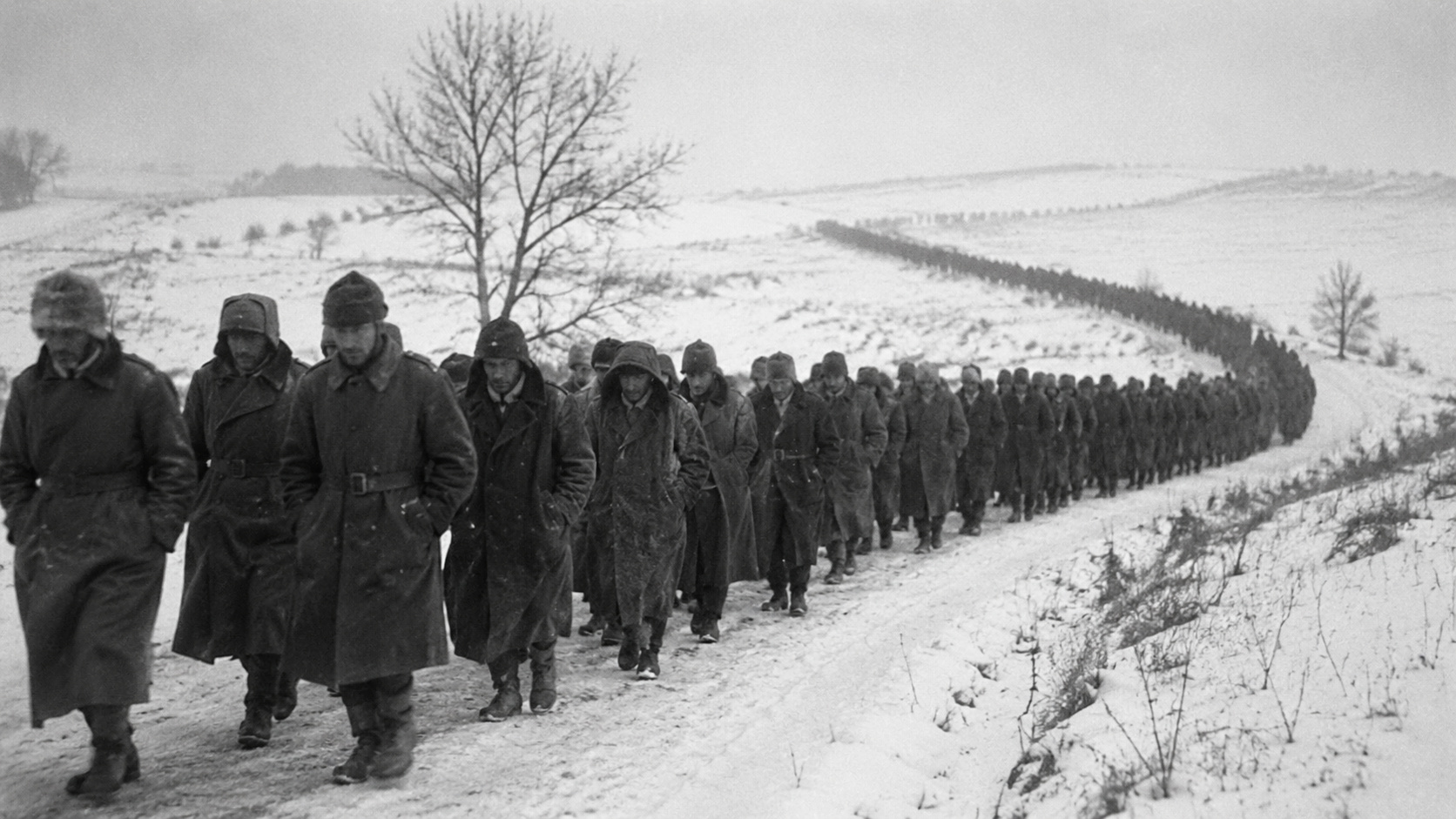

Main European oil supplier to Nazi Germany, Romania produced about 100,000 barrels per day before playing a decisive role during World War II
Few countries had such an important influence on the course of World War II as Romania, although its role is less remembered.
For years, the country provided an essential share of the fuel used by Nazi Germany. Romanian production helped keep tanks, planes, and troops moving.
The situation changed completely in 1944. Romania abandoned the Axis, began fighting alongside the Allies, and withdrew from Hitler his main European oil source.
-
Scientists discover beetles with elongated antennae and mandibles in China and Laos and name a new genus Luffy in honor of the protagonist of One Piece.

-
Former gas station attendant leaves job for recycling business, employs 12 people, and earns up to R$ 20,000 per month.

-
At 10 years old, the American Michael Kearney entered the Guinness World Records by graduating from college, accumulated four degrees before turning 18, and today dedicates his life to helping other gifted individuals.
-
A 550-million-year-old fossil found in Australia reveals a worm-like creature that already chose the right side to move and may be the first “right-handed” animal known to science.




Oil placed Romania at the center of German strategy
Romania gained its independence from the Ottoman Empire in 1877. After World War I, the kingdom gathered nearly 20 million inhabitants.
The exploitation of oil fields advanced from 1927. Industrial growth, in turn, placed the country in a privileged position in Eastern Europe.
The influence of the Iron Guard was also increasing during that period. Led by Corneliu Codreanu, the movement advocated fascist, nationalist, and anti-Semitic ideas.
This political scenario would directly influence the decisions made by Romania during the war.
Alliance with Poland caused tension with Hitler
The German invasion of Poland in 1939 placed Romania before a delicate choice.
Bucharest initially maintained the Polish-Romanian Alliance, in effect since 1921. Polish troops were authorized to cross Romanian territory.
Poland’s gold reserves also passed through the country. The material continued to Black Sea ports and was then sent to London and Paris.
The attitude displeased Adolf Hitler. The German government, nevertheless, promised to return territories lost by Romania after a possible Soviet defeat.
The oil supply was to continue as a counterpart. Romania later adhered to the Tripartite Pact and officially joined the Axis.
The country was unaware, at that time, that the secret protocol of the Ribbentrop-Molotov pact had placed part of the region in the Soviet sphere.

Production of 100 thousand barrels fueled the war machine
Romania became the main European oil supplier of the Third Reich after joining the Axis.
National production reached approximately 100 thousand barrels per day. This volume represented about half of the fuel needed by the German military structure.
More than 600 thousand Romanian soldiers participated in Operation Barbarossa, launched against the Soviet Union in June 1941.
The country’s forces fought in 25 battles. Among the episodes were the capture of Sevastopol and the Odessa massacre.
According to historian Mark Axworthy, the capture of Odessa was the greatest achievement of a minor Axis power without substantial German support.
Romanian military engineers also built a large bridge over the Dnieper River while facing enemy attacks.
The 3rd Mountain Division participated in the largest amphibious attack carried out by the Axis in Europe. Romanian troops also advanced to Nalchik, in the Caucasus.
Operation Tidal Wave tried to cut off Hitler’s fuel
The Allies decided to directly attack the Romanian oil center on August 1, 1943.
The so-called Operation Tidal Wave mobilized 177 B-24 bombers, which departed from Libya bound for the fields and refineries of Ploiești.
The German defense responded intensely. Fifty-three American aircraft were shot down or failed to return to their bases.
The high number of losses earned the mission the nickname “Black Sunday” in the United States press.
The attack demonstrated the strategic importance of Romanian oil. Germany depended on that fuel to maintain its combat capability.
1944 coup removed Romania from the Axis
The entry of Soviet troops into Romanian territory changed the scenario on August 23, 1944.
King Michael I led a coup d’état against Marshal Ion Antonescu. The action removed Romania from the Axis and ended the partnership with Germany.
Germany and Hungary declared war on their former ally. Romania then mobilized 567,000 soldiers to fight alongside the Allies.
The oil that once supported the German troops began to supply the Soviet Union.
The change occurred when Germany was already facing a severe fuel shortage. The loss of the main European supplier was, therefore, a strategic blow.
War left persecutions and enormous human losses
Romania’s participation in the conflict also left a tragic legacy for the Jewish population.
According to the Wiesel Commission, between 280,000 and 380,000 Jews were murdered by the Romanian state.
The crimes occurred mainly in the regions of Bessarabia, Bukovina, and Transnistria.
The rejection of the Nazi deportation plan, starting in 1942, helped save part of the Jewish community. About 400,000 survivors later emigrated to Palestine.
Romania ended the war with great human and material losses. The country also came under Soviet influence and became a People’s Republic.
Romania’s trajectory was marked by a historical contradiction: the country that supported Hitler’s military machine also helped to weaken it at the decisive moment of the war.
In your opinion, did Romania’s change of sides have a decisive impact on accelerating the defeat of Nazi Germany? Leave your comment!