Portuguese


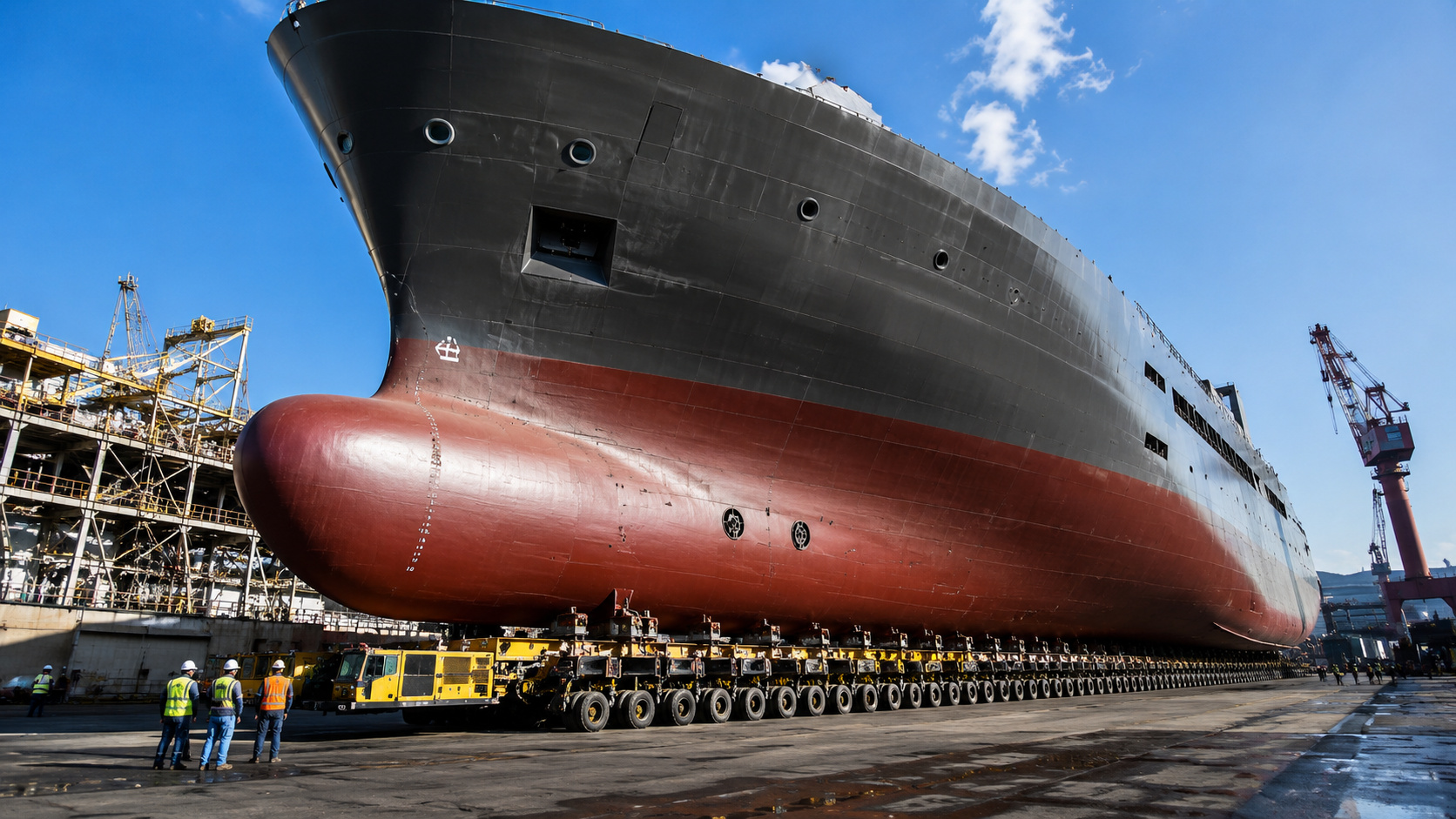

SPMT moves bridges, ships, and giant structures with hundreds of computer-controlled wheels and has become a central piece of modern heavy engineering.
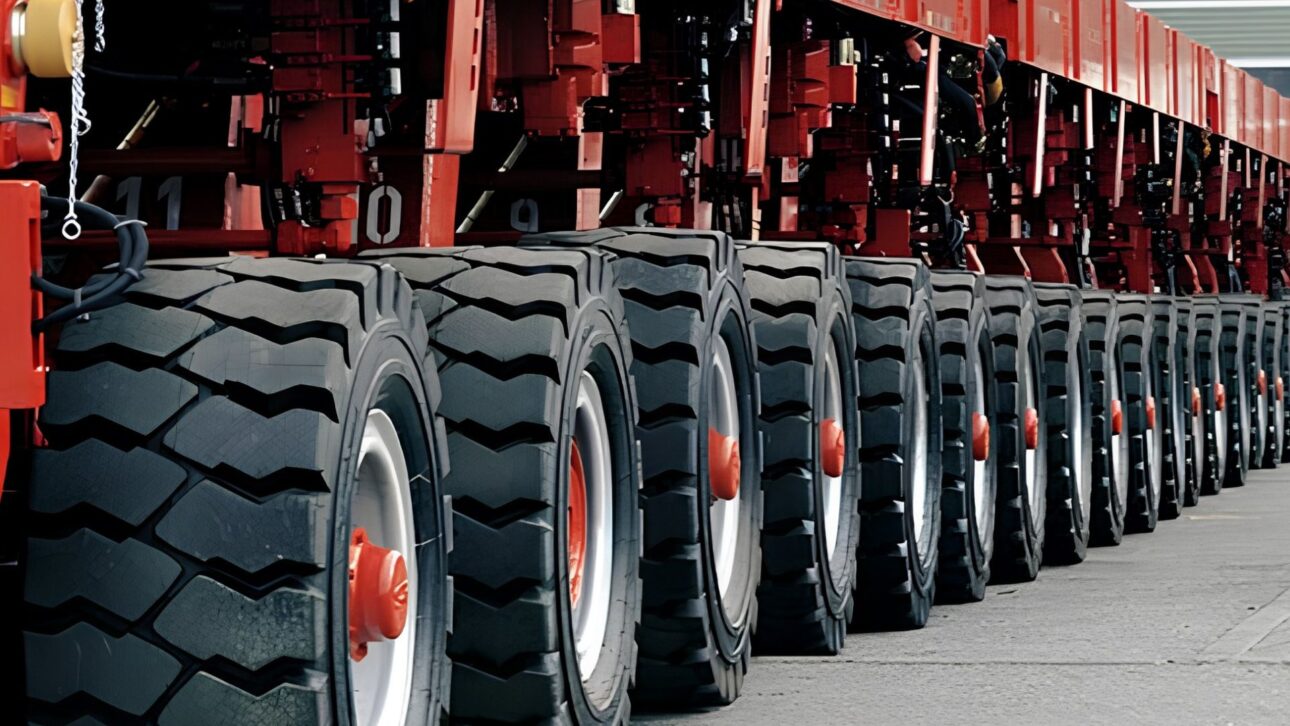
When it comes to transporting extreme loads, the most common image involves cranes, road convoys, and slow operations surrounded by risk. But there is a technology that has changed this scenario in heavy engineering: the SPMT, which stands for Self-Propelled Modular Transporter. It is a self-propelled modular platform composed of dozens or even hundreds of computer-controlled wheels, capable of moving gigantic structures such as bridges, ships, petrochemical modules, buildings, and industrial platforms.
According to the Federal Highway Administration of the United States and Mammoet, the SPMT has established itself as one of the most important solutions for moving special loads in infrastructure works, shipyards, refineries, and large-scale industrial projects. The reason is simple: it allows transporting colossal weights with millimetric control, without relying on rails and without the limitations of conventional trucks.
What is an SPMT and why this platform revolutionized heavy load transportation
The SPMT was created to solve a problem that common trucks and trailers could not face. For decades, giant structures needed to be dismantled into smaller parts because there was no system with sufficient capacity, stability, and flexibility to move them whole safely.
-
Taiwan Invests $2.3 Billion to Produce 66 Brave Eagle Jets Domestically, Showcasing Technological Autonomy Amid Chinese Pressure

-
Microsoft Reveals Windows Setting to Safely Remove USB Drives and Prevent Data Loss
-
Astronomers Discover Two Giant Planets with Cotton Candy-Like Density, Comparable in Size to Jupiter, Orbiting a Star 1,110 Light-Years Away
-
Meteor Showers and Full Moon Create Rare Celestial Display Over Brazil in Late July





With the advancement of self-propelled modular platforms, this scenario changed. The equipment is made up of independent modules that can be connected side by side or in line, creating a large mobile base. This configuration distributes the weight over many axles and allows transporting loads that reach thousands of tons.
This modularity is precisely the most decisive point of the system. Instead of existing as a fixed machine with limited capacity, the SPMT can be assembled according to the needs of each operation, expanding or reducing its support base according to the size and weight of the structure to be transported.
Hundreds of computer-controlled wheels are the secret to the strength and precision of the SPMT
What makes the SPMT so different from a regular vehicle is not just its strength, but the way its wheels operate. Each axle line has its own control and works integrated with a central electronic system that coordinates all the platform’s movements.
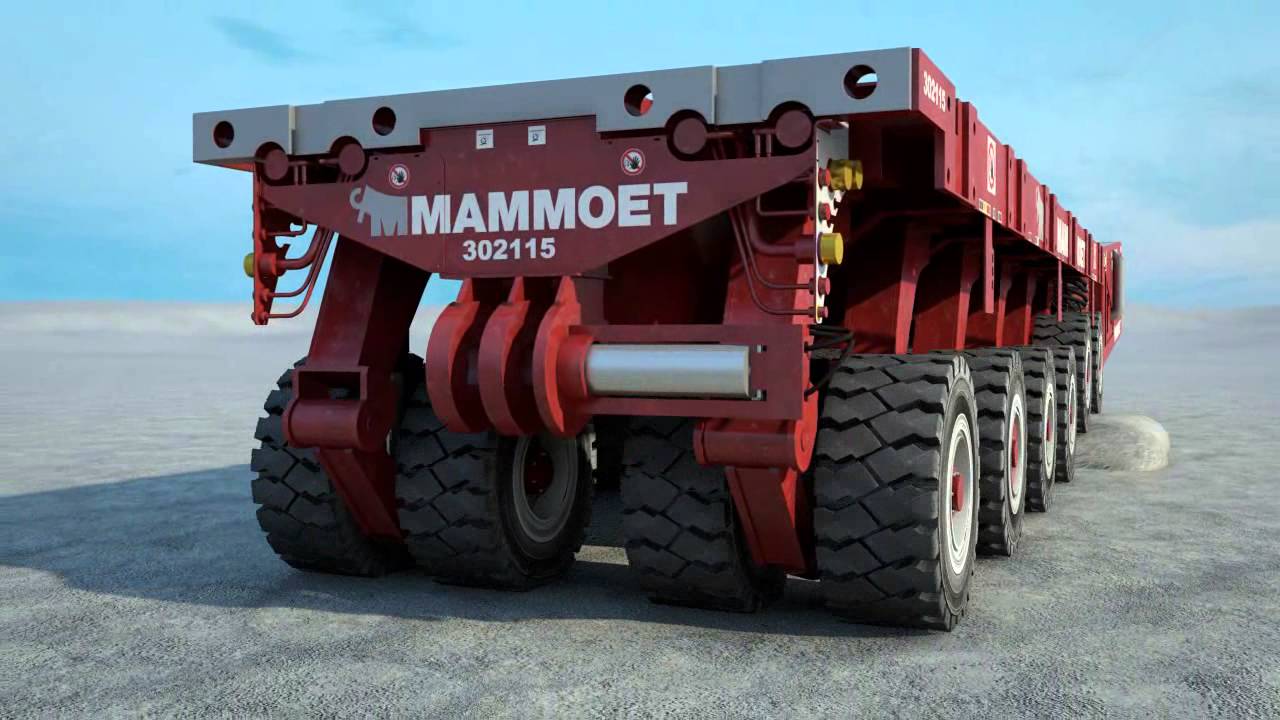
In practice, this means that the wheels not only turn left or right. They can perform extremely complex and synchronized movements. The platform can move straight, rotate on its own axis, move diagonally, and even move sideways.
It is precisely this capability that makes the equipment seem almost unreal to those seeing it for the first time. Instead of maneuvering around obstacles like a truck, the SPMT seems to glide across the ground, repositioning gigantic loads with a precision that would be impossible with traditional systems.
Axle capacity transforms the SPMT into a machine for bridges, ships, and industrial platforms
According to Mammoet, a single axle line of an SPMT can support dozens of tons, and the combination of many connected modules raises the total capacity to extraordinary levels. This logic allows the platform to operate in colossal scale operations.
In heavy engineering, the total weight is not the only challenge. The major issue lies in the load distribution, center of gravity, stability, and the need for extremely precise maneuvers in tight areas. The SPMT solves all of this by spreading the effort over a large number of wheels and adjusting each movement in a coordinated manner.

This type of solution has become essential in operations involving refinery modules, offshore structures, pre-assembled bridges, and vessel sections, where disassembling the load would be expensive, slow, or simply unfeasible.
Lateral movement of the SPMT allows transporting giant loads in reduced spaces
One of the most impressive features of this technology is the so-called lateral movement, which allows the platform to move sideways as if it were a large mechanical crab. This feature is hugely valuable in industrial environments where a few centimeters make a difference.
In refineries, shipyards, and power plants, the circulation area is usually limited by fixed structures, pipelines, metal supports, and sensitive equipment. A conventional truck needs a turning radius and space to maneuver. The SPMT, on the other hand, can adjust its position almost centimeter by centimeter.
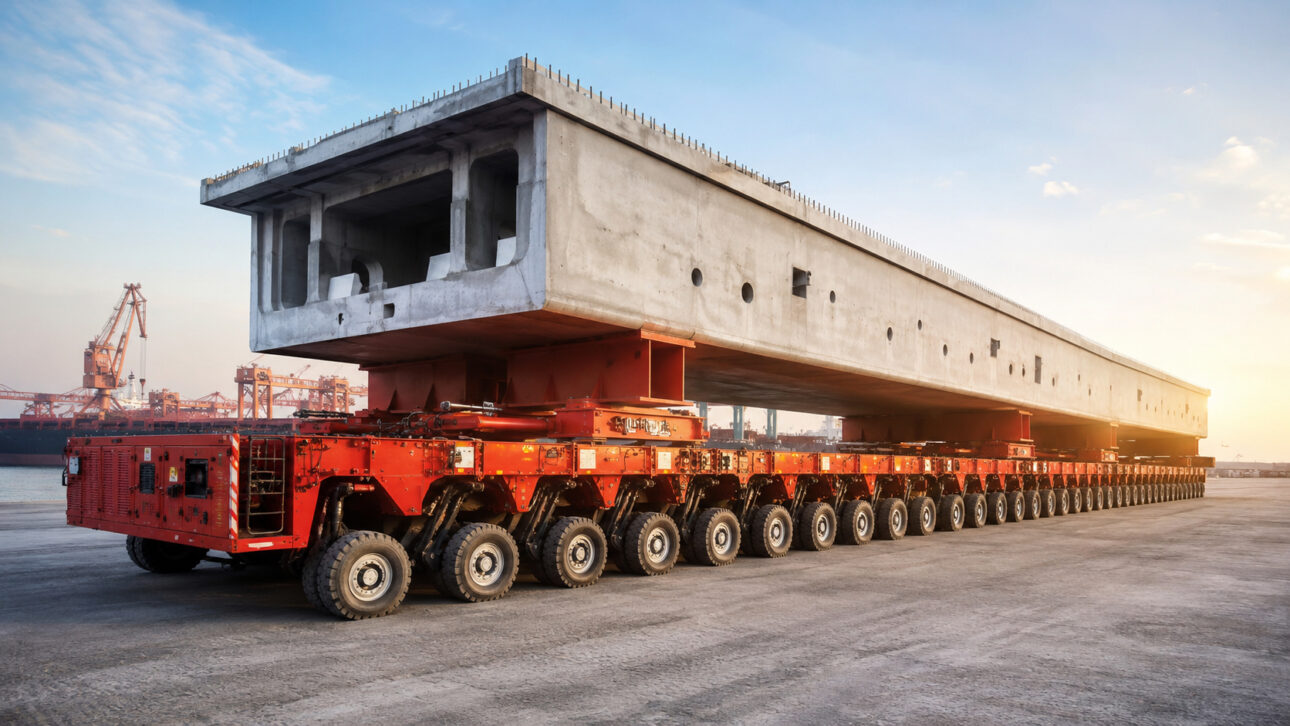
It is also possible to perform complete rotations and diagonal movements with the load already positioned on the platform. This reduces operational risk and greatly expands the ability to install giant structures in places where other systems simply could not operate.
SPMT has already transported ships, offshore modules, and entire bridges in record-breaking operations
According to Mammoet, the use of SPMT has already become common in some of the world’s largest industrial and maritime projects. Shipyards use these platforms to move naval blocks of thousands of tons between manufacturing areas and final assembly lines.
In bridge construction, the Federal Highway Administration highlights that SPMTs have completely changed the installation logic. Instead of assembling the structure directly over the highway during weeks or months of closure, many bridges are now built next to the road and installed in their final location in just a few hours.
This method has gained importance because it drastically reduces the impact on traffic, improves site safety, and speeds up project delivery. In terms of modern infrastructure, few technologies have made as much practical difference in urban and road interventions as transport by SPMT.
Low speed and absolute control explain why the SPMT has become indispensable
Despite its futuristic appearance and impressive strength, the SPMT was not made for speed. In operations with gigantic loads, it usually moves at a pace slower than human walking. This happens because the main goal is not to arrive quickly, but to maintain absolute control over the load.
Operators monitor each stage using remote controls or specific command stations, adjusting direction, height, and displacement as needed.
In many operations, success depends more on precision than on brute force, and that is exactly where the equipment excels.
This combination of extreme strength, intelligent weight distribution, and millimetric precision has transformed the SPMT into one of the most important tools in modern heavy engineering. It does not replace all transport systems but has assumed a central role precisely in operations where error costs millions and where the load does not allow for improvisation.
Why the SPMT has become one of the most impressive and least known machines in infrastructure
Even though it is little known to the general public, the SPMT is involved in some of the largest projects ever executed in global infrastructure. It moves loads that defy the logic of conventional vehicles and has made it possible to transport entire structures without disassembly, with more efficiency and less downtime.
Bridges, ships, offshore platforms, industrial modules, and even special buildings have come within the reach of this technology. What once required complex disassembly, large logistical blockages, or improvised solutions is now executed with a modular base on wheels, computer-controlled and adjusted for each mission.
In the end, the SPMT is one of those machines that the public almost never sees up close, but that silently supports contemporary engineering. With hundreds of wheels working in perfect synchronization, it has become an invisible and decisive piece in the movement of the largest objects constructed by humans.