Portuguese
  Spanish


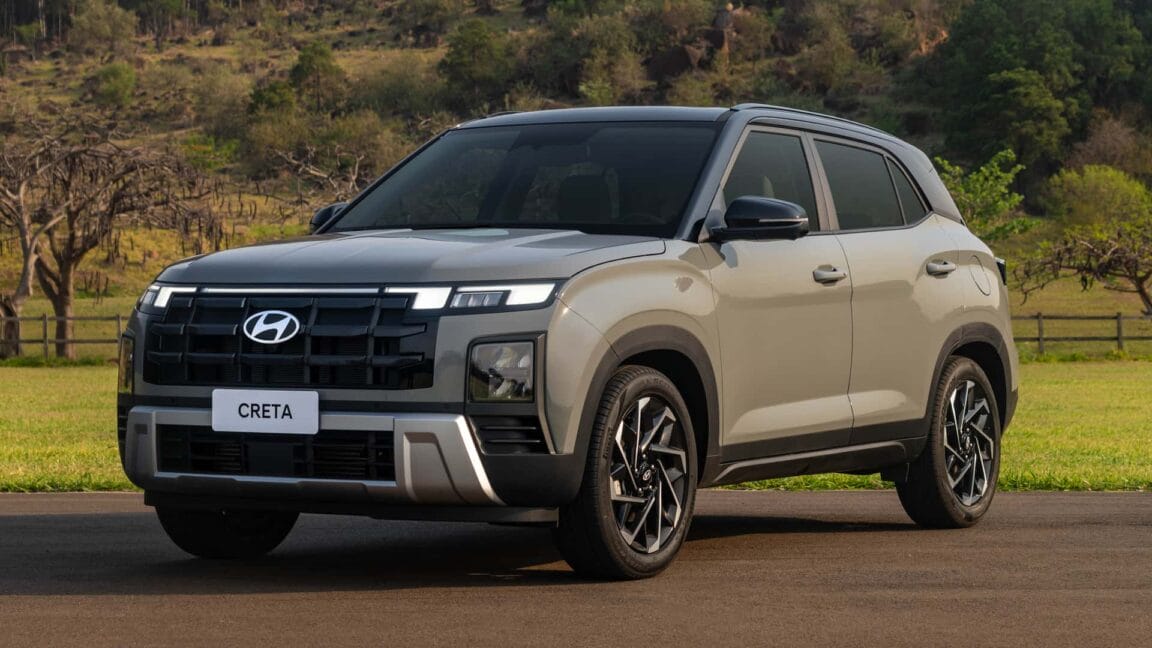

New Hyundai SUV Arrives to Redefine the Automotive Market and Leave Competitors Behind. The Hyundai Creta 2025, now with a more powerful engine, innovative design, and high-quality finish, promises to stand out in the category.
Hyundai is about to make a big impact in the automotive market, following the lead of its main competitors by launching the updated version of its compact SUV. The Hyundai Creta 2025 promises to be a true revolution in the segment, leveling up with a more powerful engine and a renewed design. Like the Honda HR-V, the new Creta will hit the market with a facelift that combines power, innovation, and sophistication, placing it among the most competitive SUVs in the category. Get ready to meet a vehicle that promises to redefine the segment with new technologies and improved performance.
How Much Will the New Hyundai SUV Cost?
The Hyundai Creta 2025 comes with the same five trim options. In four of them, the prices remain in line with the 2025 model year. The Comfort is priced at R$ 141,890, Limited at R$ 156,490, Platinum at R$ 172,690, and N Line at R$ 182,090.
Meanwhile, the top-of-the-line version of the Hyundai SUV, Ultimate, will cost R$ 189,990, R$ 2,100 more than the 24/24 model. This is because it is the only version equipped with the 1.6 TGDI engine. In the others, the already known 1.0 turbo three-cylinder engine with a maximum power of 120 hp will be provided.
-
Thinking of Installing LED Headlights? Why Replacing Halogen Bulbs is Still Banned, the Glare Risks Authorities Worry About, and How a New Proposal Could Allow Certified, Safe Installations

-
2027 Toyota Corolla Cross Unveiled: New Design, Enhanced Fuel Efficiency, Reduced Maintenance Costs, Advanced Technology, Connected Services, and Up to 10-Year Warranty

-
Fiat Cronos Precision 2018: Affordable Sedan with Spacious Trunk and Reliable Maintenance
-
Volkswagen to Cut Production by 1 Million Cars by 2030, Reducing Jobs and Platforms, Focusing on More Profitable Models


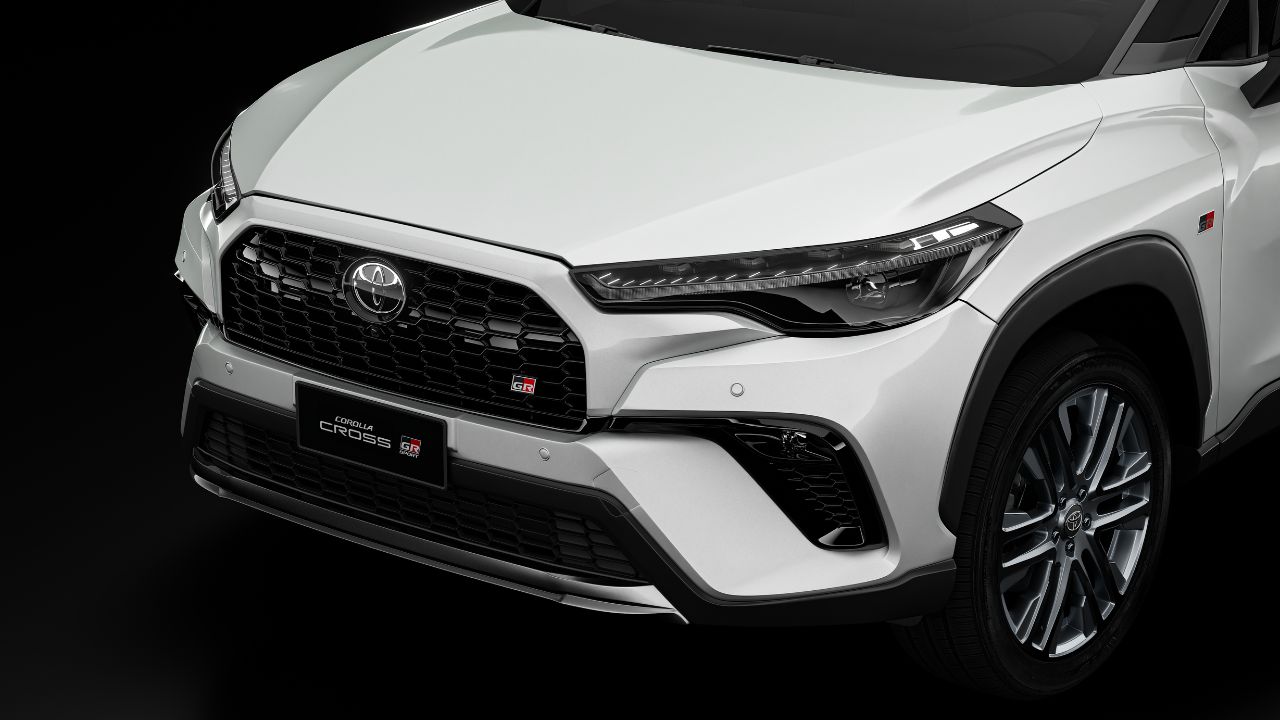




Produced in Piracicaba (SP), the Hyundai Creta 2025 has a more sober look. At the front, for example, the only detail that survived from the previous version is the height of the headlights, which remains close to the grille with a black piano finish, which became fashionable after the Fiat Toro.
However, all the parts have a square shape, which applies to the headlights, the DRL strip that bases the modified hood, which is higher, and also to the bumper. In fact, it resembles the current generation of the Santa Fe, with lights shaped like the letter H.
Check Out the Engine of the Most Powerful SUV in the Category
The new Hyundai SUV comes with silver accents on the bumpers. However, the sides remain intact with wheels ranging from 16 to 18 inches, depending on the configuration.
The rear also replaced the controversial taillights and adopted interconnected pieces with LED strips that run from one end to the other, thus crossing the trunk lid, which still has the same 422 liters of capacity.
Like the new style, the mechanics of the Hyundai Creta promises to please. The 1.6 TGDI engine is the main novelty, replacing the 2.0 aspirated 16V and 167 hp engine, which has already become obsolete due to new emissions rules imposed by Proconve L8.
In numbers, the most powerful SUV in the category generates 193 hp, making it the most powerful in the segment. The closest competitor is the Jeep Renegade, with 185 hp in the 1.3 turbo versions. The engine of the new Hyundai SUV, imported from South Korea, runs on gasoline only and equips its sibling, the New Tucson.
Interior of the New Hyundai Creta 2025 Amazes
The list of features in the Hyundai SUV is generous. There are screens that occupy the top of the dashboard and are the main highlight of the changes inside. In this, the instrument cluster and multimedia center are separated, with each piece measuring 10.25 inches.
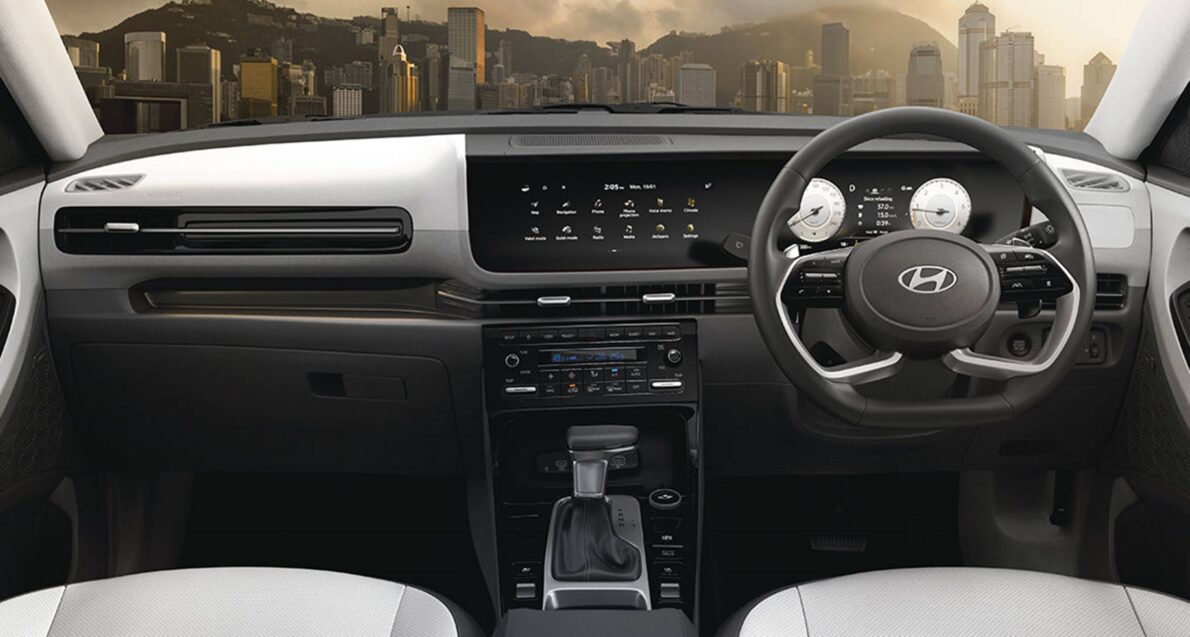
The air conditioning vents have also been repositioned. Only the central console and the steering wheel (multifunction with a flat base) have been retained. The designs of the seats, which now have electric adjustment for the driver, remained; however, it is possible to choose from different finish colors. There is also ambient lighting in the cabin.
In terms of safety, there is a 360-degree camera, electronic parking brake, front and rear parking sensors, tire pressure monitoring, and the ADAS systems that the brand calls Hyundai SmartSense. The package includes everything from autonomous braking, fatigue detector, and a system that keeps and centers the car in the lane, to new rear cross-traffic assist and blind spot assist, as well as safe exit alerts.