






 Portuguese
  Spanish


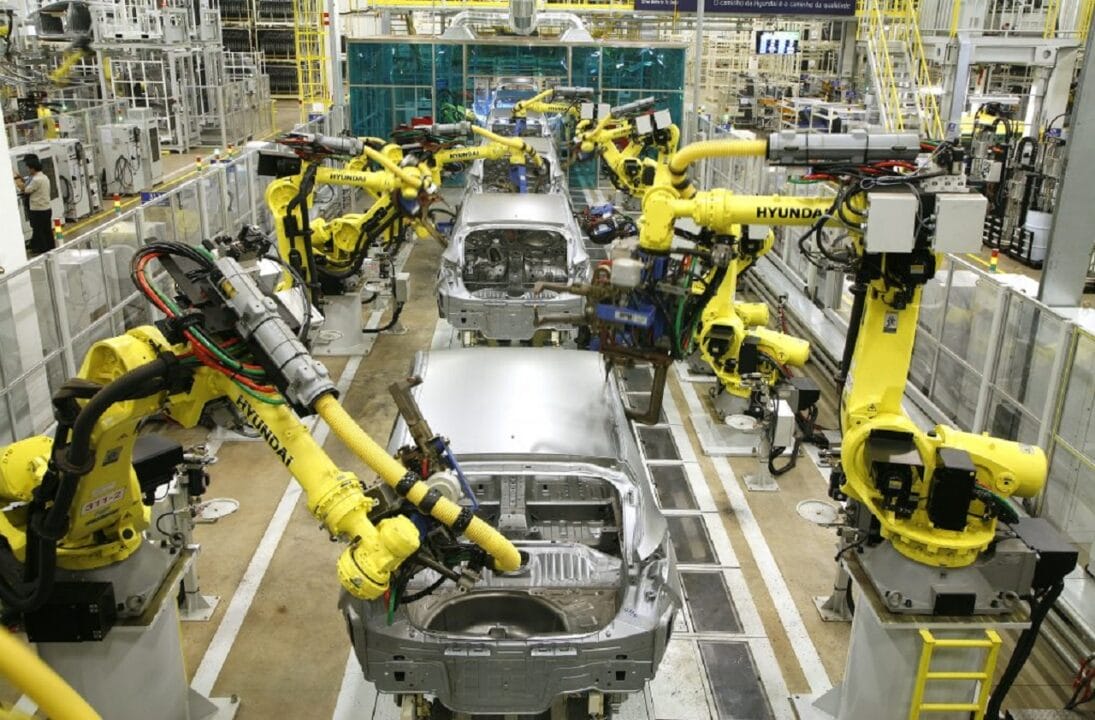


Hyundai Is Considering Launching an Innovative Manure-Powered Car, Promising Economic Efficiency and Sustainability in the Automotive Market.
In a recent approach to sustainable mobility, Hyundai revealed its visionary plan for the coming years, focusing on innovative hydrogen-based solutions. In line with the theme ‘Ease Every Way‘, the South Korean automaker reinforced its commitment to the development of innovative alternatives for mobility. Among these initiatives, the proposal for a manure-powered car stands out, a groundbreaking concept that combines sustainability with technological advancement.
Hyundai Plans to Consume 3 Million Tons of Hydrogen Per Year by 2035

The project for Hyundai’s new car, called Waste-to-Hydrogen, utilizes a process to convert organic waste into hydrogen, which is then used to power a hydrogen engine. Hyundai claims that the manure-powered car has the potential to be a sustainable transport solution, as it can help reduce greenhouse gas emissions and dependency on fossil fuels.
The project for Hyundai’s new car is being implemented in Indonesia. The Waste-to-Hydrogen technology utilizes waste from local communities, developing mini hydrogen production centers, eliminating the need for transportation and storage of the product.
-
2027 Toyota Corolla Cross Unveiled: New Design, Enhanced Fuel Efficiency, Reduced Maintenance Costs, Advanced Technology, Connected Services, and Up to 10-Year Warranty

-
Fiat Cronos Precision 2018: Affordable Sedan with Spacious Trunk and Reliable Maintenance
-
Volkswagen to Cut Production by 1 Million Cars by 2030, Reducing Jobs and Platforms, Focusing on More Profitable Models

-
Toyota Launches First 100% Electric Car in Brazil: bZ4X with 343 HP, All-Wheel Drive, 361 km Range, Priced at $419,990 BRL, Limited to 99 Units



According to the automaker, there are already buyers for the manure-powered car, which will make the region an industrial hub for hydrogen around the input production center, thus promoting the growth of a society based on hydrogen. The expectation is to consume 3 million tons of hydrogen per year by 2035. In this way, Hyundai aims to produce sustainable steel and generate clean energy as part of its sustainable initiative.
Understand How Hyundai’s Manure-Powered Car Works
The process of transforming organic waste into hydrogen is done through a chemical reaction that involves the fermentation of organic waste, such as food, iodine, and cattle manure to generate biogas. The biogas, in turn, is treated to capture CO2 and generate hydrogen.
An alternative developed for Hyundai’s new car is the Plastic-to-Hydrogen (P2H) technology, which uses polymers (plastics) that would be discarded. The melting of these plastic wastes that cannot be recycled is carried out. The plastic is then gasified, impurities are removed, and hydrogen is produced.
It is important to mention that, in 2021, the brand tested its hydrogen-powered car Nexo, showing that it has the potential to become a reference in the segment. According to test numbers, Hyundai’s new car was able to travel 900 km on just one tank and purified 449,100 liters of air during the journey. For comparison, a conventional combustion-powered car would emit 125 kg of polluting gases on a 900 km trip.
Other Companies Are Also Working on Manure-Powered Cars
In addition to Hyundai’s new car, another company, ARM Engineering, is also developing similar projects for cars powered by H2 derived from biomass.
The manure-powered car presented was a Renault Zoe, which received a series of upgrades, such as a reinforced battery and a tank with 200 liters of G-H3, a biofuel produced from manure and hydrogen. The GH-3 powers a fuel cell to generate energy and propel the vehicle.
The range of the model can exceed 2,000 km. Overall, a manure-powered car has the potential to be a viable solution for sustainable transport, but there are still challenges to overcome before they can become a commercial reality.
One of the main challenges is the cost of converting organic waste into hydrogen. However, as technology develops and costs decrease, models of this type may become a more attractive option for the market.








