Portuguese
  Spanish


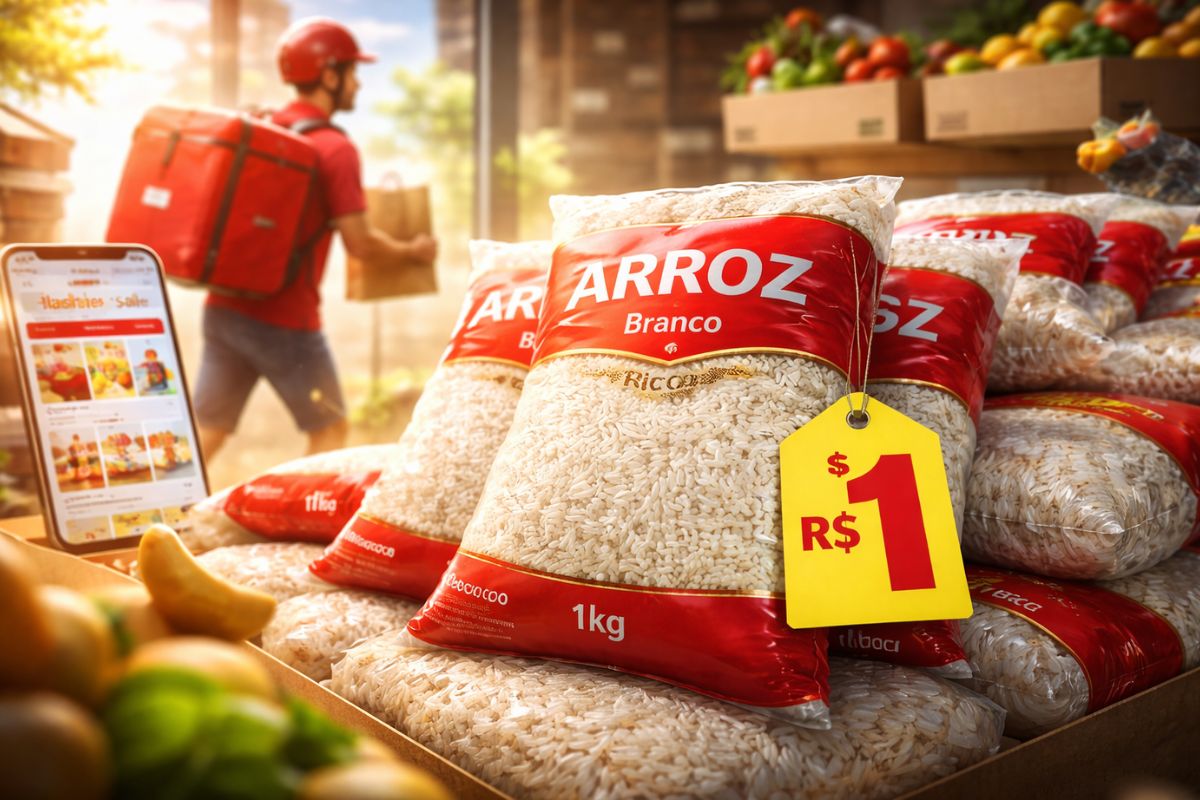


1 kg of Rice for R$ 1 in Flash Sale on iFood Marks the Start of a 100-Day Campaign with Daily Discounts on App Purchases.
At a time when budgets are tight and the basic grocery list weighs heavy at the end of the month, seeing a package of rice for R$ 1 on the iFood app immediately grabs attention. The offer appears as a short-term promotional action, in the format of a flash sale, aimed at those who buy groceries through delivery and need to ease the cost of daily purchases.
At the same time, the company takes advantage of the visibility of the rice for R$ 1 to announce a longer campaign: 100 days of daily discounts on different products and categories within the app. The idea is simple and straightforward: use a symbol of basic nutrition to attract attention to a calendar of ongoing offers, where users find different opportunities each day.
How the Rice Offer for R$ 1 Works
In practice, the action of rice for R$ 1 appears to the user as a flash offer within the app, linked to selected partner markets.
-
Brazilian Startup Turns Coffee Grounds into Plant-Based Leather, Cutting Water Use by Over 50 Times for High-Impact Sustainable Fashion

-
Eco Invest Auction Aims to Unlock $10 Billion in Investments, Focusing on Green Fertilizers, Critical Minerals, Batteries, and AI for Clean Industry in Brazil

-
Half of Brazilians Prefer Lower Taxes with Private Health and Education, While 44% Opt for Higher Taxes for State-Provided Services, Datafolha Survey Reveals

-
Brazil’s Most Expensive Toll Rises to R$ 40.60 on Route from São Paulo to the Coast, Nearly Matching Bus Fare to Santos




In general, promotions of this type have limited quantities, short activation windows, and clear rules within the app, such as limits on units per CPF and minimum purchase amounts to complete the order.
The highlighted product is a 1 kg package of rice, with a promotional price of R$ 1, applied directly in the cart when the customer meets the conditions of the offer.
The user needs to pay attention to the final purchase amount before confirming payment, checking if the rice discount for R$ 1 was indeed applied and if delivery fees or other items did not negate the benefit.
By using the rice for R$ 1 as a lure, iFood brings the campaign closer to an item that everyone recognizes and consumes, turning an everyday product into an entry point for the rest of the offers in the app.
The 100-Day Campaign of Daily Discounts
The rice for R$ 1 does not come alone. It is the “start” of a longer action, where the platform announces 100 days of daily discounts.
The proposal is that throughout this period, the user will always find some type of advantage available: in grocery purchases, restaurant orders, specific products, or benefits related to shipping, depending on the conditions presented in the app.
In the logic of the campaign, rice for R$ 1 serves as the first major highlight, generating curiosity and prompting the consumer to explore the other offers.
Once the initial impact wears off, other rotating promotions come into play, which may include basic pantry items, beverages, quick snacks, or weekend combos.
For those who frequently check the app, this structure of daily discounts creates a routine: open iFood, check what is on promotion that day, and decide if it’s worth fitting the purchase into the budget.
Why Rice for R$ 1 Draws So Much Attention
Among all grocery items, rice for R$ 1 piques immediate interest because it symbolizes something much larger than just a cheap product.
Rice is a staple food in millions of households, present in simple meals as well as weekend dishes, and has become an emotional thermometer of the cost of living.
When consumers see a 1 kg package of rice being sold for R$ 1 in a flash sale, the feeling is one of momentary relief, but also of contrast with the daily reality.
The promotion becomes almost a “breath of fresh air” within a landscape of high prices, especially for those closely monitoring monthly grocery spending.
By linking the 100-day campaign to this symbol, the company positions itself as an ally to the consumer’s wallet, even though the action is time-limited and depends on specific conditions to be realized.
Tips for Taking Advantage of Rice for R$ 1 Without Headaches
Even when the offer seems very tempting, like rice for R$ 1, some basic precautions help avoid disappointment. The first step is always to read the promotion’s conditions within the app, confirming:
If there is a limit on units per user for the rice for R$ 1.
If there is a minimum purchase amount to unlock the discount.
If the discount appears clearly in the cart before payment.
Another important point is to check the impact of fees. In some scenarios, the R$ 1 on the product is offset by higher delivery fees or the purchase of items the user didn’t intend to buy at that moment.
It makes a difference to check if the savings are real in the total order amount, and not just in the price of a single product.
Finally, it is worth remembering that flash offers tend to follow the criterion of while supplies last.
During peak times or in areas with high demand, it is possible that the rice for R$ 1 simply disappears from the app after a certain volume of purchases, without it necessarily indicating an error or technical issue.
What Rice for R$ 1 Represents for iFood and Partner Markets
From iFood’s side, the rice for R$ 1 is an aggressive marketing move that increases app usage time, encourages grocery delivery purchases, and strengthens the platform’s image as a channel for relevant promotions.
The company gains visibility, engagement, and consumption behavior data throughout the 100-day campaign.
For partner markets, the action can represent increased traffic, stock turnover, and the influx of new customers who may never have made purchases through the app.
Many users discover their neighborhood market within iFood precisely through actions like this, testing the service with the rice for R$ 1 and then returning for full new purchases if the experience was positive.
On the other hand, it’s a delicate balance: the consumer needs to feel that they are facing a real advantage, not a trick of the shelf.
If the rice for R$ 1 attracts attention but the rest of the purchase is too expensive, the perception of benefit can dissipate quickly.
Rice for R$ 1 Today, Shopping Habit Tomorrow
Campaigns like the rice for R$ 1 are part of a larger strategy to try to transform app visits into a daily habit.
The idea is simple: the user enters because of a big specific offer, discovers other promotions during the 100 days of discounts, and starts to consider delivery as a recurring option for stocking their home.
If the experience is good in terms of price, delivery time, and product quality, the specific promotion becomes the gateway to a new consumption behavior, where part of the monthly purchases is made through the app, rather than relying solely on physical visits to the grocery store.
In the end, rice for R$ 1 serves as a test for all parties: the consumer tests the app, the app tests the market’s appetite for grocery offers, and the markets test whether they can gain enough volume to offset the discounts.
With information from Gazeta de S. Paulo.
And you, would you consider taking advantage of a rice for R$ 1 in a flash sale of these 100 days of discounts, or would you prefer to continue shopping only at your local physical market?