






 Portuguese
  Spanish
  4 min of reading
  0 comments


Infrastructure Works And New Safety Devices Transform BR-163, A Strategic Highway For Agricultural Transport And Flow, Bringing Improvements To Pavement, Signage And Monitoring At Critical Points.
BR-163, one of the main federal highways in the country, located between the West and Southwest of Paraná, has been undergoing significant restructuring since the EPR Iguaçu concessionaire took over the management of 662 kilometers of the stretch in 2025.
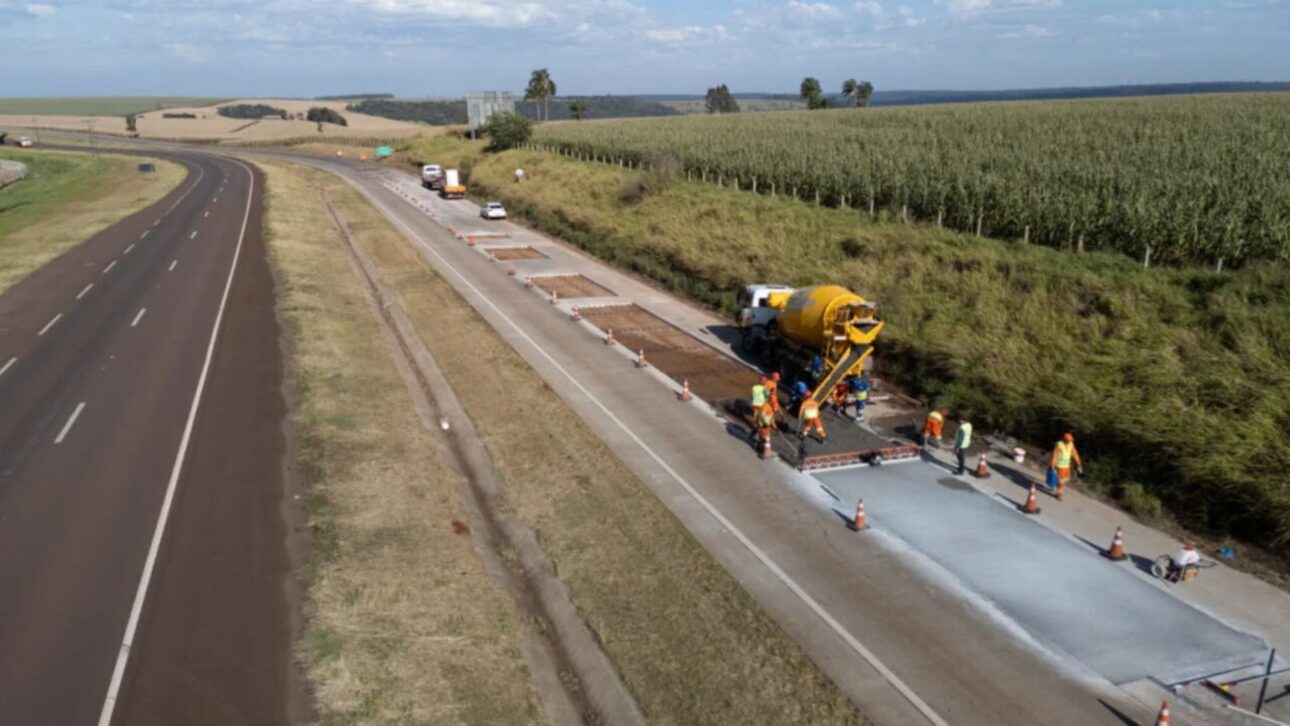
The requalification project includes the replacement of nearly 600 concrete slabs in areas of rigid pavement, along with the installation of new radars and the revitalization of signage in areas deemed critical for road safety.
BR-163: Logistical Corridor And Investment Focus
In just over two months of operation, EPR Iguaçu has already recovered 220 kilometers of highway.
-
Brazilian Joins Homeownership Consortium, Faces Decade of Dual Payments Totaling $141,000, Surpassing Traditional Mortgage

-
Land Rover to Halt Production in July, Putting 371 Jobs at Risk, as Chinese Automaker Negotiates to Convert Factory to 100,000 Vehicles Annually by 2027

-
Mexican Pest Threatens U.S. Cattle Herds at Historic Lows, Potentially Boosting Brazilian Beef Exports as Burger Prices Soar

-
Brazilian Freight Bill Progresses in Congress with $5,000 Minimum Wage, 70% Advance Payment, and Fines Up to $1 Million, as Agriculture and Industry Warn of Rising Costs and Legal Uncertainty


More than 190,000 square meters of horizontal signage have been revitalized, and over 1,920 vertical signage plates have been installed or substituted.
The process also included cleaning and mowing along approximately 1,500 kilometers.
The improvement schedule started in the Southwest region, considered strategic for the flow of agricultural production and for the state economy, according to logistics sector data.
Why Is BR-163 So Important?
It is a fundamental corridor for cargo transport between the states of Mato Grosso, Mato Grosso do Sul, and the Port of Paranaguá, responsible for the flow of a significant portion of the country’s grain production.
This intense flow justifies the focus on safety measures, such as the implementation of radars and reinforcement of signage.
Pavement Recovery: Replacement Of Concrete Slabs
The requalification of BR-163’s pavement has become necessary due to the identification of several segments with severe structural problems, especially in areas with rigid pavement.
According to the concessionaire, by July 2025, 140 concrete slabs have already been replaced, and the goal is to exceed 570 units by the end of the intervention.
Among the main stages of the recovery process are cutting, demolition, removal of compromised slabs, base preparation, concreting, chemical and wet curing, cutting of joints, and sealing, with inspections and tests at each phase.
In the flexible pavement segments, meaning where traditional asphalt is present, requalification work—such as pothole repairs, milling, and application of micro surfacing—already totals over 70 kilometers in length, utilizing approximately 30,000 tons of asphalt mixture.
The investments reflect noticeable improvements for those traveling along the highway.
“I frequently use the highway to assist damaged vehicles. I feel the road has already become safer. I see that it is still in the improvement process, but it is already more comfortable and peaceful to drive there”, reports electrician Igor Grapiglia, a local resident.
Road Safety And New Radars: Focus On Critical Points
Road safety, one of the project’s priorities, motivated the mapping of three points considered to be of higher risk on BR-163, all located in Southwest Paraná.
At km 138, where speed excesses are registered, speed bumps and lane alignment markers are being installed, along with a complete revitalization of horizontal signage.
These interventions aim to increase visibility and the understanding of drivers regarding the characteristics of the segment, reducing the risk of accidents.
At km 141, a return with a high incidence of accidents, a total revitalization of signage and improvements to the pavement are planned, measures that seek to improve the understanding of vehicle flow and orient drivers regarding road organization.
Km 160, another critical point, will be targeted for interventions such as signage readjustment, pavement improvement works, and the installation of devices to enforce speed reduction, aiming to enhance user safety, especially in winding sections.
These requalification actions complement plans for the installation of new radars at the three mentioned points, an initiative awaiting approval from the National Agency for Terrestrial Transport (ANTT) and the Federal Highway Police (PRF).
The electronic devices will monitor and enforce speed limits, aiming to reduce the number of incidents and ensure greater compliance with traffic rules.
After approval from the responsible agencies, the installation of radars will be officially communicated to the public.
Integrated Management And Dialogue With The Community
In addition to structural and technological improvements, the concessionaire maintains a constant dialogue with local communities and regional authorities, prioritizing emergency interventions pointed out collectively during technical meetings.
“Throughout the entire stretch, the safety of users is our absolute priority. We have been operating on various fronts, reinforcing the number of teams, to ensure efficiency and trafficability, providing a safer and more comfortable mobility experience for all“, states Marcos Moreira, president of the EPR Paraná Núcleo.
The executive director of the concessionaire, Silvio Caldas, explains that, in addition to the works, the inspection routine is ongoing to ensure the durability and efficiency of the pavement.
“The process of recovering rigid pavement is complex and must follow a series of steps to achieve the desired quality, durability, and safety. Throughout all stages, inspections and tests are conducted to ensure the quality of the work, including leveling, alignment, thickness, and pavement resistance, to support traffic efficiently and extend its lifespan“, he explains.





-

-

-

-

-

-

18 people reacted to this.