






 Portuguese
  Spanish
  4 min of reading
  0 comments


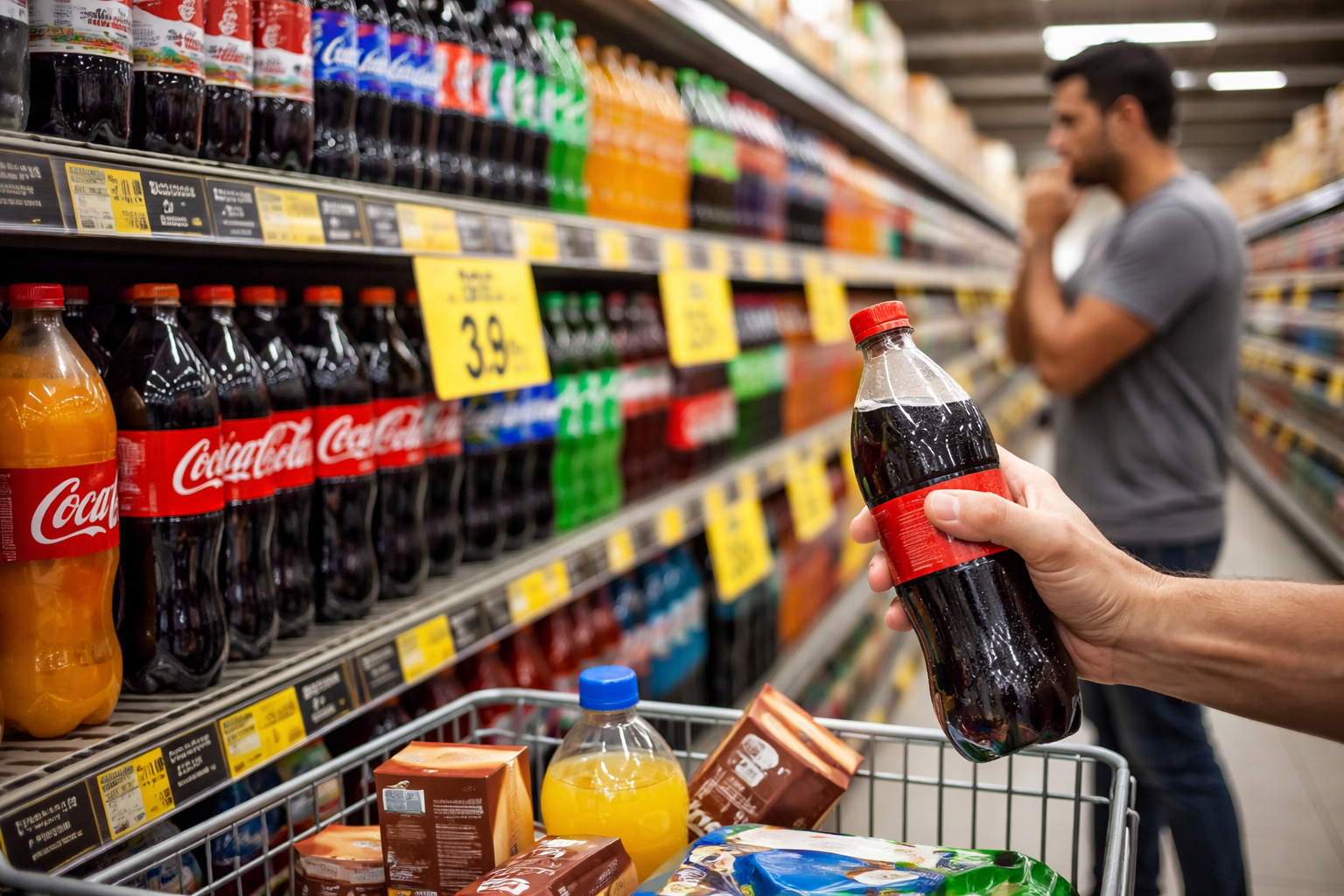
The New Tax Redefines Prices, Alters Consumption Patterns, and Expands the Debate on Social and Economic Impacts from 2026
A tax change with significant social and economic repercussions began to gain national prominence since 2024, following the progress of the tax reform in Congress. The Selective Tax, scheduled to come into effect in 2026, was designed to deter the consumption of products considered harmful to health and the environment. In this context, soft drinks and chocolate drinks are among the items most directly affected in supermarkets.
Currently, sugary drinks already account for an average tax burden of up to 40% of the final price. With the new rule, a rise of approximately 1.7 percentage points in the cost of these products is expected. This adjustment, though technically moderate, begins to reorganize prices and consumption expectations, especially among low-income families.
This movement highlights how tax policy seeks balance between revenue collection and guidance of habits, while also raising concerns about its practical effects on people’s daily lives.
-
Brazilian Joins Homeownership Consortium, Faces Decade of Dual Payments Totaling $141,000, Surpassing Traditional Mortgage

-
Land Rover to Halt Production in July, Putting 371 Jobs at Risk, as Chinese Automaker Negotiates to Convert Factory to 100,000 Vehicles Annually by 2027

-
Mexican Pest Threatens U.S. Cattle Herds at Historic Lows, Potentially Boosting Brazilian Beef Exports as Burger Prices Soar

-
Brazilian Freight Bill Progresses in Congress with $5,000 Minimum Wage, 70% Advance Payment, and Fines Up to $1 Million, as Agriculture and Industry Warn of Rising Costs and Legal Uncertainty


Tax Revision Reveals Direct Impact on Family Budgets
The application of the Selective Tax occurs uniformly, regardless of the consumer’s income. Therefore, the effect becomes regressive, as it affects more intensely those with less financial capacity. According to data from IBGE, low-income families allocate, on average, 22% of their monthly budget to food, while higher-income families commit only 7.6% to these expenses.
Thus, the increase in prices of soft drinks and chocolate drinks tends to pressure economically vulnerable households more intensely. Although the tax does not differentiate income brackets, the real burden of taxation manifests unevenly in family budgets.
Moreover, since these products are part of the daily consumption of a large portion of the population, the impact spreads rapidly, influencing food choices and monthly planning for families.
Economic and Social Implications of the Selective Tax
Although the declared objective is to reduce the consumption of sugary products, the lack of complementary measures raises doubts about the effectiveness of the policy in improving public health indicators. This is because soft drinks, industrial juices, and chocolate drinks are among the most consumed foods in Brazil, which broadens the scope of price increases.
In this context, the rise could stimulate undesirable adaptations in the market, such as the search for cheaper and equally harmful options. Thus, the expected effect on consumption habits may be limited, while the financial impact remains high.
This scenario demonstrates how tax regulation faces the challenge of balancing health objectives and social effects, especially when there is no differentiation by income profile.
Beverage Sector Assesses Risks to Revenue and Jobs
The sugary beverage sector holds significant relevance for the national economy, both in terms of revenue generation and formal job creation. Hence, there is concern that the change in the tax regime, starting in 2026, could trigger negative effects on the formal industry.
Experts warn that excessive price increases could create space for the informal market, reducing revenue collection and complicating sanitary control. This movement, if realized, could harm public health, as well as weaken companies that operate within the rules.
Thus, the debate around the Selective Tax extends beyond shelf prices and involves jobs, formalization, and the economic sustainability of the sector.
Consumption Adaptations and Market Reorganization
In light of the expected price increases, consumers tend to reorganize their purchasing habits. However, this adjustment occurs unevenly, as lower-income families have less capacity for substitution in their food budgets.
At the same time, the market may respond with changes in supply, prioritizing less taxed products or reforms that do not necessarily reduce health risks. In this way, the practical impact of the tax may diverge from the original objective.
This combination of factors reinforces how broad tax changes produce cascading effects that go beyond revenue collection.
The Selective Tax in a Broader Context
The implementation of the Selective Tax in 2026 integrates a broader effort of the tax reform to reorganize the tax system in the country. While seeking to correct distortions, the measure highlights tensions between fiscal justice, social protection, and economic stimulus.
Thus, the anticipated increase in prices of soft drinks and chocolate drinks comes to symbolize a larger debate about who pays for public policies and how these choices affect different segments of the population.
In light of this scenario, how to balance the objective of deterring health-harming products without further increasing financial pressure on low-income families?





-

-

4 people reacted to this.