






 Portuguese
  Spanish
  6 min of reading
  0 comments


Scientists have identified microbial communities beneath the Atacama, in deep layers linked to minerals capable of retaining moisture, revealing an underground environment that helps guide research into life in extreme regions of Earth and Mars.
Beneath the hyper-arid surface of the Atacama Desert, in northern Chile, scientists have identified microbial communities capable of persisting in deep soil layers, in areas with little or no direct connection to current atmospheric conditions.
The finding, described in the scientific journal PNAS Nexus, expands knowledge about microorganisms in extreme environments and is highlighted by researchers as a reference for studies on the search for signs of life on Mars.
The research analyzed sediments from the Yungay region, one of the driest areas in the hyper-arid core of the Atacama.
-
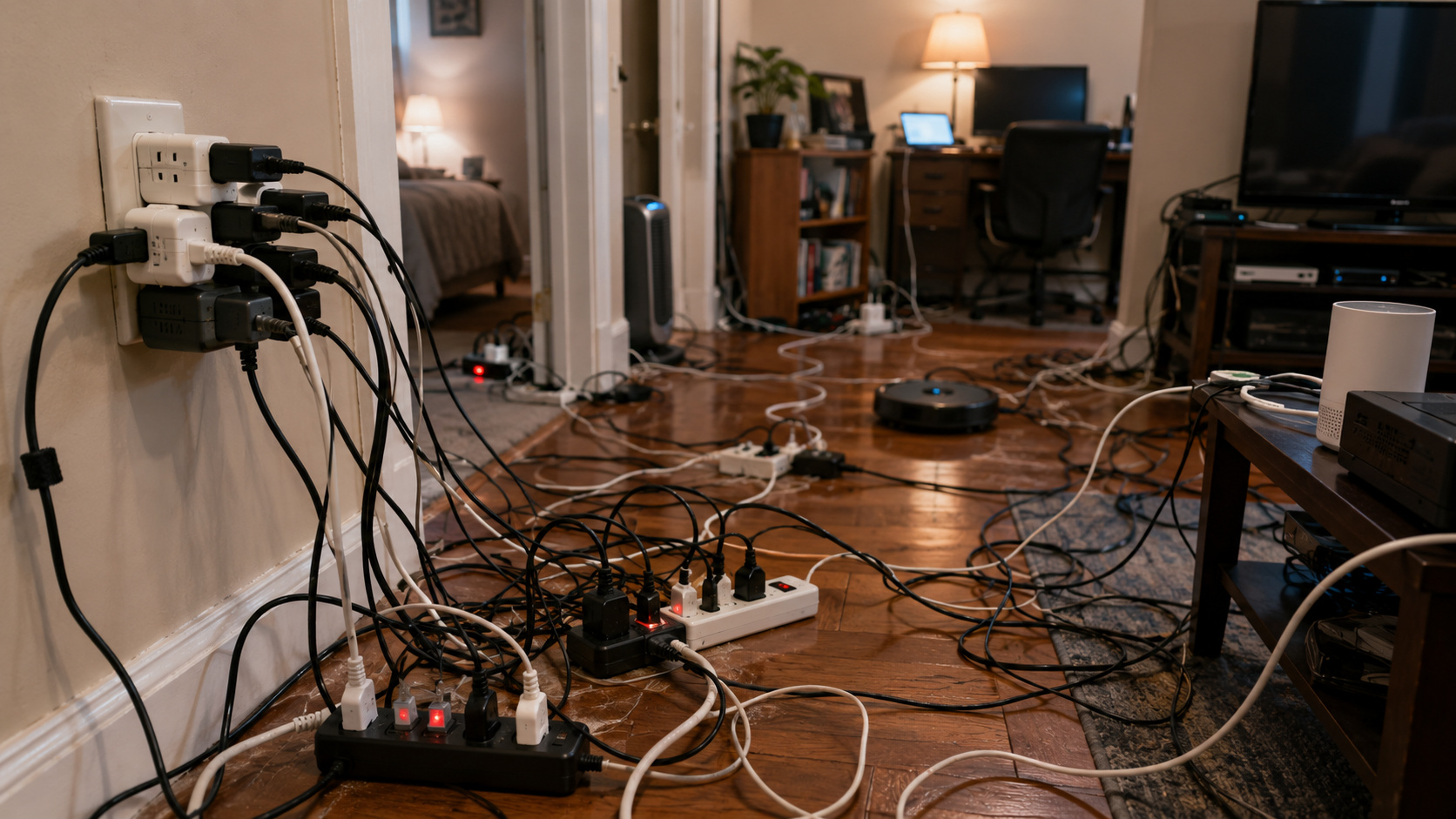
The invisible danger inside the house: plugging too many devices into the same outlet and spreading extensions throughout the rooms can overload the electrical network, silently heat wires, and turn a common habit into one of the leading causes of house fires.

-
Goodbye traditional laundry: Roborock launches washer and dryer with super hydrolysis, microbubbles, 99.99% sterilization, low-temperature drying, automatic detergent, app control, and cycles to remove stains, odors, mites, and bacteria from clothes.

-
It is now possible to generate energy without batteries: new flexible material transforms body heat into electricity and paves the way for more efficient, autonomous, and comfortable wearable devices, with the potential to revolutionize personal electronics in the coming years.
-
Leaving the charger plugged in without a phone consumes energy or is it a myth? Experts call the phenomenon “phantom consumption” and warn that dozens of devices on standby can add up on the bill over the year.


The team collected soil profile samples up to 4.20 meters deep and found signs of potentially viable microbial communities, especially in layers associated with gypsum-rich deposits.
The study was not limited to detecting DNA in the soil.
The researchers applied techniques for extracting intracellular DNA and genetic sequencing to differentiate signals related to preserved cells from genetic material dispersed in the environment.
With this procedure, they sought to evaluate whether the detected microorganisms could represent a resident community in the subsurface, and not just ancient traces transported from the surface.
The data indicate that nearly sterile deserts in the surface layer can harbor microbial niches at depth.
In the Atacama, extreme aridity, intense solar radiation, and low water availability restrict life near the surface.
Under certain mineral conditions, however, the subsurface can offer protection and small reserves of moisture to organisms adapted to this type of environment.
Microscopic life in the hyper-arid core of the Atacama
The Atacama Desert is used in research on the limits of life because it combines extreme dryness, high ultraviolet radiation, saline soils, and low availability of organic matter.
These characteristics make the region an environment of interest for studies in microbiology, geology, and astrobiology.
In the Yungay area, scientists observed that microbial communities changed according to depth and soil composition.
In the upper layers, up to about 80 centimeters, there was a predominance of bacterial groups associated with playa sediments, flat areas that may have been influenced by ancient episodes of temporary water accumulation.
Between approximately 80 centimeters and 2 meters, signs of microbial colonization significantly decreased.
According to the study, the high concentration of soluble salts may be related to the lower presence or detection of communities in this section.
In deeper layers, however, researchers again recorded microbial signs, mainly in alluvial fan deposits with the presence of gypsum.
This distribution suggests that the Atacama subsurface does not form a uniform environment.
Even in a region marked by aridity, variations in mineralogy and water availability associated with minerals can create microenvironments with distinct conditions for the preservation or survival of microorganisms.
Gypsum can retain moisture in extreme environments
Gypsum, a hydrated calcium sulfate, appears in the study as one of the relevant elements for the presence of microorganisms at depth.
In hyper-arid environments, minerals capable of retaining water or favoring the formation of microscopic moisture films can act as points of permanence for communities adapted to water scarcity.
According to the authors of the research published in PNAS Nexus, gypsum-rich deposits can offer an alternative source of water in the subsurface.
This moisture does not correspond to a large quantity of liquid water, but it can be associated with the mineral structure at levels sufficient for organisms specialized in extreme conditions.
Among the detected groups are bacteria from lineages known to tolerate environmental stress.
The work describes relevant changes in community composition along the profile, with a predominance of Firmicutes in shallower layers and the reappearance of microbial signs at depth, where the geological composition differs from the more saline stretch.
The expression microbial “oasis” at about 2 meters deep also appears in previous studies on the Atacama.
In research published in the journal Astrobiology, scientists identified bacteria and archaea in underground hypersaline substrates, with biomarkers around this depth.
In that case, salts such as halite, nitrate, and perchlorate were associated with the ability to capture moisture and favor microscopic conditions for microorganisms.
Discovery in Atacama helps study life on Mars
Interest in the Atacama is also linked to research on Mars.
The Martian surface is exposed to intense radiation, extreme temperatures, and low availability of liquid water.
For this reason, astrobiology researchers consider the subsurface one of the most relevant locations for the search for possible signs of past or present life on the planet.


The parallel with the Atacama does not indicate that there is life on Mars.
The research does not present this conclusion.
The study offers a terrestrial example of how microorganisms can persist in dry, saline, or nutrient-poor environments, especially when minerals preserve small amounts of water or record ancient environmental conditions.
The presence of gypsum is also relevant in this field because deposits of this mineral have already been identified on Mars.
On Earth, gypsum can be associated with the preservation of biological signs and the limited availability of water in arid environments.
The analysis of microbial communities related to this mineral in the Atacama, according to the researchers, can help define methods for searching for biosignatures outside Earth.
Deep sampling strategies, analysis of hydrated minerals, and the study of salts capable of retaining moisture are part of discussions about future planetary investigations.
The Chilean case reinforces, within this context, the need to observe subterranean environments, and not just the exposed surface.
What the study managed to demonstrate
The PNAS Nexus study found evidence of potentially viable microbial communities in the hyperarid subsurface of the Atacama.
This interpretation is based on the analysis of intracellular DNA and the relationship between the detected microorganisms and the geochemical characteristics of the samples.
The results, however, do not directly demonstrate that all these organisms were metabolically active at the time of collection.
In extreme environments, microorganisms can remain in states of low activity or dormancy for long periods.
The difference, according to the methodology described by the authors, is that the adopted procedures help reduce the possibility that the found signals are merely superficial contamination or ancient DNA unrelated to preserved cells.
The team also evaluated the influence of the soil’s chemical composition.
The variation of salts, the organization of layers, and the presence of gypsum help explain why signs of life decrease at some depths and reappear at others.
The combination of genetic and geochemical data strengthens the analysis, although the method’s own limitations indicate the need for further investigations.
The finding does not characterize the Atacama as an environment abundant in life.
What the data shows is that, even in a region whose surface imposes strong biological restrictions, the subsurface can contain discrete, protected niches associated with specific minerals.
Signs of life beneath Earth’s driest desert
The image of an underground “oasis” contrasts with the dry landscape of the Atacama, but the term does not refer to a hidden lake or a cavity filled with visible organisms.
In the context of the cited studies, it refers to biological signs and microscopic communities associated with deep layers, where minerals and salts can influence water availability.
This distinction avoids interpretations beyond what the data allows.
The life detected in the Atacama subsurface does not prove that Mars is inhabited, nor does it confirm the existence of active microorganisms on another planet.
Still, according to researchers in the field, the result shows that the search for signs of life in extreme environments needs to consider rocks, salts, hydrated minerals, and protected surface layers.
The Atacama remains a reference area for research on the limits of the biosphere.
Samples taken from its deep layers help test instruments, methods, and hypotheses used in astrobiology studies.
Instead of focusing the investigation solely on superficial signs, recent work expands attention to underground refuges with minimal resources.
The discovery also contributes to the understanding of terrestrial deserts.
Apparently empty regions can contain invisible communities, separated from sunlight and dependent on chemical interactions between minerals, salts, and traces of water.
This type of knowledge is of interest to planetary science, microbial ecology, and the study of organism adaptation to extreme conditions.





Be the first to react!