






 Portuguese
  Spanish
  5 min of reading
  0 comments


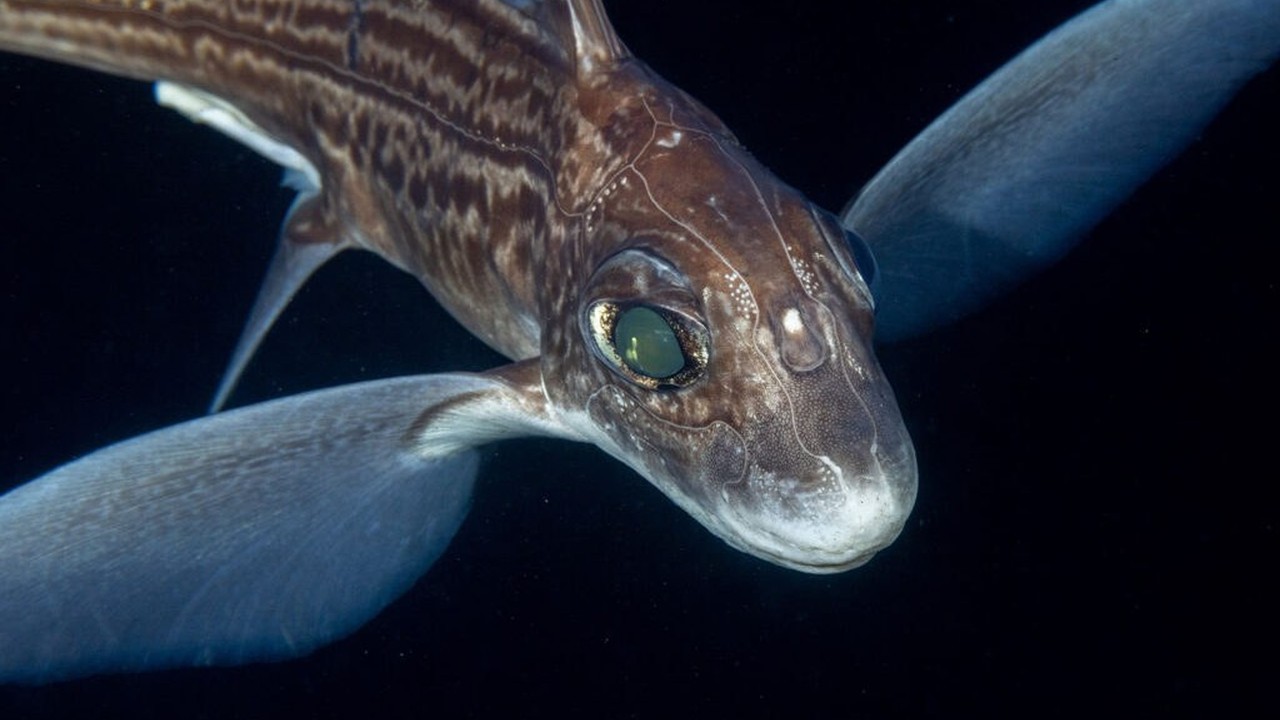
In the deep waters of the Coral Sea, in Australia, researchers have described a new species of ghost shark, a fish with huge eyes and a prehistoric face that looks like it came straight out of a deep-sea creature movie.
The deep ocean is a nursery of creatures that defy imagination, and the newest of them has a ghostly name. Researchers have described a new species of ghost shark, found in the Coral Sea Marine Park, in Australia. Despite the nickname, the creature is not exactly a shark, but a distant relative, with such a strange appearance that it seems to belong to another era in the history of life on Earth.
The scientific name for this group is chimera, and it suits the creature. They are smooth-bodied fish with large, bright eyes, a prominent snout, and a somewhat ghostly face that earned them the popular nickname. They live in the dark depths of the ocean, far from sunlight, in an environment so inhospitable that very few people in the world have ever seen one up close. Each new species described is a rare window into this submerged world.
A bizarre relative of sharks
Chimeras are distant cousins of sharks and rays, having diverged from them hundreds of millions of years ago, following their own evolutionary path. That’s why they carry this appearance that is both familiar and strange, with the cartilage skeleton of sharks, but shapes and details that seem from another planet. Looking at a ghost shark is, in a way, peering into a very ancient branch of the tree of life that has survived to this day.
-
In the USA, thousands of people are being paid to wash dishes and clean the house with body cameras, every movement turning into data to train robots to imitate humans, in a new “digital gig” that could redefine the future of domestic work.

-
At 22 years old, a young person from Recife creates an artificial intelligence startup with a team barely over 25, serves giants like Bayer and Ipiranga, earns millions without taking a cent from investors, and transforms a young company into a national AI phenomenon.
-
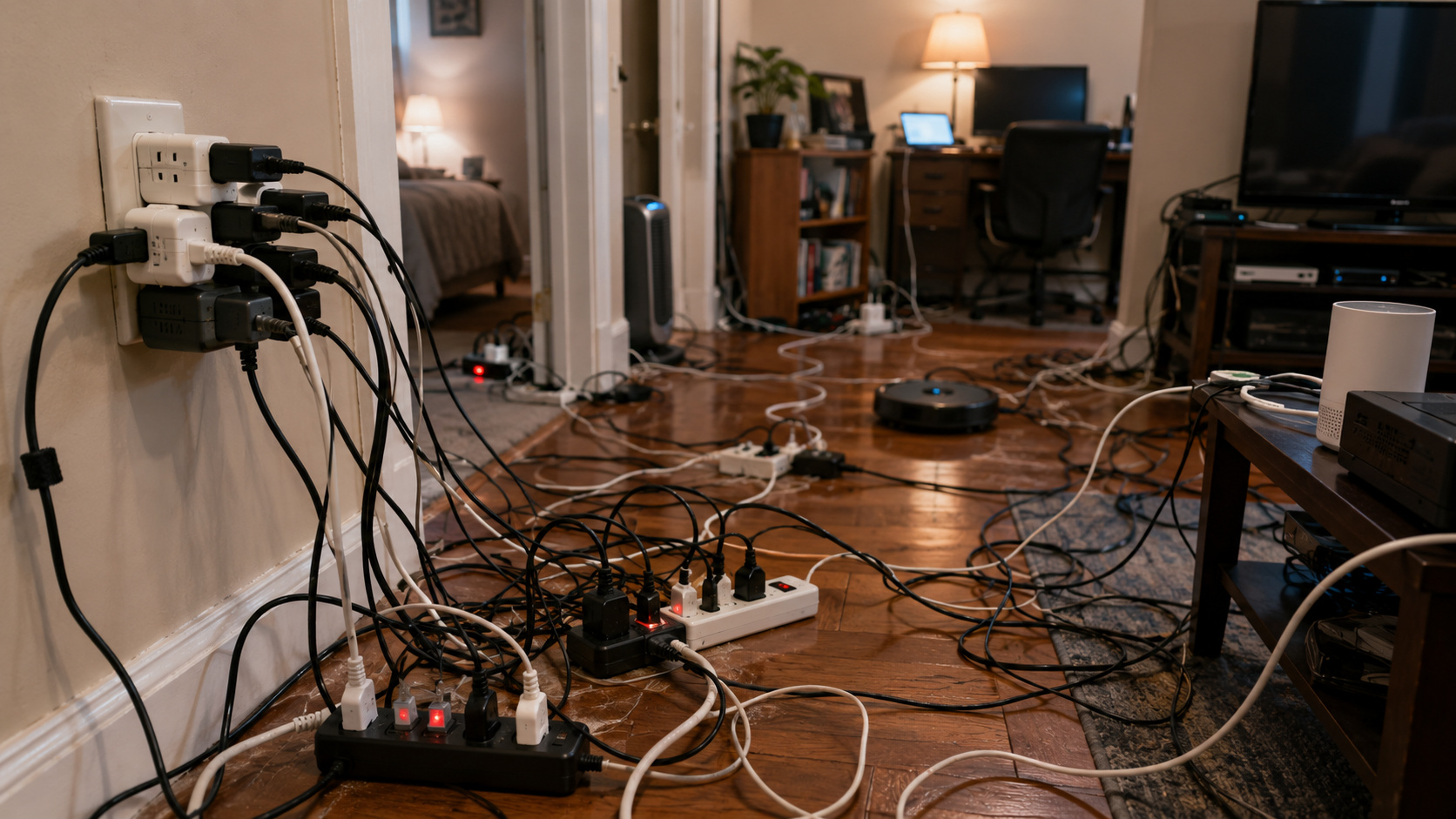
The invisible danger inside the house: plugging too many devices into the same outlet and spreading extensions throughout the rooms can overload the electrical network, silently heat wires, and turn a common habit into one of the leading causes of house fires.

-
Goodbye traditional laundry: Roborock launches washer and dryer with super hydrolysis, microbubbles, 99.99% sterilization, low-temperature drying, automatic detergent, app control, and cycles to remove stains, odors, mites, and bacteria from clothes.



I confess I have a special fascination for these creatures that seem like living fossils. They have traversed entire geological eras, hidden in the depths, while the world above changed completely. Finding a new species of chimera is like discovering that this ancient branch still holds surprises, that even such a well-studied group continues to have unknown members waiting to be revealed in the darkest parts of the ocean.
These fish also have a curious detail that reinforces how special they are. Instead of the mouth full of sharp teeth we imagine in a relative of sharks, chimeras have dental plates that resemble a beak, used to crush small hard-shelled animals they find on the seabed. This type of adaptation reveals how each deep-sea creature has specialized in surviving in its own way, taking advantage of resources that other animals ignore. Describing a new species of ghost shark is, therefore, adding another piece to this immense puzzle of solutions that evolution has been inventing over hundreds of millions of years in absolute darkness.

Life in absolute darkness
The place where this fish lives is one of the most extreme environments on the planet. In the depths of the ocean, sunlight simply does not reach, the temperature is freezing, and the water pressure is capable of crushing equipment. To survive there, creatures have developed impressive adaptations, such as huge eyes to capture any trace of light and keen senses to find food and partners in total darkness.
The large, bright eyes of the ghost shark are precisely one of these adaptations to the dark. Everything in its body tells a story of survival in a world without light, where every detail of its anatomy serves a purpose. Studying these creatures helps scientists understand the limits of life and how it shapes itself to the most hostile conditions, revealing biological solutions that would never arise in a more mild and illuminated environment. It’s as if each deep-sea inhabitant is a small living laboratory of adaptation, testing, over millions of years, what works or not in one of the most inhospitable places on the planet.

Why we are still discovering so much in the sea
It may seem strange that, in a century with so much technology, we are still discovering large species like a deep-sea fish. But the deep ocean is so vast and difficult to explore that it remains practically unknown. Reaching there requires submarines, robots, and expensive equipment capable of withstanding the crushing pressure, and each expedition covers only a tiny piece of this immense submerged world.
That’s why discoveries like the ghost shark in Australia keep happening. The more scientists can descend and explore, the more new creatures appear, a reminder that the seabed is probably the largest unexplored frontier on our own planet. Each new species is proof that we still know very little about who shares the Earth with us down there, in the dark.

The ghost that lives in the depths
I imagine this ghost shark silently gliding through the darkness of the Coral Sea, with its huge eyes and its face from another era, living its entire life in a place that almost no human being will ever visit. It’s one of those creatures that remind us of how much our planet still holds strange and wonderful things far from our eyes.
Describing a new species like this is not just adding another name to the science list, it’s giving a face to a secret inhabitant of the depths and expanding our portrait of life on Earth a little. The ghost shark from Australia proves that the most fascinating creatures aren’t always in distant worlds; sometimes they live right here, at the bottom of our own ocean, waiting for someone brave enough to descend and find them.
Isn’t it amazing to think that such strange creatures are living right now in the darkness of the ocean floor?





Be the first to react!