






 Portuguese
  Spanish



Central Pivot Irrigation Initiative Revolutionizes Saudi Sustainable Agriculture, But Sustainability Challenges Remain
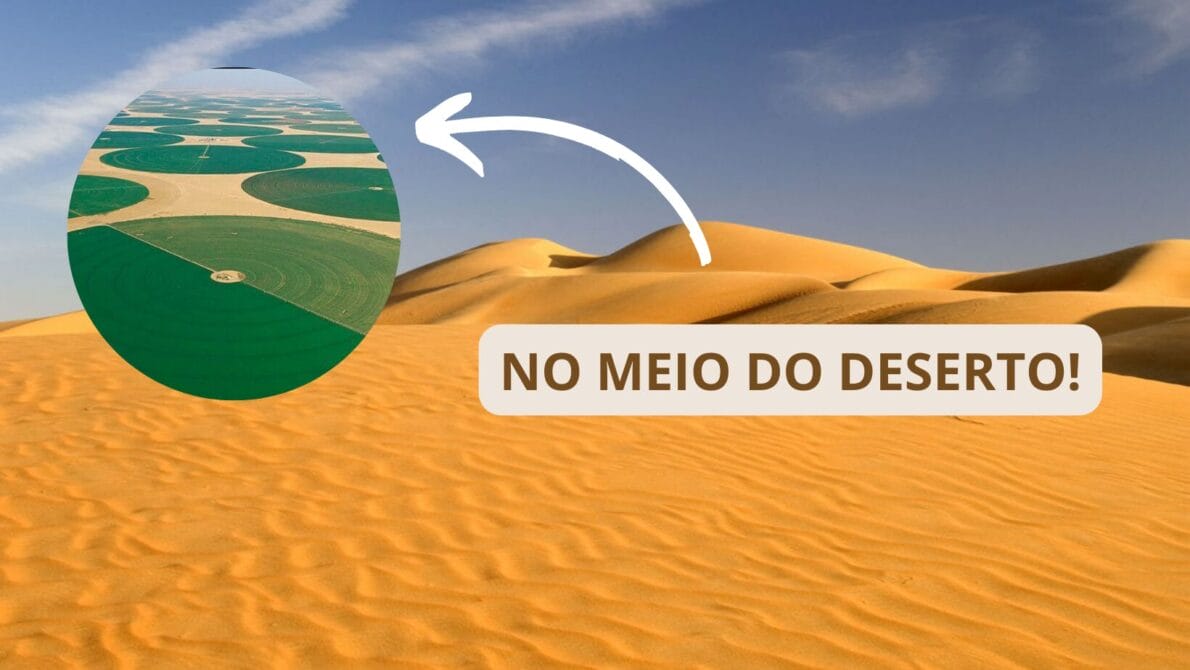
Saudi Arabia, the 13th largest country in the world with over 34 million inhabitants, is widely known for its vast oil reserves. However, a significant transformation is underway: the reforestation of the desert through an ambitious irrigation project. This project, located in the Al-Ahsa depression in the northwest Arabian Peninsula, is revolutionizing Saudi agriculture.
Natural Challenges and Innovative Solutions for Reforestation
With 95% of its territory covered by arid deserts and temperatures reaching 50°C in the summer, Saudi Arabia faces enormous challenges for agriculture. Historically, the country has depended on imports for 70% of its food consumption. However, thanks to central pivot irrigation, once barren areas are becoming productive.
The Central Pivot Irrigation System for Saudi Desert Reforestation
The central pivot irrigation technique, invented in the 1940s, involves sprinklers mounted on galvanized steel or aluminum pipes, which are moved by towers with wheels in a circular pattern. Each system covers about 50 hectares, allowing for efficient irrigation of large areas. This method, refined over the years, minimizes water loss through evaporation, a crucial factor in arid regions.
-
Astronaut from Artemis II steps down after mission to the Moon and decision surprises after a record of 406,771 km, a historic 10-day journey, and an unprecedented achievement for Canada.

-
A fossil kept for years in a small museum in Montreal concealed 450-million-year-old soft tissue, a discovery that has only happened once before in history.

-
Three teenagers transform cut cardboard into Japanese origami-style packaging that promises to retire styrofoam and bubble wrap, win a $12,500 prize, and target giants like Amazon, FedEx, and Home Depot after a robot motor arrived broken.

-
The large jar blender has a rival: Oster Ultra Power bets on 1,000 W, six stainless steel blades, and two portable cups with leak-proof lids.




Since the 1960s, the area of arable land in Saudi Arabia has grown from 400 km² to over 35,000 km². The Al-Ahsa basin alone represents 7,800 km² of this total. Satellite images show the desert transformed into green fields, cultivating alfalfa, barley, and corn.
Sustainability Challenges
Despite the successes, the reforestation project faces significant challenges. Intensive irrigation is rapidly depleting underground water resources, which are not replenished due to low precipitation. Experts warn that the aquifers may dry up in 50 to 60 years, threatening the long-term viability of agriculture in the Saudi desert.
To address these challenges, the Saudi government is implementing the Vision 2030 plan, which aims to diversify the economy and reduce dependence on oil. Among the initiatives are a ban on wheat cultivation due to its high water consumption and the adoption of agricultural monitoring technologies to optimize the use of water resources.
Additionally, Saudi Arabia has been investing in the purchase of agricultural land abroad, securing food production reserves in countries such as the United States, China, and Senegal. The country is also promoting tourism, issuing visas to foreign visitors since 2019, in an effort to diversify its revenue sources.
The Future of Saudi Agriculture with Reforestation
The adoption of advanced irrigation systems has brought significant benefits, but the depletion of water resources underscores the need for sustainable solutions. Saudi Arabia is at a crossroads: it either adapts to new environmental and economic realities or risks seeing its agricultural projects become unviable.
The Saudi effort to transform deserts into arable land is a remarkable example of innovation in the face of extreme conditions. However, long-term success depends on the country’s ability to sustainably manage its natural resources and diversify its economy. With the right measures, Saudi Arabia can continue to be an agricultural powerhouse, even in a global scenario of increasing concern for environmental sustainability.


