Portuguese
  Spanish




A U.S. Company Is Creating A Long-Range Missile With Impressive 1,609 Km Range And Capacity To Carry 454 Kg Of Payload
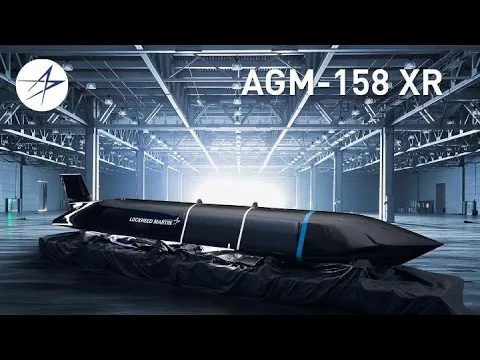
A Lockheed Martin, one of the largest defense companies in the United States, presented its latest advancement in the field of long-range missiles. During the Air, Space & Cyber 2024 conference held in Washington, the company unveiled the AGM-158 XR, an enhanced version of the Joint-Air-to-Surface Standoff Missile (JASSM) line. This new missile is designed to hit targets at extreme distances and carry a warhead of up to 1,000 pounds, making it one of the most powerful and effective in its class.
The JASSM series is already widely used by the United States Air Force (USAF) for long-range strike missions, and with the new AGM-158 XR variant, Lockheed Martin aims to further extend the range and efficiency of these missiles.
The JASSM line also includes naval versions, known as Long-Range Anti-Ship Missiles (LRASM), used by the U.S. Navy in maritime strike operations.
-
China Unveils Laser Weapon Capable of Instantly Neutralizing Military Drones, Marking a Significant Advancement in Air Defense Technology

-
U.S. Navy’s Ticonderoga-class Cruiser Becomes a 9,800-Ton Missile Fortress with Advanced Aegis System Capable of Tracking Hundreds of Targets

-
France’s Charles de Gaulle: The Sole Nuclear-Powered Aircraft Carrier Outside the US, Weighing 42,500 Tons and Equipped with Two Atomic Reactors

-
The military spaceplane that almost took the Cold War into orbit: Boeing X-20 Dyna-Soar was designed to re-enter above Mach 20, fly for up to 40 hours, land like a plane, and transform Titan rockets into a gateway to a new era of orbital warfare.



One of the most notable features of these missiles is their low detection capability, allowing them to be launched from aircraft and ships without being easily detected by enemy radars.
The AGM-158 XR’s ability to strike targets at distances of up to 1,000 miles (approximately 1,600 km) compares favorably to renowned missiles such as the Tomahawk, significantly enhancing the strategic power of the Air Force.
The missile’s modular design allows for continuous upgrades, with cutting-edge avionics and sensors, ensuring that it remains effective and relevant in future missions.
Versatility and Modularity

One of the key innovations of the AGM-158 XR is its modularity. John Hill, general manager of Lockheed Martin, highlighted that the missile is designed to be easily modified and updated. “As we make modifications, we are going digital. We are leveraging the existing mission planning framework and software architecture“, said Hill during the presentation.
This flexibility allows the AGM-158 XR to be adapted to different types of missions, as well as incorporate real-time improvements as it moves through the production line.
This ensures that field fighters can rely on the most modern and effective weaponry, regardless of the mission circumstances.
Additionally, the new variant features a series of improvements in its coating, which is now semi-gloss black.
According to Lockheed Martin experts, this change was designed to reduce the missile’s visual signature, making it less detectable by enemy monitoring systems.
Impact on Combat Operations
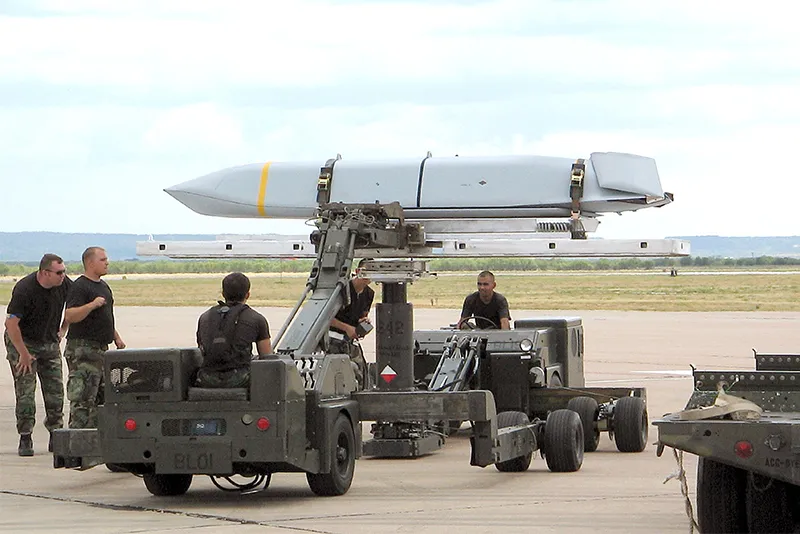
The AGM-158 XR’s long-range capability brings significant advantages for launch platforms such as F-16, F-15, and F-18 fighters, as well as strategic bombers.
The missile has been developed to increase the survival capability of these aircraft, allowing them to operate at a safe distance from their targets, away from anti-aircraft defenses.
One of the most promising strategies for using the AGM-158 XR is its integration with the “Rapid Dragon” system, a technique that uses cargo planes to launch missiles over long distances. As these aircraft are more vulnerable than fighters or bombers, the missile offers the advantage of being launched hundreds of miles away from the target, increasing crew safety and mission effectiveness.

Outlook for the Future
Although Lockheed Martin has revealed many details about the AGM-158 XR, the missile has not yet been tested in real combat conditions.
The company plans to produce about 1,100 units per year, combining AGM-158 ER and XR variants, based on demand from the USAF and foreign armed forces.
However, since the XR variant is internally funded, it will take a few more years before it undergoes deep flight testing.
Until then, Lockheed Martin will continue to enhance its modular design and combat capabilities, ensuring that this missile becomes one of the key pillars of air defense for the U.S. and its allies.