






 Portuguese
  Spanish
  7 min of reading
  0 comments


According to information from G1, the Prime Minister of India, Narendra Modi, made an unusual appeal to the population this Friday (15) asking citizens to reduce fuel consumption, limit gold purchases, avoid international travel, and adopt remote work whenever possible. The guidance reflects the growing pressure on the Indian economy caused by the crisis in the Strait of Hormuz, through which about half of the oil imported by the country passes.
The appeal was made by Narendra Modi, Prime Minister of India, in an unusual change of tone for a leader accustomed to growth-stimulating speeches. When the measures began to be implemented: this Friday (15), Indian state companies increased gasoline and diesel prices for the first time since the beginning of the crisis, raising the cost per liter in cities like New Delhi. How the crisis affects India: the country imports about 90% of the oil it consumes and spends more than US$ 72 billion per year on gold imports, two factors that drain foreign currency reserves and make the economy vulnerable to any disruption in energy flow. Why the situation is urgent: the Strait of Hormuz, partially paralyzed since the beginning of the conflict involving Iran, is the route through which historically half of India’s oil imports transit, and without alternatives on a sufficient scale, the government seeks to reduce internal demand to avoid a collapse in external accounts.
In addition to the increase in fuel prices, the Indian government raised the import tax on gold from 6% to 15% in an attempt to discourage the purchase of the metal. Modi also began a diplomatic trip this Friday to the United Arab Emirates and European countries with energy security as the central theme of the talks. Upon arriving in Abu Dhabi, the Prime Minister highlighted the importance of keeping the Strait of Hormuz open and in compliance with international law.
A country that depends on 90% imported oil
India’s energy vulnerability is structural and predates the current crisis. The country buys about 90% of the oil it consumes from abroad, a dependency that turns any fluctuation in the global energy market into a direct impact on the domestic economy. When barrel prices rise or when transport routes are blocked, India feels the effect almost immediately in fuel costs, the price of transporting goods, and food inflation.
-
Embrapa takes cashew, peanuts, and sesame to the world’s largest seed bank in Norway, where Brazil has already stored more than 8,000 samples since 2012 against pests and climate change.

-
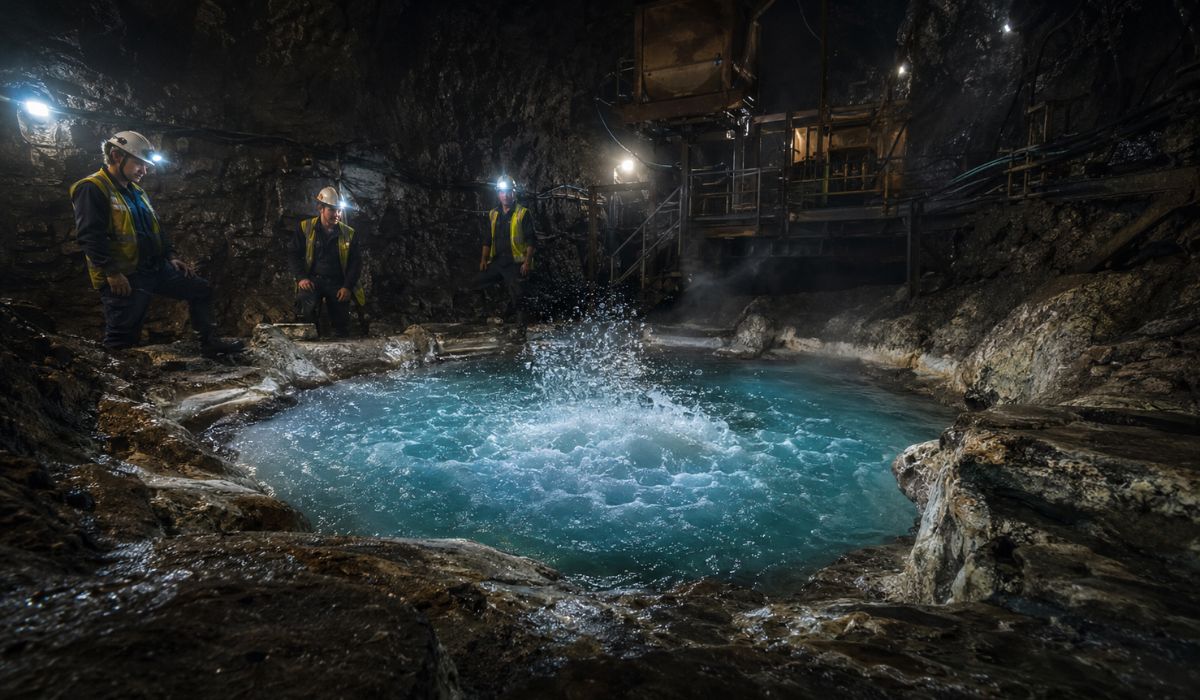
Almost 1 km beneath Albania, miners find an underground “jacuzzi” of nearly pure hydrogen, with bubbles emerging from a pool inside a chrome mine and the potential to reveal a rare natural reservoir beneath Europe.

-
After working as a waiter for ten years, he borrowed R$ 500 from his brother, created 40-minute lines with an açaí cart on the street, and today runs a farm with 600,000 trees in Pará and a network worth R$ 45 million.
-
Italian community secretly excavated an 8,500 m² underground temple 30 meters deep for 16 years, opened decorated halls under a mountain, and was only discovered after a tip-off and police entry.



The Strait of Hormuz is the most sensitive point in this supply chain. Historically, about half of India’s oil imports pass through this maritime route between the Persian Gulf and the Gulf of Oman. With the strait partially paralyzed by the conflict involving Iran, India lost access to a significant portion of its energy supply without having immediate alternatives on a sufficient scale. It is this combination of extreme dependence and route disruption that led Modi to take measures that no Indian prime minister had adopted with such intensity.
More expensive gasoline and rising cooking gas
The effects of the crisis have already reached the wallets of Indians. State-owned companies increased gasoline and diesel prices this Friday, raising the cost per liter in cities like New Delhi. The adjustment comes after previous increases in the price of cooking gas, an essential fuel for millions of families who depend on it to prepare their daily meals. In a country where a large part of the population lives on a tight budget, each increase in energy prices has a cascading effect on inflation.
The rising cost of fuels directly affects the transportation of goods, which in India relies heavily on diesel-powered trucks. When diesel prices rise, freight costs rise along with them, and the prices of food, construction materials, and practically all consumer goods follow suit. For the urban population already dealing with high inflation, the increase in fuel prices adds pressure that has no obvious short-term escape valve.
Gold: US$ 72 billion draining Indian reserves
Modi’s guidance for the population to reduce gold purchases reflects an economic peculiarity of India that few countries share. In 2025, India spent more than US$ 72 billion on gold imports, a value that represents a massive outflow of dollars from the country’s foreign exchange reserves. Gold has deep cultural importance in Indian society, being used in weddings, religious festivals, and as a store of value by families of all social classes.
To curb this outflow of foreign currency in a time of crisis, the government raised the import tax on gold from 6% to 15%. The goal is to make the metal more expensive in the domestic market and discourage purchases, preserving dollars that the country needs to pay for its oil imports. However, taxing gold in India is a politically risky measure: in a country where the metal holds almost sacred value in family ceremonies, any restriction on access generates popular resistance.
Remote work as an energy policy
Asking the population to work from home may seem like an unusual measure for an oil crisis, but the logic is straightforward. Every worker who stops commuting daily to the office saves car, bus, or train fuel, reducing the aggregate demand for energy at a time when every liter of gasoline and diesel weighs on India’s external accounts. Multiplied by millions of workers in cities like Mumbai, Bengaluru, and New Delhi, the potential impact on fuel demand is significant.
The guidance to avoid international travel follows the same logic of containing expenses in foreign currency. Every Indian traveling abroad spends dollars or euros that the country needs to import oil. In normal times, outbound tourism is a manageable outflow of foreign exchange. With foreign reserves under pressure and the rupee losing value, the government considers that reducing international travel is a way to preserve strong currency for essential imports.
The reaction on the streets: skepticism and misunderstanding
Modi’s appeal found a population divided between those who support the precaution and those who question the lack of more concrete measures. In cities like Kolkata, residents claim not to fully understand the scope of the guidelines, and young workers say they already live with a restricted consumption pattern and do not see how to reduce it further. For those earning minimum wage who already do not travel, do not buy gold, and use public transport, the appeal seems directed at a social class that is not theirs.
Part of the urban population also criticizes the political timing of the announcement, made right after the general elections. For this group, the prime minister’s speech lacks practical measures explaining how India intends to deal with the prolonged increase in energy costs and currency pressure. Still, there are favorable voices: some professionals assess that the call for austerity may be preventive in the face of an uncertain international scenario and that reducing consumption now may prevent more severe consequences in the future.
Modi travels to the Emirates and Europe in search of energy security
Alongside internal measures, the Indian government reinforces its diplomatic strategy. Modi began a trip this Friday to the United Arab Emirates and European countries with energy security as the main agenda. In Abu Dhabi, the prime minister emphasized the importance of keeping the Strait of Hormuz open and in compliance with international law, signaling that India treats the blockade as an economic survival issue and not just geopolitics.
The talks with Emirati authorities are expected to include agreements on oil, gas, and investments that help India reduce dependence on vulnerable routes. The long-term goal is to diversify suppliers and increase the country’s energy resilience, but in the short term, India needs immediate relief for a crisis that has already made fuels more expensive, pressured the currency, and forced the government to ask the population to change consumption habits.
A country between growth and austerity
India has asked its population to work from home, avoid travel, reduce gold purchases, and consume less fuel while the Strait of Hormuz remains blocked. The country that imports 90% of the oil it consumes, spends $72 billion on gold per year, and has the rupee under pressure faces a choice that few governments like to make: asking for austerity in an economy that still needs to grow. The population’s response will be as decisive as any diplomatic agreement Modi makes in Abu Dhabi or Europe.
What do you think about a government asking the population to work from home and avoid travel to contain an energy crisis? Tell us in the comments if you believe this approach would work in Brazil, how you assess India’s dependence on imported oil, and if austerity measures are effective when they affect those already living on a tight budget. We want to hear your opinion.




Be the first to react!