Portuguese
  Spanish


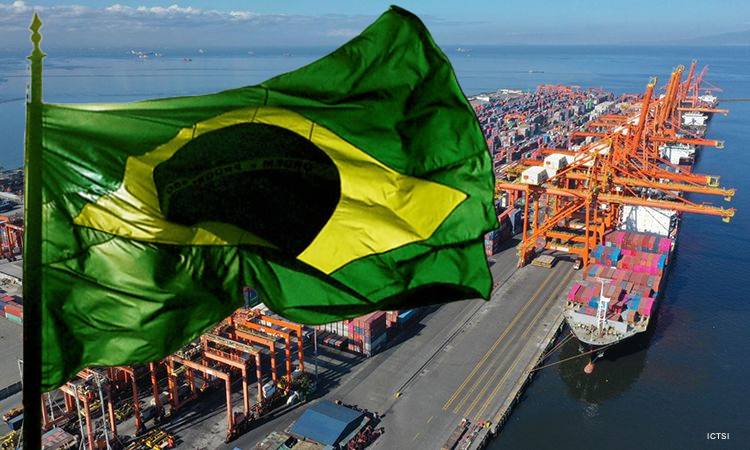

Maximizing the Use of the Made in Brazil Product, Attempting to Export What Is Possible from Our Industry, and Substituting Imports When Feasible May Be the Key to Mitigating the Effects of the Crisis at This Moment
The scenario that the Brazilian industry faces at the end of this semester due to the crisis is still very confusing, with companies returning to operations after preventive breaks against covid-19 and others suspending operations indefinitely. The expected decline in Brazil’s GDP has already surpassed 5%. So let’s talk a little about the national product
Other Interesting Articles
- Construction of a Refinery at Porto do Açú-RJ Was Approved This Week by an American Oil Company, Check Here.
- The Espírito Santo Already Has Several Approved Construction Projects and Will Generate About 8,000 Jobs After the Pandemic Crisis. Learn More
How to Face the Crises in the Long Term and Safeguard Against New Economic Surprises? One of the competitive advantages that have become clear at this moment is local production of industrial inputs. With the nationalization of raw materials, companies become less susceptible to exchange rate fluctuations and logistical restrictions.
In a scenario of difficulties for air and maritime transport, having inputs produced in the national territory brings peace of mind. Stopping imports and starting local production is only possible through long-term planning, trust in your subsidiaries, and conscious hiring for strategic positions. Obtaining the necessary certifications is also a crucial step in gaining market leadership.
-
Brazilian Entrepreneur Expands Automotive School to 48 Locations, Acquires Electric Car Company to Lead Technical Training in Latin America

-
Former Roma and Fiorentina Player Filipe Gomes Returns to Brazil to Found Empório do Galeto, Aiming for $10 Million Revenue by 2026
-
Havaianas: From Humble Beginnings to a $900 Million Global Fashion Icon
-
Innovative Mortar Technique Enhances Porcelain Tile Stability, Reduces Buckling and Detachment Risks, and Provides Durable Finish Under Heavy Use




Another sensitive point for companies at the moment is exchange rate variation, as the tie of imports to the dollar or euro proves to be a ticking time bomb. On the other hand, export, for those who can do it, represents an advantage for the industry engaged in the international market, as a very profitable activity that should be fostered in the recovery of this crisis.
If an industry maintains a well-established supply chain, and has inputs in stock, it is possible to continue serving its customers in a short period of time and without considerable price variations. A great saving in the midst of the crisis.
Currently, I manage sales in the industrial sector of a valve manufacturer and I realize that the fact of producing sealing diaphragms in Brazil with the capacity for export to different countries has been an advantage. Even amid national uncertainty, the possibility of expanding external sales arises, which could even lead to new hires.
When an industry imports an input, it is at the mercy of numerous variables – even theft of already negotiated loads, as we have seen lately, in what has been classified as “modern piracy.” By investing in the nationalization of this product, it is even possible to customize the input to better meet the client’s specific application.
The National Confederation of Industry (CNI) has endorsed this trend, stating that nationalization, which was once viewed as a protectionist measure in the past, is now an important industrial policy for the country: incorporating technologies, developing and innovating new products and business models, as well as diversifying into sectors and activities with higher added value.
The tip would be to maximize the use of the Made in Brazil product, attempt to export what is possible, and substitute imports when feasible. This consistent investment will be a lifeline for the country’s economy – but it requires courage and long-term decisions.
*Mateus Souza is the General Sales Manager in the industrial area of GEMÜ Valves, Measurement, and Control Systems.
About GEMÜ – The subsidiary of the German multinational founded by Fritz Müller in the 1960s offers the Brazilian market highly efficient and quality valves. The plant located in São José dos Pinhais (PR), which has 100 employees and will complete 40 years in 2021, produces valves and accessories for water and effluent treatment in industries across all sectors, such as steelmaking, fertilizers, and the automotive sector, as well as for integrating energy generation systems. In the PFB sector (pharmaceutical, food, and biotechnology), GEMÜ is a world leader and sells high-precision products to all of Latin America, providing local service, as well as consulting with professionals capable of guiding in choosing the best valve solution for each application.