






 Portuguese
  Spanish


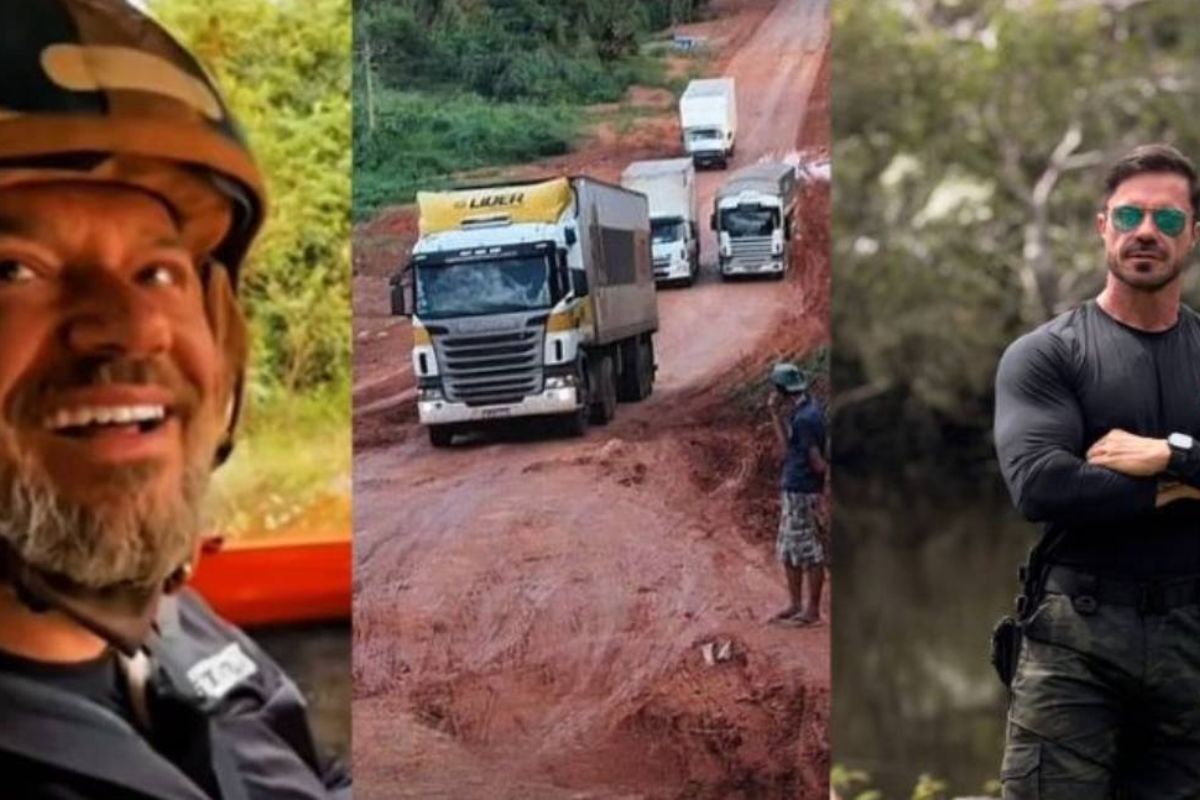


On the Transamazon Highway, live broadcasts by content creators during the rainy season show mud, lines, and vehicles stuck in sections of dirt, reigniting a practical discussion about mobility, logistics costs, travel safety, and the dependence of Amazonian communities on an unstable route at different times along the way.
The Transamazon Highway has gained traction on social media after an expedition of influencers and YouTubers decided to traverse the road in the midst of the rainy season, live-streaming sections with heavy mud, vehicles stuck, and long difficulties in movement. What was initially presented as an adventure quickly transformed into a showcase of a structural problem that affects local routines.
The images draw attention because they show a concrete contradiction. The Transamazon Highway does not appear as an empty or symbolic road, but as a route used by buses, trucks, and residents, precisely at a time when the rain makes circulation more unpredictable and increases the risk of delays and interruptions.
The Expedition that Transformed a Crossing into a Public Portrait of the Road

The group featured in the reports includes content creators and YouTubers on a live-streamed crossing, highlighting the coverage associated with the ACF channel, linked to mechanical engineer Ricardo Freitas, known as Ricardinho ACF. The expedition also included well-known names to the audience, such as Richard Rasmussen, which expanded the reach of the images and discussions.
-
Farewell to Toilet Paper? New Technology Sparks Debate on Bathroom Habits

-
Young Entrepreneur Who Started Recycling Bottles at Age 3 Becomes Environmental Icon in the U.S.

-
Nivea Blue Tin Cream: Popular Post-Beach and Pool, But Pharmacist Warns About Missing Ingredients and Common Summer Mistakes Regarding UVA and UVB Protection.
-
Archaeologists Recover Colossal Structure Lost for Over 1,600 Years Under the Sea, Including 22 Monumental Blocks Weighing Up to 80 Tons, Intriguing Experts.



This broadcast format had an important effect. Instead of edited clips, the audience began to follow the movement in real-time, witnessing sections that seemed passable and, subsequently, areas of major difficulty. The live broadcast exposed the irregularity of the trip, something that often does not appear clearly in short videos.
Another point that gained attention was the contrast between expectation and reality. For outsiders, crossing a highway may seem routine. However, the expedition itself showed that during the rainy season, the route can become a test of endurance for vehicles and passengers.
There were also reports of parallel unforeseen incidents during the journey, including mentions of vehicle seizures. Even without making this the focal point of the discussion, the episode helped keep public attention focused on the crossing and the road conditions.
Rain, Soil, and Heavy Traffic Create the Scenario of Stuck Vehicles

The basis of the debate, in both images and reports, is the combination of rainy season, sensitive soil, and constant traffic. During certain periods, especially between December and May, rain completely alters the behavior of the dirt road in several sections of the Transamazon Highway, with thick mud, slippery areas, and loss of traction.
There are technical explanations pointing to unstable soil, flooding, and clay as factors that hinder durable paving and elevate maintenance complexity. At the same time, there is also the notion that engineering solutions are possible, but they require an appropriate project, efficient drainage, correct execution, and costs compatible with the region’s reality.
The broadcasts reinforced this point without the need for elaborated technical discourse. It was enough to show buses and trucks facing poor sections for the difficulty to become evident. The problem does not only appear in a private vehicle prepared for adventure; it emerges in the normal flow of transportation.
When trucks and buses slow down or get stuck, the consequence goes beyond the viral image. The road stops being just a backdrop and becomes infrastructure, with a direct impact on travel time, route regularity, and supply predictability in localities that rely on it.
The Transamazon Highway as a Real Usage Route and Not Just a Topic of Dispute on Social Media
One of the strongest points of the images is that they dismantle the idea that the Transamazon Highway would be an irrelevant or abandoned route in the sense of disuse. The material shows movement, circulation, and daily dependence. People pass, cargo passes, buses pass, services pass, even under difficult conditions.
This helps to reposition the discussion in a more concrete field. In various cities and communities along the road, the discussion is not abstract. It involves access, movement, cost, and time, especially during the times when the rain worsens road conditions and increases arrival uncertainty.
The reports also mention that during dry periods, traffic tends to become less complicated and regularity improves. This seasonal difference is important because it shows that the problem is not uniform throughout the year, but becomes critical during specific windows, precisely when the volume of mud and road degradation advance.
In practice, this means that the same route can alternate between reasonably passable moments and sections of logistical chaos. For those who depend on the road, this variable behavior complicates planning, increases operating costs, and expands vehicle wear.
The Technical Debate on Paving Without Simplification and Without Slogans
The repercussions of the expedition reignited an old debate about infrastructure in the Amazon, but the images help to separate emotional argument from technical discussion. There is a real engineering challenge in areas with intense rainfall, complex drainage, and soil with low stability in some points.
At the same time, the public discussion itself shows that reducing everything to climate or soil also oversimplifies the issue. Paving and maintaining a road in the region requires a project, drainage, base, periodic maintenance, and continuous resources, not just a superficial layer that dissolves after the first rains.
This point was forcefully raised in comments about low-durability pavings, often criticized for not resisting the rainy cycle. The problem, in this case, is not just placing material on the road, but ensuring execution quality and performance durability in a demanding environment.
The expedition, therefore, ended up doing something greater than producing entertainment. It transformed a crossing into a visual evidence that the debate about the Transamazon Highway encompasses logistics, engineering, maintenance costs, and functionality for those who live and work in the region.
What the Images Reveal About Infrastructure, Routine, and Public Perception
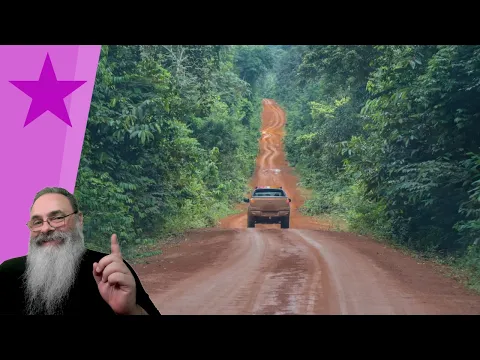

The live broadcasts also changed how many people perceive the road. For some of the audience, seeing a stuck vehicle in a video may seem like an extreme adventure. For those familiar with the local reality, however, the scene refers to work-related travel, transportation of goods, and bus trips with unreliable schedules during certain periods.
This difference in perception is central. The same image can be a spectacle for viewers and an operational problem for those dependent on the route. It was precisely this overlap that gave strength to the ripple in social media, as it brought to the center of the conversation a precariousness that has circulated in regional reports for years.
The case also shows the power of real-time broadcasts to highlight infrastructure debates. When the journey is shown without long cuts, the audience witnesses waiting, mud, attempts at passage, and sudden changes in road conditions, better understanding the practical dimensions of the route.
In the end, the Transamazon Highway returns to the debate not only for its historical symbolism but because the images reframe the essential question of a route that continues to be widely used, even when rain turns the crossing into a risky and delayed operation.
The expedition of influencers on the Transamazon Highway during the rain transformed a live broadcast into a public record of a road that remains essential for the circulation of people and goods but operates with significant seasonal instability in critical sections. The images of stuck vehicles, buses, and trucks reignited an objective discussion about mobility, engineering, and infrastructure in the Amazon.
If you have traveled on a dirt road during the rainy season, what was the most difficult aspect: waiting time, risk of getting stuck, vehicle wear, or lack of arrival predictability? And looking at the Transamazon Highway, what should come first to improve the routine of those who depend on this route: drainage, continuous maintenance, or paving with a more durable standard?




Primeiro é preciso vontade política, estudo geográfico e investimento em infra correta. Segundo, plano de conservação. É isso.
Me desculpem mas isso não é abandono da transamazônica… Isso é investimento de votos… Pq todo candidato promete que vai, que vai, que vai, que vai… brasileiro burr0 de nascença que é, vota maledeto!
Pôbrema do braziu é o brazilero!!!
É até uma contradição falar em manutenção contínua de uma estrada caótica. É preciso um pouco de tudo, e de forma ordenada: drenagem, depois pavimentação resistente e, a partir daí, manutenção contínua.