






 Portuguese
  Spanish
  4 min of reading
  0 comments


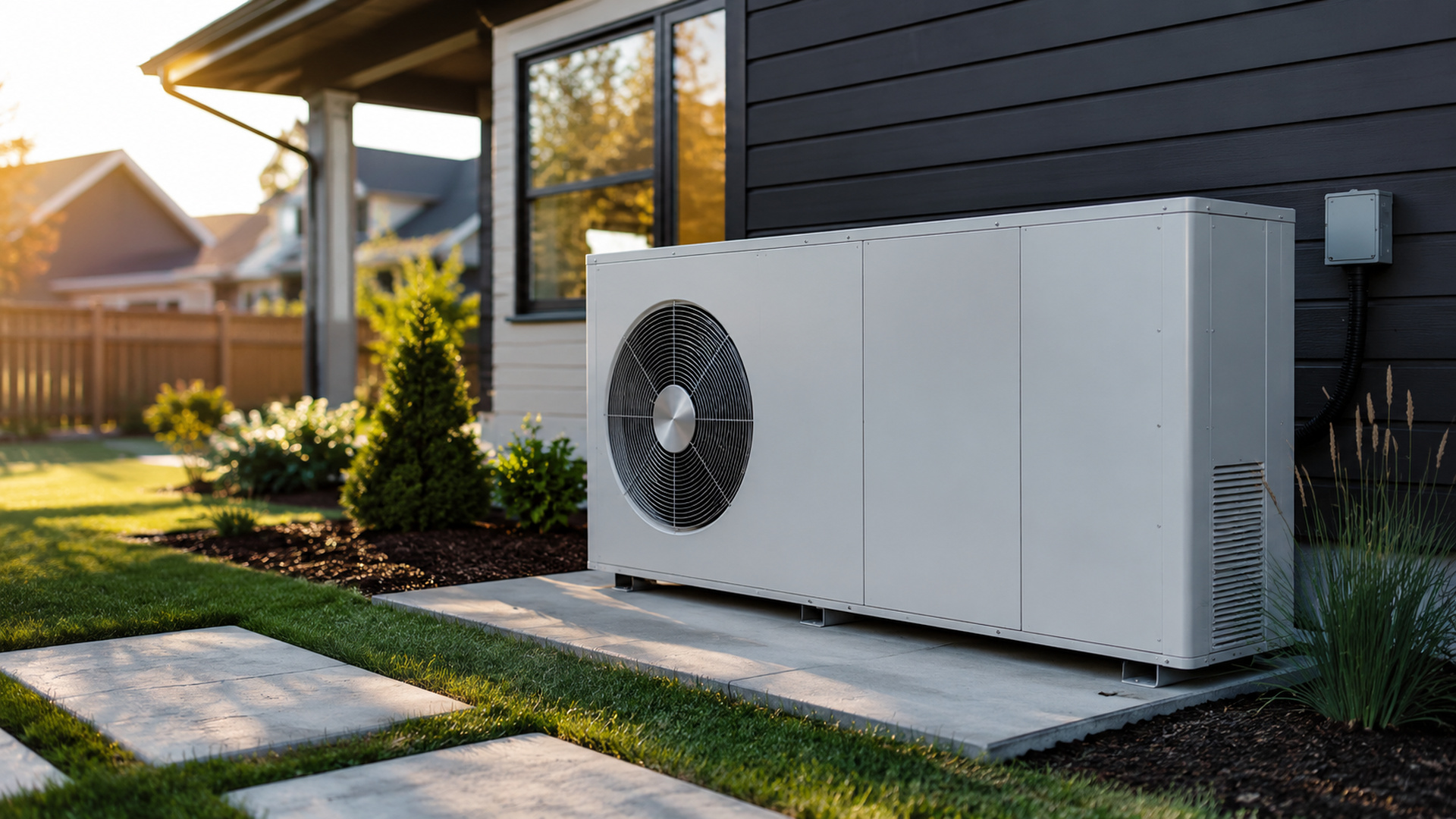
Nvidia tests mini data centers in common house backyards to accelerate global artificial intelligence and reduce digital infrastructure costs.
According to a report published by Tecmundo on May 7, Nvidia wants to transform residences into part of the global artificial intelligence infrastructure. In partnership with the American startup Span, the company began tests to install mini data centers in the backyards of common homes and small businesses in the United States.
The proposal seeks to decentralize data processing, reduce billions in costs, and accelerate the expansion of artificial intelligence. Named XFRA, these small data centers can operate using the idle electrical capacity of properties. The project already has the support of the PulteGroup construction company and emerges amid the explosive growth in demand for AI-focused computing.
Nvidia bets on mini data centers to expand artificial intelligence
Nvidia is currently one of the leaders in the market for chips used in artificial intelligence. Now, the company wants to expand its operations to include the infrastructure responsible for sustaining this technological advancement.
-
Helicopter Drops 180 Tons of Sand and Gravel on Swedish River to Revive Ecosystem Damaged by Decades of Exploitation

-
Brazilian Company Launches Retro Smartphone with 48 MP Camera, T9 Keyboard, and Privacy Features for Social Media-Free Use

-
Self-Taught Chinese Farmer Builds 5-Ton Submarine from Scrap, Launches It in Anhui River
-
Invisible Induction Technology Enables Wireless Power for Blenders, Coffee Makers, and Air Fryers, Reducing Countertop Cables




The growth of artificial intelligence has drastically increased the need for servers and computational power. Generative tools, cloud platforms, and automated systems require gigantic operational capacity.
As a result, tech giants have started investing billions of dollars in new data centers. The problem is that these structures are expensive, take years to complete, and face energy and environmental challenges. It is precisely in this scenario that mini data centers emerge as an alternative.
How mini data centers can work in common house backyards
Nvidia’s proposal is relatively simple. Instead of building only enormous industrial centers, the company wants to distribute small computational units in residential areas.
XFRA mini data centers can be installed in common house backyards, on the sides of properties, and in small outdoor spaces. The system relies on a structure composed of:
- Smart electrical panel
- XFRA Unit
- Backup battery
- Solar panels in some cases
These equipment use the idle energy of properties to power servers connected to global artificial intelligence. According to Span, a network of these units can achieve capacity similar to that of small and medium-sized data centers.
Nvidia wants to reduce costs and accelerate technological expansion
The construction of large data centers has become a billion-dollar challenge for the technology sector. In addition to high investment, companies face problems related to electricity consumption, cooling, and environmental licensing.
Nvidia’s partner startup claims it can install approximately 8,000 XFRA units almost six times faster than building a traditional 100-megawatt data center.
Another data point cited by the company involves operational cost. According to Span, mini data centers can cost only one-fifth of the amount required for large conventional facilities. For Arch Rao, CEO of the startup, the project can help meet the growing demand for computational processing more economically and efficiently.
Artificial intelligence growth pressures energy and infrastructure
The accelerated advancement of global artificial intelligence concerns energy and infrastructure specialists. This is because large data centers consume enormous amounts of electricity daily. Furthermore, many servers rely on cooling systems that use millions of liters of water.
According to the International Energy Agency, data center energy consumption is expected to grow significantly in the coming years due to the expansion of AI.
In this context, companies have started looking for alternatives capable of reducing pressure on large centralized structures. Among the benefits highlighted by Nvidia’s model are:
- Lower operational cost
- Faster expansion
- Reduced energy overload
- Decentralized infrastructure
- Better energy utilization
The project also approaches the concept of edge computing, which seeks to bring servers closer to end-users.
Backyards of common homes can become part of the new digital economy
The idea of transforming the backyards of common homes into part of the global technological infrastructure still seems futuristic. Nevertheless, tests in the United States show that the project has already begun to take shape.
Should it advance commercially, residents will be able to participate in the network responsible for powering artificial intelligence systems. At the same time, experts warn of important challenges involving privacy, digital security, and residential energy stability.
Still, the technology sector believes that decentralized solutions should gain strength in the coming years.
Nvidia follows billion-dollar race for data centers
The global artificial intelligence race is already driving gigantic investments around the world. Companies are vying for space to build new computational structures capable of supporting increasingly advanced AI systems.
In Brazil, for example, TikTok is funding the construction of a large data center in Ceará. The venture involves billions of dollars and has generated debates related to environmental impacts and local indigenous communities.
This scenario shows how digital infrastructure has become a strategic piece for the world economy.
Nvidia believes that mini data centers could represent a significant change in this market. If the project truly scales, the backyards of common homes could transform into an essential part of the new technological revolution driven by artificial intelligence.
With information from Tecmundo.




Be the first to react!