






 Portuguese
  Spanish


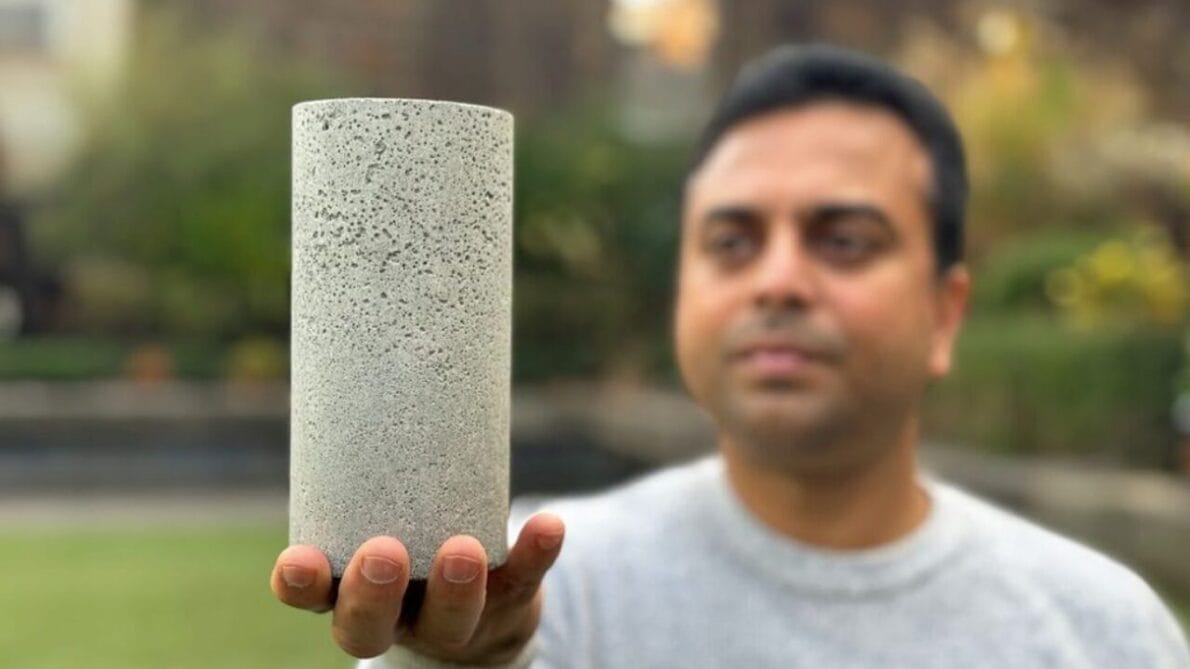

Discover The Sustainable Concrete That Uses 80% Fly Ash, Reducing Carbon Emissions In Construction Without Compromising Durability
RMIT University has developed an innovative low-carbon concrete that can recycle double the amount of fly ash compared to current standards, halve the amount of cement needed, and maintain exceptional performance over time. This innovation addresses two critical environmental issues in construction: the production of fly ash and carbon emissions from cement.
In 2022, coal-fired power plants generated over 1.200 million tons of fly ash. In Australia, this ash accounts for nearly one-fifth of all waste and will continue to be abundant for decades, even as renewable energy sources are adopted.
Additionally, cement production contributes 8% of global carbon emissions, and the demand for concrete, which uses cement as a key ingredient, is growing rapidly.
-
U.S. City Builds Tiny Home Village on Water Company Land to House 136 Homeless People: Inside the Social Housing Units

-
Woman Turns Shipping Container into Home, Embraces Rural Life to Cut Monthly Expenses to Just Over $330
-
France Revamps 530 Social Housing Units with Large Balconies and Glass Facades Without Demolishing Existing Buildings

-
Facing high rent, couple transforms parents’ garage into a fully functional apartment, creating a complete home at a fraction of the market cost.




Innovation In Construction
Engineers at RMIT, in collaboration with AGL’s Loy Yang power station and the Australian Ash Development Association, have managed to replace 80% of the cement in concrete with coal fly ash.
Dr. Chamila Gunasekara, project lead at RMIT, emphasized that this represents a significant advancement, as existing low-carbon concretes replace, at most, 40% of cement with fly ash.
Addition Of Nano Additives
The key to this advancement lies in the addition of nano additives to modify the chemistry of the concrete, allowing for the incorporation of more fly ash without compromising structural performance in construction. This modification also enables the use of “pond ash” of lower quality, which has been underutilized until now, sourced from coal sludge storage tanks at power plants, with minimal processing.
Prototypes And Standards
Large prototypes of concrete beams have been created for construction using both fly ash and pond ash, demonstrating compliance with Australian structural performance standards and environmental requirements. Preliminary results show similar performance with lower-grade pond ash, which could open a hugely underutilized resource for cement replacement.
Modeling And Long-Term Resilience
A pilot computer modeling program, developed in collaboration with Dr. Yogarajah Elakneswaran from Hokkaido University, has been used to predict the long-term performance of these new concrete mixes.
According to Dr. Yuguo Yu, a specialist in virtual computational mechanics at RMIT, this approach allows us to understand how the newly developed materials will withstand the test of time.
Physics-Based Model
The physics-based model created by RMIT reveals how the various ingredients in the new low-carbon concrete interact over time. For example, it shows how fast-drying nano additives act as a performance enhancer during the early drying stages, compensating for the large amounts of slower-drying fly ash and pond ash.
Impact And Future In Construction
This research, supported by the ARC Industrial Transformation Research Hub for the Transformation of Recovered Waste Resources into Materials and Engineering Solutions for a Circular Economy (TREMS), has the potential to revolutionize sustainable construction. Led by Professor Sujeeva Setunge from RMIT, TREMS brings together prominent scientists, researchers, and industry experts to minimize landfill waste and reuse recovered materials in construction and advanced manufacturing.
The adoption of this low-carbon concrete not only represents an innovative solution for managing fly ash waste but also significantly reduces carbon emissions in the construction industry. The collaboration between RMIT, Hokkaido University, and industry partners promises large-scale implementation of this technology, marking a significant advancement toward more sustainable and environmentally responsible construction.
Source: rmit.edu.au








