






 Portuguese
  Spanish
 4 min of reading
  0 comments



The Federal Institute (IFRJ) Has 1,740 Openings in Free Technical Courses. Applications Are Open Until September 28.
The Federal Institute of Education, Science and Technology of Rio de Janeiro (IFRJ) has opened the selection process for the 2026 academic year, offering 1,740 openings in free technical courses integrated with high school.
Applications are open until September 28, 2025, and can only be made through the IDECAN website.
This opportunity is aimed at students who have completed elementary school and are up to 17 years old on the registration date, ensuring access to free and quality education that combines theory and professional practice.
-
Surprising opportunity in the railway sector: MRS offers a free course for assistant train driver and shunter in Juiz de Fora with a R$ 1,600 scholarship, specialized training, and the chance to join one of the largest railway operators in Brazil.

-
It’s official: IFMS opens spots in free courses on artificial intelligence, drones, and app creation, expanding technological education in 2026 and preparing students for areas with high professional demand and accelerated digital transformation.
-
Senai launches an unprecedented program with Petrobras and opens 2,000 spots in free courses with recognized certification, a monthly allowance of R$ 600, and training for industrial professions that continue hiring across the country.

-
Petrobras and SENAI open 480 spots in free technical courses with a scholarship of up to R$ 858, meal allowance, and training in Mechanics, Welding, Metallurgy, and Industrial Automation to meet the growing demand of the industry and the oil and gas sector.


Free Technical Courses at the Federal Institute (IFRJ)
The Federal Institute distributes its 1,740 vacancies across 11 campuses, covering different areas of knowledge and catering to both General Competition and the Reservation System for public schools, including income, racial, quilombola, and disability criteria (PcD).
Some examples of free technical courses and openings by campus:
- Arraial do Cabo: Computer Science (60), Environmental Science (60), Oil and Gas (60)
- Duque de Caxias: Chemistry (60), Plastics (60)
- Nilópolis: Environmental Control (120), Chemistry (60)
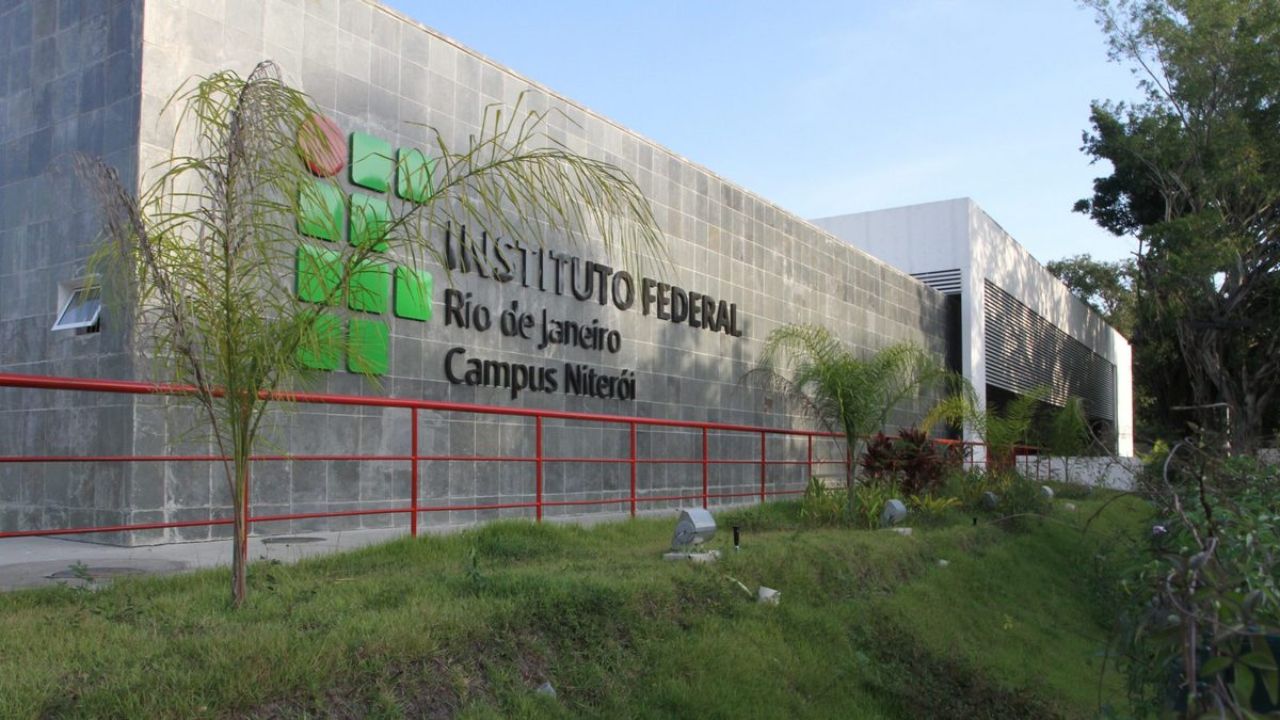
- Niterói: Administration (64), Computer Science (64)
- Rio de Janeiro: Food Science (64), Biotechnology (64), Pharmacy (64), Environmental Science (64), Chemistry (64)
Additionally, there are courses in Industrial Automation, Electrotechnics, Occupational Safety, and Agriculture at other campuses, offering a variety that prepares students for both the job market and higher education.
Who Can Apply?
To compete for vacancies in the free technical courses at the Federal Institute, the candidate must have completed elementary school and be at most 17 years old on the registration date.
Students from private schools should apply through General Competition, while the Reservation System is exclusive to students who completed elementary school entirely in public schools.
Application and Fee
Applications for the free technical courses at the Federal Institute are conducted online through the IDECAN website, with a fee of R$ 70.00.
Selection Process
The selection process includes an objective test scheduled for November 23, 2025, from 9 AM to 12 PM, consisting of 30 multiple-choice questions — 15 in Portuguese Language and 15 in Mathematics — based on elementary school content.
It is necessary to score at least 32 points in total and not to score zero in any subject. The final classification will be done by campus, course, and group of vacancies.
The Federal Institute of Rio de Janeiro reaffirms its commitment to public and free education, offering courses that strengthen the social and professional development of young people.
With this initiative, students have the chance to enter a recognized technical education program, opening doors to both university and the job market.
About the Federal Institute of Rio de Janeiro (IFRJ)
The Federal Institute of Education, Science and Technology of Rio de Janeiro (IFRJ) is one of the most important educational institutions in the state, with a strong tradition in professional, scientific, and technological education.
Its origins date back to the Technical School of Chemistry (ETQ), created in 1959, during a time when the Industrial Chemistry area was strategic for national development.
Since then, the institution has undergone various transformations, keeping pace with the political and social changes in the country and adapting to new professional training demands.
Throughout its history, IFRJ has received different names. Between 1965 and 1974, it became the Federal Technical School of Chemistry of Guanabara (ETFQ-GN) and later, the Federal Technical School of Chemistry of Rio de Janeiro (ETFQ-RJ), a name it maintained until 1999.
This year, it was transformed into the Federal Center of Technological Education of Chemistry of Nilópolis (Cefet-Química), a name it retained until 2008.
The historic turning point occurred with the enactment of Law No. 11,892, on December 29, 2008, which created Federal Institutes throughout Brazil.
Cefet-Química then changed its name to the Federal Institute of Rio de Janeiro (IFRJ), also incorporating the Agricultural College Nilo Peçanha (CANP), a century-old institution established in 1910.
The creation of IFRJ represented not only a name change but also a new institutional identity, with an expansion of its academic activities, an increase in courses, and the establishment of new campuses.
The institute began to offer education at multiple levels: initial and continuing education, integrated and subsequent technical courses, undergraduate and graduate programs, both lato and stricto sensu.
Currently, IFRJ has 15 campuses spread across the state, in cities such as Duque de Caxias, Nilópolis, Paracambi, Pinheiral, São Gonçalo, Volta Redonda, among others.
Its administrative structure is organized by the Rectory, which coordinates and guides all academic units.
This reach enables IFRJ to serve a wide diversity of students, contributing to the democratization of access to quality public education and strengthening regional development.
Thus, the Federal Institute of Rio de Janeiro consolidates itself as a strategic institution for teaching, research, and extension, training qualified professionals and critical citizens who can act in different areas of knowledge and respond to contemporary challenges of society.





-

-

-

-

-

-

116 people reacted to this.