Portuguese
  Spanish




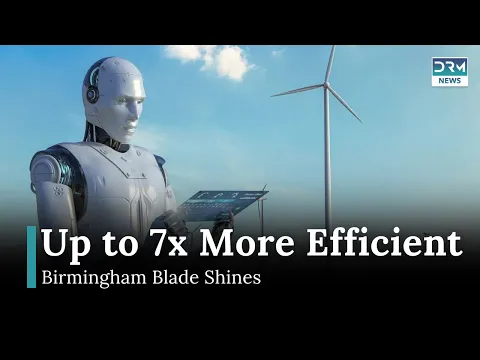
EvoPhase Launched A Compact Wind Turbine Created With AI That Can Generate Up To 7X More Energy In Urban Areas! Designed To Overcome The Challenges Of Weak City Winds, This Innovation Could Change The Future Of Sustainable Electricity. See How This Technology Can Transform The World!
A wind energy has always been one of the biggest bets for a sustainable future, but its efficiency in urban areas still faced challenges.
However, a new technology could drastically change this scenario.
An innovative turbine, created with the support of artificial intelligence, promises to revolutionize electricity generation in cities, producing up to seven times more energy than conventional models.
-
Brazil’s 2026 Tax Refund: Record 9.58 Million Filers in Largest Payout Ever, But a Key Detail on Priority Recipients Draws Nationwide Attention

-
Itaú Alters Hybrid Work Model, Increasing Office Days from 2028, Prompting Employees to Adjust to New Routine
-
Facing Labor Shortage, Japan Plans to Invest $34 Million to Attract Foreign Workers in Construction, Healthcare, Industry, and Commerce

-
Brazilian City Makes Remarkable Leap, Becomes 4th Wealthiest in the Country with GDP of R$ 134.1 Billion




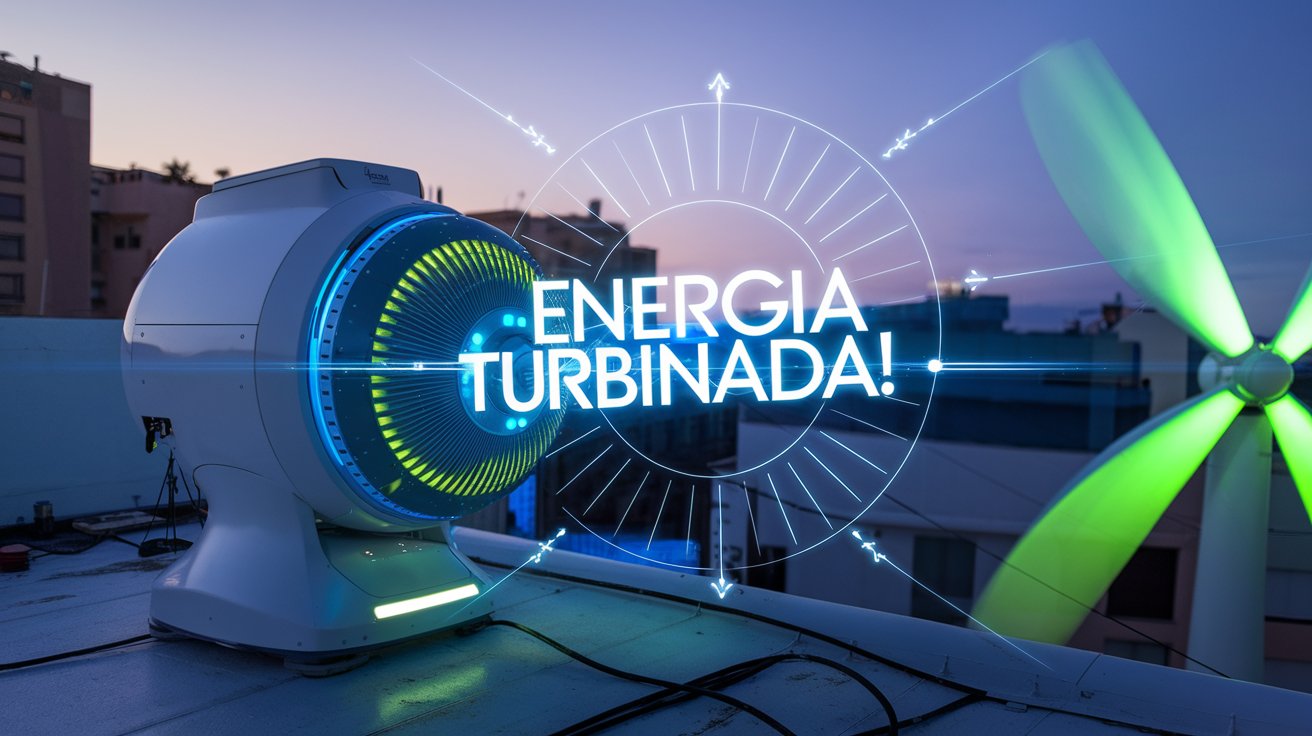
The invention belongs to the British company EvoPhase, which, in collaboration with precision metal manufacturer Kwik Fab Ltd., developed the turbine named “Birmingham Blade”.
Designed to adapt to urban challenges, the turbine has a compact shape and was made to operate even in environments where the wind is weak and unstable. Its differentiator? The use of AI to optimize the design and maximize wind capture in cities.
How Does This New Turbine Work?
The main barrier to wind energy in cities has always been the irregularity of the winds. Tall buildings create natural barriers, causing air flow to become turbulent and unpredictable.
In places like Birmingham, for example, the average wind speed is only 3.6 meters per second, which is insufficient for traditional turbines to operate efficiently.
To overcome this limitation, EvoPhase engineers used artificial intelligence algorithms that analyzed over 2,000 turbine models in just a few weeks.
The result was an optimized design capable of better capturing wind flows even in adverse urban conditions.
Seven Times Greater Efficiency
Preliminary analyses indicate that the “Birmingham Blade” could have an efficiency up to seven times greater than traditional turbines in urban environments.
This means that a significant amount of clean energy could be generated directly from rooftops and buildings, reducing dependence on conventional electric grids.
This technology could represent a strategic advance for energy transition in cities, as it allows for an increase in renewable energy production without the need for extensive open spaces, as is the case with traditional wind farms.
Tests And Expectations
It is expected that the first prototype of the “Birmingham Blade” will be installed in 2025 in a building in the city of Birmingham.
If the results are positive, the turbine could be adopted on a large scale in cities around the world.
The possibility of transforming city rooftops into true clean energy generation plants is something that could completely redefine the concept of sustainable urbanization.
If this technology proves viable, governments and companies may invest heavily in the deployment of urban wind turbines, driving a revolution in how energy is generated and consumed in urban centers.
The Future Of Wind Energy In Cities
Experts point out that, with the growing demand for clean and self-sufficient energy, technologies like the Birmingham Blade could play a fundamental role in the coming years.
Currently, most of the world’s wind energy is generated in wind farms located in remote areas, where the winds are more consistent.
However, the new turbine could change that reality, allowing commercial buildings, residential areas, and urban industries to become self-sufficient in electricity.
Thus, the “Birmingham Blade” could be one of the first steps toward fundamentally transforming how cities handle energy generation and consumption.
With less carbon emissions and greater efficiency, this turbine could be the future of urban energy.