Portuguese
  Spanish


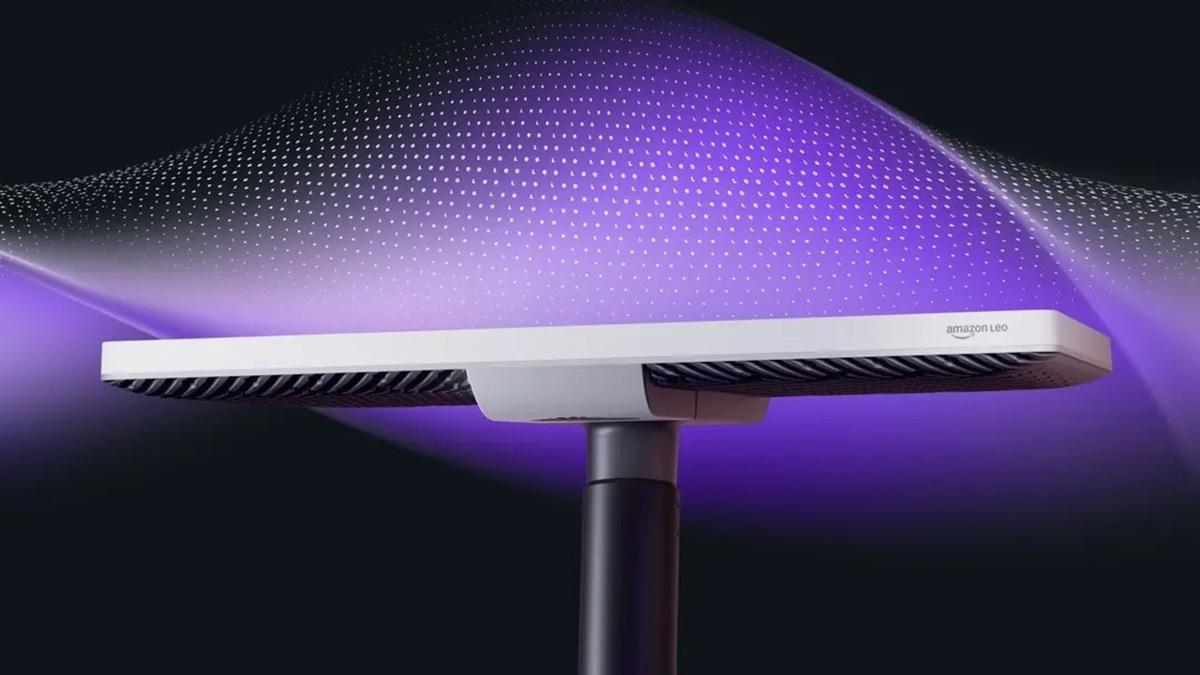


Amazon Intensifies Its Entry into the Satellite Internet Market with the Leo Ultra Antenna, Promising High Speed, Low Latency, and Direct Integration with AWS for Sectors That Require Stable Connectivity in Remote Areas
Amazon has taken a decisive step towards the launch of its satellite internet service, scheduled for next year. The company introduced the Leo Ultra, an antenna that serves as the most advanced equipment developed for the project, and initiated a preview aimed at selected businesses.
The announcement marks the transition of Amazon Leo, formerly known as Project Kuiper, from the deployment phase to a stage where commercial readiness begins to solidify. The constellation surpasses 150 satellites, and the company claims to be ready to expand coverage as the timeline progresses.
Antenna Designed for Critical Demands of Businesses and Governments
The Leo Ultra leads the new family of antennas and was designed to serve corporate and governmental users who rely on continuous communication in remote locations. The terminal, measuring 20 by 30 inches, achieves download speeds of up to 1 Gbps and maintains uploads of 400 Mbps. Amazon cites the device as the fastest commercial phased-array antenna currently in production.
-
Google’s Biotechnology Project Seeks EPA Approval to Release 64 Million Bacteria-Infected Male Mosquitoes to Curb Disease Transmission

-
China Tests New Urban Mobility in Hefei with Electric Aircraft and Drones, Eyeing a Trillion-Dollar Market to Transform Transportation

-
Xiaomi Unveils Smart Technology to Replace Air Conditioners: Promises 45% Less Energy Use, 1,760 m³/h Airflow, APF 5.31 Efficiency, and Annual Savings of 884 kWh.
-
After AI Failures, Ford Hires Hundreds of Veteran Engineers


The design eliminates moving parts and allows for quick installation, reducing exposure to failures in extreme environments. Executives state that this combination was developed to cater to operations in areas where terrestrial connectivity is lacking.
Chris Weber, Vice President of Consumer and Business Solutions for Amazon Leo, emphasized that the network and hardware were structured to meet complex demands typical of organizations operating far from urban centers.
The antenna utilizes silicon developed by Amazon, proprietary radiofrequency engineering, and signal processing algorithms that help reduce latency and increase throughput. According to the company, these elements are essential for maintaining stability in applications that require continuous connection.
Platform Focused on Cloud Tasks and Real-Time Communication
The functionalities of the Leo Ultra were designed for scenarios involving cloud, video conferencing, and constant monitoring. The platform integrates with existing networks and performs simultaneous upload and download operations without the need for deep structural adaptations.
JetBlue expressed enthusiasm about the possibility of offering faster Wi-Fi onboard. Marty St. George, President of the company, stated that the previous collaboration with Amazon made the decision to consider Amazon Leo easier.
For him, the proposal aligns with the company’s focus on reliable performance and flexibility for passengers who desire stability during flights.
Private Network Infrastructure for Sensitive Operations
Amazon Leo will feature encryption throughout the network, management tools, and priority support on a continuous basis.
The system connects directly to AWS and other environments, whether in the cloud or on-premises, without passing through the public internet. The company offers two main forms of integration.
One is Direct to AWS, which connects terminals to cloud workloads via a web console and supports AWS Transit Gateway or Direct Connect Gateway.
The other is the Private Network Interconnection model, which allows dedicated links to be set up in major colocation data centers. Amazon claims that this format reduces provisioning time from months to days.
The focus on security is reinforced by recent research identifying unencrypted geostationary satellite connections, which exposed VoIP calls and corporate data. Amazon presents its private network infrastructure as a response to these flaws detected in older systems.
Partnerships Already Established and Gradual Expansion of the Program
The company has established partnerships with sectors such as aviation, energy, logistics, and agriculture. The pre-launch version is already active for corporate users who received access to the Leo Pro and Leo Ultra hardware.
Hunter Hunt, CEO of Hunt Energy Holdings and Chair of the Board of Skyward, stated that the combination of Amazon Leo’s broadband capability with the secure private link meets his company’s expectations.
Amazon intends to expand the program as it adds capacity to the constellation. The commercial launch is expected next year, in a market that already includes Starlink.
The company claims it reaches peak speeds higher than those anticipated in current competitor plans, while SpaceX is developing an upgrade for the V3 version.
The presentation of the Leo Ultra and the opening of the preview indicate that Amazon is ready to enter the global satellite connectivity market, strengthening its strategy to compete with established solutions.