Portuguese
  Spanish


The Debug initiative bets on a technique that seems straight out of science fiction, but is already based on previous studies and tests: using male mosquitoes with bacteria to affect the reproduction of wild populations and reduce health risks in cities.
Google LLC has requested experimental authorization from the United States Environmental Protection Agency, the EPA, to release up to 64 million male mosquitoes in areas of Florida and California over two years.
The goal is to reduce populations of Culex quinquefasciatus, known as the southern house mosquito, a species associated with the transmission of diseases such as the West Nile virus and St. Louis encephalitis in the United States.
According to the Federal Register, the request involves live males carrying the Wolbachia pipientis wAlbB bacteria, identified in the process as DQB Strain. The number is noteworthy because the plan foresees up to 16 million mosquitoes per year in Florida and up to 16 million per year in California. In two years, the total reaches 64 million.
-
China Tests New Urban Mobility in Hefei with Electric Aircraft and Drones, Eyeing a Trillion-Dollar Market to Transform Transportation

-
Xiaomi Unveils Smart Technology to Replace Air Conditioners: Promises 45% Less Energy Use, 1,760 m³/h Airflow, APF 5.31 Efficiency, and Annual Savings of 884 kWh.
-
After AI Failures, Ford Hires Hundreds of Veteran Engineers
-
Humanoid Robots in Texas Train Like Humans, Lift 25 kg, and Highlight the Billion-Dollar Race Among Startups, Automakers, Big Tech, and Logistics Giants


The plan is not to release biting mosquitoes, but males that prevent new eggs
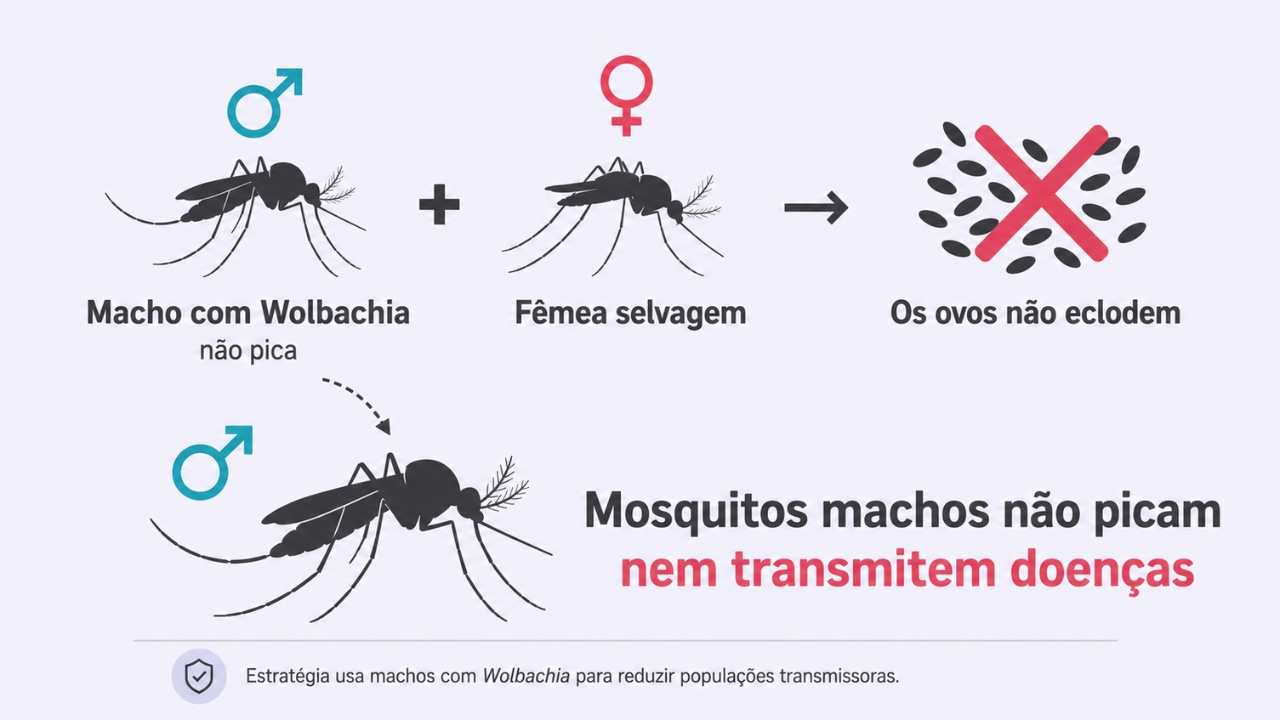
The central part of the proposal is simple to understand, although it may seem strange at first glance. The released mosquitoes would be males. They do not bite people, as bites are linked to females, who need blood to produce eggs.
The strategy uses the Wolbachia bacteria to create reproductive incompatibility. When these males mate with wild females that do not carry the same bacterial strain, the generated eggs do not survive.
With repeated releases, the expectation is to reduce the local population of the target species over generations. The logic is to replace widespread insecticide spraying with a more specific biological method, aimed only at the mosquito that needs to be controlled.
The EPA describes technologies of this type as emerging control alternatives, with males that do not bite and species-targeted effects. This is important because common insecticides can affect other organisms and lose efficiency with the advancement of resistance.
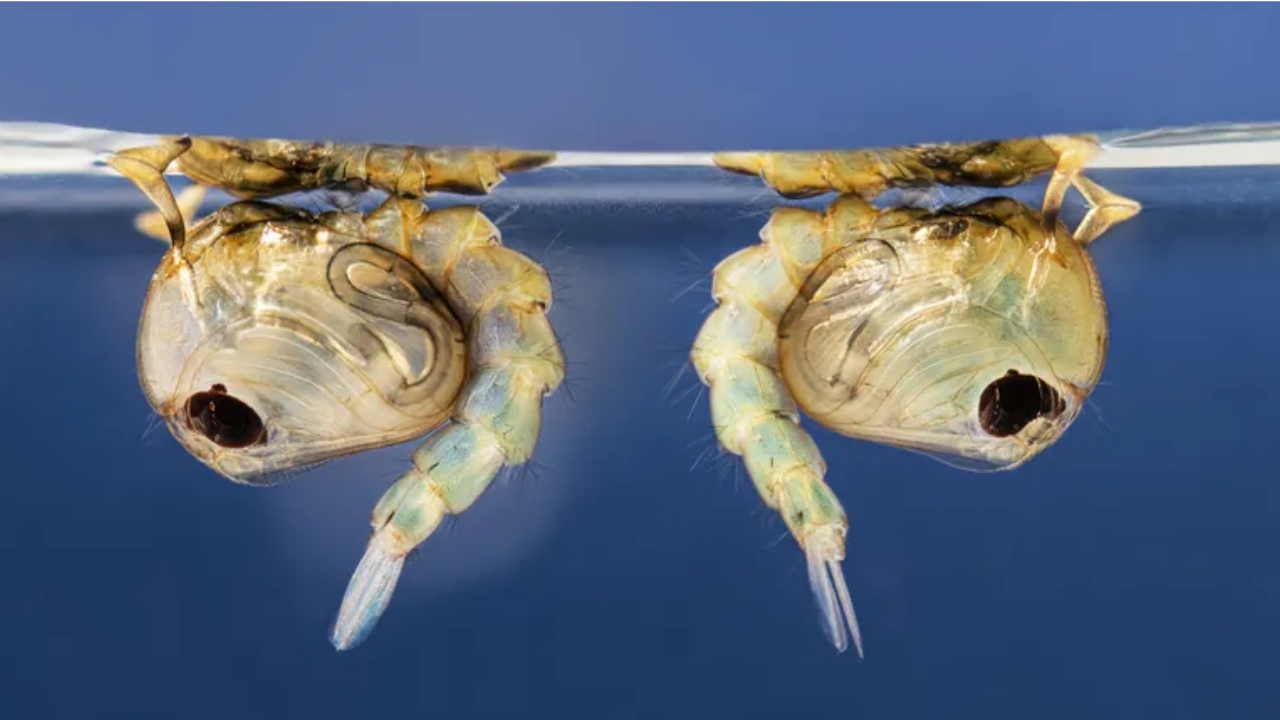
Image credit: Smith Collection/Gado/Getty Images.
The technology comes from Debug, a project linked to Google
The project is presented by Debug, an initiative linked to Google that works with the creation, selection, and release of sterile mosquitoes on a large scale. In its public materials, Debug claims to use Wolbachia, not genetic modification, toxins, or chemicals.
The difference lies in the scale. Creating millions of mosquitoes, accurately separating males from females, and releasing the insects at strategic points requires more than just a laboratory. The company describes the use of robotics, automated breeding systems, GPS-equipped vehicles, and artificial intelligence to identify and separate the mosquitoes.
It’s in this combination that the case gains strength. The mosquito, a long-standing problem in cities, is now being tackled with bacteria, automation, and AI. The proposal does not attempt to eliminate all insects from the environment but to reduce an invasive population associated with health risks.
The number of 64 million came from an experimental request, not a final approval
The strongest data comes from the Federal Register. The document states that Google requested an Experimental Use Permit, a type of authorization for experimental use, and that the EPA considered the request with potential regional or national importance.
The public comment period ended on June 5, 2026. The process received 3,059 comments on Regulations.gov, a sign that the topic garnered attention beyond the technical circle.
As of the information available in the research, there was no final publication from the EPA approving or definitively rejecting the request. This changes the tone of the story. Google wants to release the mosquitoes, but the regulatory stage is still an essential part of the process.
The official framework itself treats the product as an experimental biopesticide. The EPA label for “Debug quinx males” identifies Google LLC as the registrant and describes the material as live males of Culex quinquefasciatus with Wolbachia wAlbB.
The confusion with Aedes shows why the species detail matters
Part of the coverage of the topic mentioned Aedes mosquitoes, especially Aedes aegypti, due to Debug’s history and other projects with Wolbachia. However, the process of the 64 million cited in the Federal Register specifically deals with Culex quinquefasciatus.
The distinction matters because each species has a different epidemiological role. Aedes aegypti is usually linked to dengue, Zika, chikungunya, and yellow fever. Meanwhile, Culex quinquefasciatus is associated with diseases like West Nile and St. Louis encephalitis in the American context.
The CDC reports that mosquitoes of the Culex genus, including Culex quinquefasciatus, can transmit relevant viruses in the United States. West Nile is identified as the main mosquito-borne disease in the continental American territory, with about 2,000 diagnoses per year, although many infections show no symptoms.
Previous experiments help explain the enthusiasm of scientists


The idea of using sterile insects is not new. Debug compares the technology to the Sterile Insect Technique, used since the 1950s against different agricultural and sanitary pests.
What changes is the attempt to apply this concept with modern systems in urban environments. A study published in Nature Biotechnology reported the release of 14.4 million male Aedes aegypti with Wolbachia in Fresno, California, in 2018. At the peak of the season, treated areas recorded 95.5% fewer females compared to areas without release.
In Singapore, the environmental agency NEA reports that the Wolbachia Project managed to reduce Aedes aegypti populations by 80% to 90% in treated areas, along with a more than 70% drop in the risk or incidence of dengue.
These data do not automatically prove that Google’s plan will have the same result with Culex quinquefasciatus in Florida and California. But they help explain why experts consulted by Live Science view the proposal with interest, especially when compared to the widespread use of insecticides.
An urban pest became a test for the future of disease control
The most striking point of the case is not just the number of mosquitoes. It’s the change in logic. Instead of spreading poison against a difficult-to-control insect, the proposal tries to use the species’ natural behavior against itself.
Non-biting males, a common bacterium in insects, AI screening, and release supported by automation form a strategy that mixes biology and engineering. At the same time, the volume of public comments shows that a technology of this size needs transparency, regulation, and monitoring.
Google’s proposal goes beyond an experiment with mosquitoes. It shows how cities pressured by vectors, diseases, and insecticide resistance can begin to discuss a new type of urban control, less based on spraying and more reliant on precision, data, and applied biology.