Portuguese
  Spanish


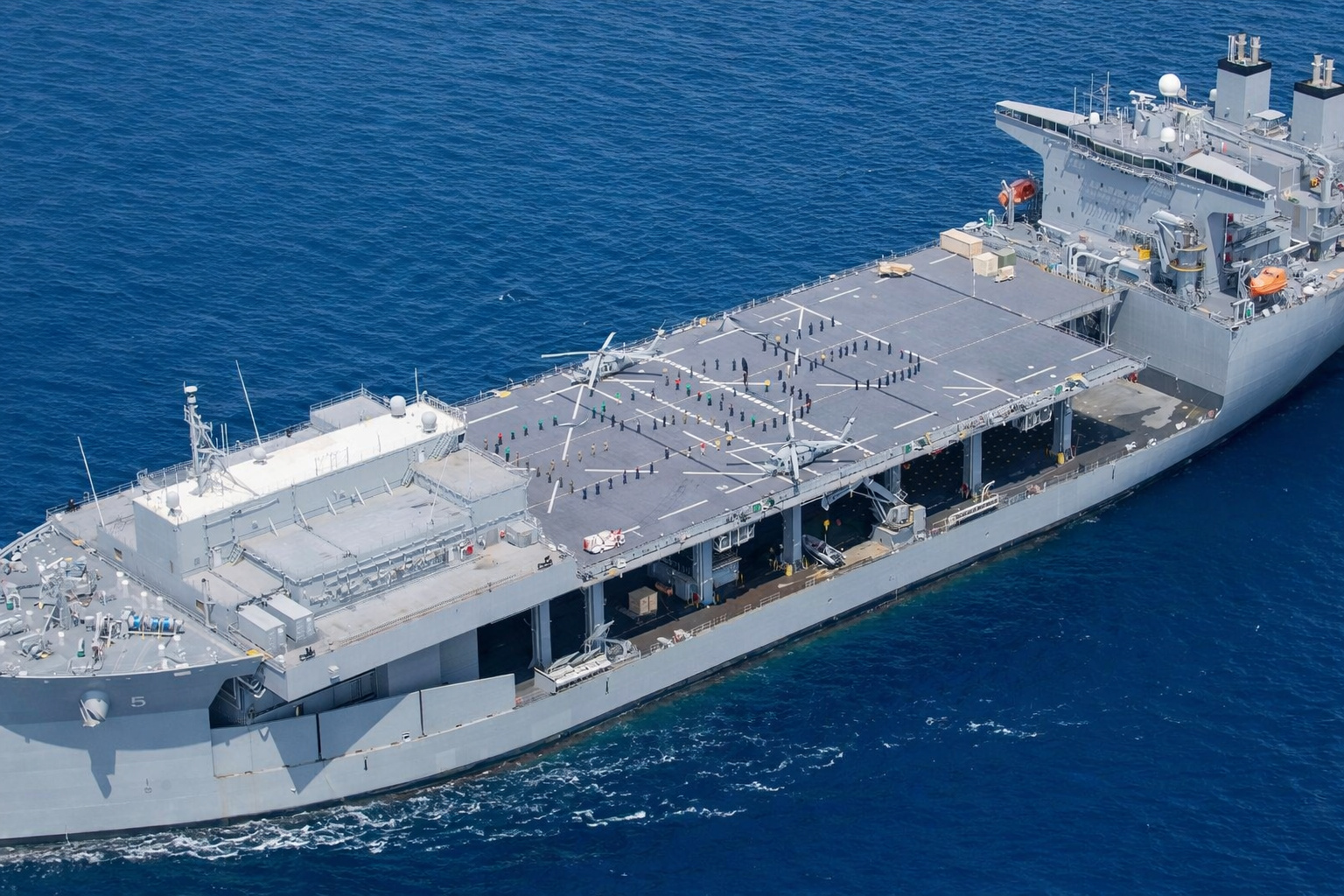

USS Lewis B. Puller is a 90,000-ton floating military base that brings complete operations to regions without ports or runways.
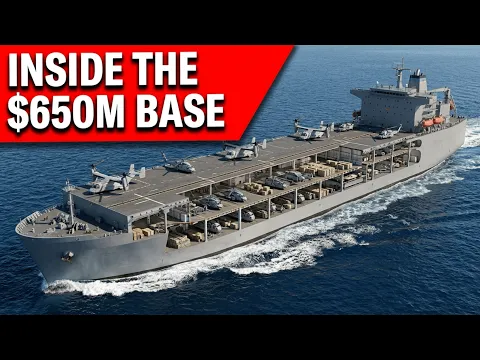
In 2017, the United States Navy commissioned the USS Lewis B. Puller (ESB-3), the first vessel of the Expeditionary Sea Base class, designed to function as a mobile military base at sea in areas without logistical infrastructure on land. Instead of following the classic model of aircraft carriers, destroyers, or amphibious ships, the Puller was conceived to support missions such as special operations, mine warfare, air support, and expeditionary response, expanding American presence in sensitive areas without relying on fixed bases.
Based on a design derived from Alaska-class commercial tankers, the ship symbolizes a clear strategic shift: bringing the support structure itself to the theater of operations. With a length of 239.3 meters and about 90,000 tons of full load displacement, the USS Lewis B. Puller is among the largest naval platforms of the United States outside the realm of supercarriers, but its real differentiator lies in its function: serving as a floating forward point to sustain military operations where almost nothing else could operate.
USS Lewis B. Puller operates as a complete floating military base
The central concept of the Expeditionary Sea Base class is simple yet revolutionary: to transform the ocean into an extension of the operational territory.
-
Australia to Deploy Up to 8 Nuclear-Powered Submarines in Indo-Pacific, Establishes Billion-Dollar Naval Chain Through AUKUS, Joining Elite Group Capable of Extended Underwater Missions

-
Indonesia Begins Construction of 2,000-Ton Scorpène Stealth Submarines with Advanced Weaponry and French Steel

-
Brazil’s Largest Navy Ship, NAM Atlântico, Transforms into Field Hospital During National Crises

-
Brazilian Navy Demonstrates Strength in Naval Exercise with Over 20 Nations, Deploys Frigate Independência in Anti-Submarine and Air Defense Scenarios, and Joins Historic Formation with 26 Ships from 14 Allied Navies off the U.S. Coast



The Puller was not designed for direct combat but to support complex operations in remote environments. It acts as a forward base for helicopters, special forces, drones, mine warfare teams, and logistical units.

This allows military operations to be conducted even in regions without ports, airports, or any existing infrastructure, such as unstable coastal areas or emerging conflict zones.
Flight deck allows continuous operation of heavy helicopters
One of the most important features of the USS Lewis B. Puller is its large flight deck, designed to operate multiple helicopters simultaneously.
The vessel can support aircraft such as the MH-53E Sea Dragon, used in mine warfare operations, as well as transport and tactical support helicopters. The deck has been sized for intensive operations, with capabilities for refueling, maintenance, and continuous movement of aircraft.
In practice, this transforms the ship into a floating airbase specialized in vertical operations, essential in scenarios where there are no available landing strips.
Platform supports special forces and mine warfare operations
Another central role of the Puller is supporting special forces operations. The ship can serve as a launch point for fast boats, submersible vehicles, and tactical teams, allowing for discreet and highly specialized actions.
Additionally, it plays a strategic role in naval mine warfare, one of the most critical areas for maritime security.
Helicopters and drones operating from the ship can detect and neutralize mines, ensuring the opening of maritime routes. This capability is essential in strategic regions like the Persian Gulf, where the Puller frequently operates.
Project uses adapted commercial ship base for military use
One of the most innovative aspects of the USS Lewis B. Puller is its structural origin. The ship was developed from a commercial hull of the Alaska class, originally used for oil transport.
This approach reduced costs and accelerated the construction process, allowing the Navy to obtain a large platform with a lower investment compared to traditional military ships.
This strategy shows a growing trend of leveraging civilian structures for advanced military applications, enhancing budget efficiency.
Diesel-electric propulsion system ensures autonomy and efficiency
The Puller uses a diesel-electric propulsion system, typical of large commercial vessels. Although not designed for high speeds, the system offers excellent autonomy and energy efficiency, allowing for long periods of operation at sea.
This feature is fundamental to its role as an advanced base, as the ship needs to remain for weeks or months in remote areas.
The ship has infrastructure to accommodate hundreds of military personnel, technicians, and operators. This capacity includes accommodations, command areas, communication systems, and complete logistical support.
This allows the Puller to function as an independent operational center, capable of coordinating complex missions without the need for immediate support from other bases.
Platform broadens military presence without the need for fixed bases
One of the main strategic objectives of the USS Lewis B. Puller is to reduce dependence on land bases. In many regions of the world, building military bases faces political, logistical, or geographical barriers.
With a floating base, the United States can maintain an active military presence without the need for permanent infrastructure. This significantly increases strategic flexibility and the ability to respond quickly to crises.

The Puller is part of a broader shift in modern naval doctrine. Instead of concentrating capabilities in a few high-value assets, such as aircraft carriers, naval forces are distributing functions across specialized and more flexible platforms.
The Expeditionary Sea Base class exemplifies this approach, providing support for multiple types of missions within a single structure.
Ship operates in strategic regions with high geopolitical tension
The USS Lewis B. Puller has frequently been deployed for operations in the Middle East, especially in the Gulf area.
This region concentrates some of the world’s most important maritime routes, along with constant challenges related to naval security.
The presence of a floating base allows for a rapid response to threats, support for allies, and maintenance of freedom of navigation.
Platform shows how the ocean can become military infrastructure
The concept behind the Puller points to a deeper transformation. The ocean ceases to be just a transit space and begins to function as a complete operational infrastructure.
Ships like the Puller not only navigate, they occupy maritime space as permanent bases, capable of sustaining complex operations.
The emergence of platforms like the USS Lewis B. Puller raises a relevant strategic question. If a complete base can be taken to any point in the ocean, what will be the role of fixed bases in the future?
Can this new generation of ships definitively transform the way military operations are planned and executed?