Portuguese
  Spanish


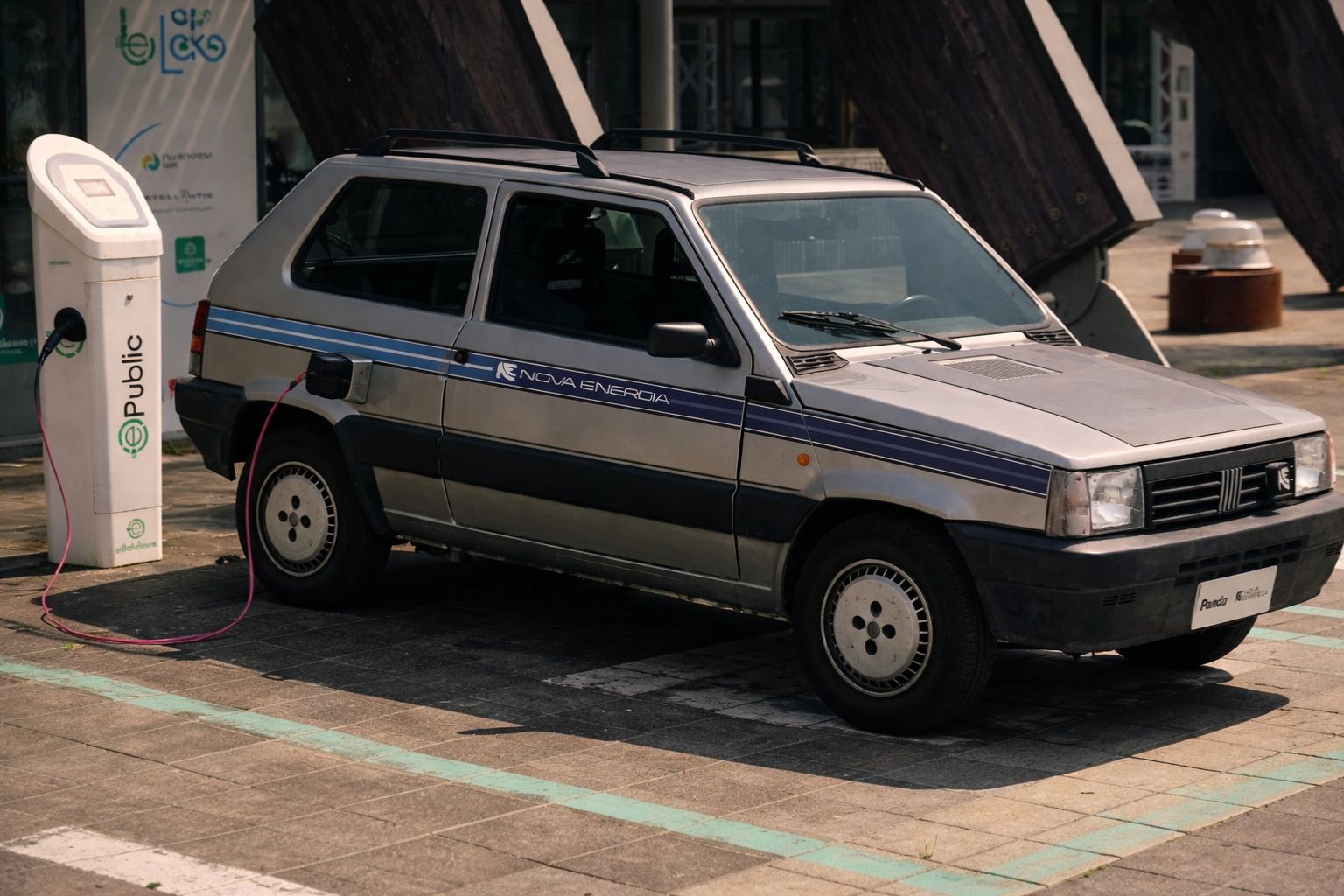


An Italian company is transforming the classic Fiat Panda into an electric car through a conversion kit that costs from 15 thousand euros. The Panda NE runs 100 to 110 km on a charge that costs only 3 euros, has a 54 hp engine and a top speed of 90 km/h. An optional solar panel on the roof adds up to 15 km of range per day.
Italians passionate about the classic Fiat Panda have found a way to keep the car in the garage without having to abandon gasoline completely: they are converting the model to electric. The company Nova Energia, in partnership with ElectroFit Systems and the Polytechnic University of Turin, developed a retrofit kit that transforms the classic Fiat Panda into a 100% electric vehicle capable of traveling 100 to 110 km on a single charge that costs only 3 euros, equivalent to R$ 17.69. The Panda NE, as it has been named, maintains the external and internal appearance of the original classic Fiat Panda, but replaces the gasoline engine with a 40 kW (54 hp) electric motor with 18.3 kgfm of torque and 11.7 kWh batteries installed under the vehicle’s floor.
The project goes beyond simple mechanical conversion. Nova Energia offers an optional roof with solar panels that recharges up to 15 km of range per day, an addition that can cover the daily commute of many urban drivers without needing to plug the car into an outlet. The top speed of the converted classic Fiat Panda is 90 km/h, sufficient for urban use and short trips, and a full recharge takes 4.5 hours on a standard 16 amp outlet. There is currently no fast charging option, but for a car designed to run within cities, overnight charging at home solves the problem.
What the conversion kit does to the classic Fiat Panda

image: Nova Energia
The concept behind the conversion is retrofit: adopting new technology in an old product without altering its character. The kit replaces the gasoline engine of the classic Fiat Panda with a 40 kW electric motor and installs 11.7 kWh batteries under the floor, preserving both the rear seats and the trunk, something that the original electric version of the Panda, called Panda Elettra, could not achieve. That model, which existed in the 1990s, needed to remove the rear seats to accommodate the batteries and was limited to 65 km/h with only 24 hp of power.
-
End of an era in Brazil: beloved sedan by Brazilians is discontinued despite having a 2.0 engine with 151 hp, CVT transmission, 466-liter trunk, and up to 650 km of range.

-
New Law Proposal in Brazil Could Heavily Penalize Drivers: Dangerous Overtaking May Become a Serious Offense with Fines Increased Tenfold and a 12-Month License Suspension; Update on 2026 Progress

-
Electric Revolution: Watts W125 Motorcycle Offers 160 km Range, 90 km/h Speed, and Affordable Price Starting at $3,000
-
General Motors Replaces Over a Thousand Workers with 50 Cobots at Electric Vehicle Plant, UAW Union Criticizes Move Amid Industry’s Automation Push




The Panda NE is significantly superior to its electric predecessor. With 54 hp and a top speed of 90 km/h, the classic Fiat Panda converted offers performance comparable to that of the original gasoline model, which depending on the version had similar or even lower power. The driving experience remains familiar for those who already know the car, with the difference that the engine noise disappears and fuel costs drop to a fraction of what was spent on gasoline.
How much does it cost to transform the classic Fiat Panda into electric

According to information from the portal Vrum, the conversion kit is available in three versions with prices reflecting the level of restoration included. The most affordable option costs 15,000 euros (R$ 88,4 thousand) and includes the electric conversion, mechanical review, and internal and external renovation of the classic Fiat Panda. The “New” package, for 18,000 euros (R$ 106,1 thousand), adds completely new mechanical and internal components, in addition to the exterior restoration. The “Special” package includes complete restoration of the interior and exterior, but no price has been disclosed.
To contextualize, the comparison with a new Panda is revealing. A new generation Fiat Panda in Italy starts at 17,400 euros (R$ 102,5 thousand), while the factory 100% electric version costs from 23,900 euros (R$ 140,8 thousand). The conversion kit for the classic Fiat Panda, at 15,000 euros, is cheaper than both new options and offers the emotional advantage of keeping a car with history, personality, and sentimental value that no brand new vehicle can replicate.
The solar panel that gives 15 extra km to the classic Fiat Panda
The most interesting optional feature of the Panda NE is the roof with solar panels. The photovoltaic system integrated into the body of the classic Fiat Panda recharges up to 15 km of range per day using only sunlight, which in Italy, with an average of 250 sunny days per year, can represent a significant portion of the daily commute for an urban driver who does not travel more than 15 to 20 km between home and work.
In practice, the solar panel can eliminate the need for charging at the outlet on days of moderate use. If the owner of the converted classic Fiat Panda drives 15 km a day or less, the solar panel can keep the battery charged indefinitely at no electricity cost, a proposal that transforms the operational cost of the car into virtually zero. For those who drive more, the panel acts as a supplement that reduces the frequency of recharges and extends the total range of the vehicle.
Why Italians prefer to convert the classic Fiat Panda instead of buying a new car
The decision to spend 15,000 euros on a vintage car instead of buying a new model for the same price is more emotional than rational, and that is precisely why it works. The classic Fiat Panda is an icon of Italian culture, a car that is present in the memories of generations and represents a time when automobiles were simple, practical, and built to last. Converting this car to electric is a way to preserve that identity while adapting to the environmental and economic demands of the present.
There is also an environmental dimension that goes beyond zero emissions during use. Converting a classic Fiat Panda that already exists is more sustainable than manufacturing a new car from scratch, because it avoids all the energy and natural resources needed to produce a body, chassis, interior, and components of a vehicle. The retrofit reuses the existing structure and only replaces what needs to be changed, generating less industrial waste and a smaller overall carbon footprint than purchasing a brand-new electric car.
The limitation that the classic Fiat Panda 4×4 faces in the conversion
Not all models of the classic Fiat Panda can be converted. Nova Energia reports that only front-wheel-drive units are compatible with the kit, because in the Panda 4×4, the rear axle occupies the space where the batteries need to be installed under the floor. This limitation excludes one of the most beloved versions of the model, the Panda 4×4, famous for its ability to tackle rural roads and uneven terrain with a lightness that modern SUVs cannot replicate.
For owners of 4×4 units, the news is frustrating, but the company does not rule out future solutions. As battery technology evolves and allows for more compact and flexible formats, it is possible that future versions of the kit will accommodate the all-wheel drive of the classic Fiat Panda without compromising energy storage capacity. For now, the conversion is only available for front-wheel-drive models, which fortunately represent the majority of units produced over the decades.
Italians are converting the classic Fiat Panda to electric with 110 km of range for 3 euros and a solar panel on the roof. Would you do this with a vintage car? Do you think retrofit is the future? Share your opinion in the comments.