Portuguese
  Spanish


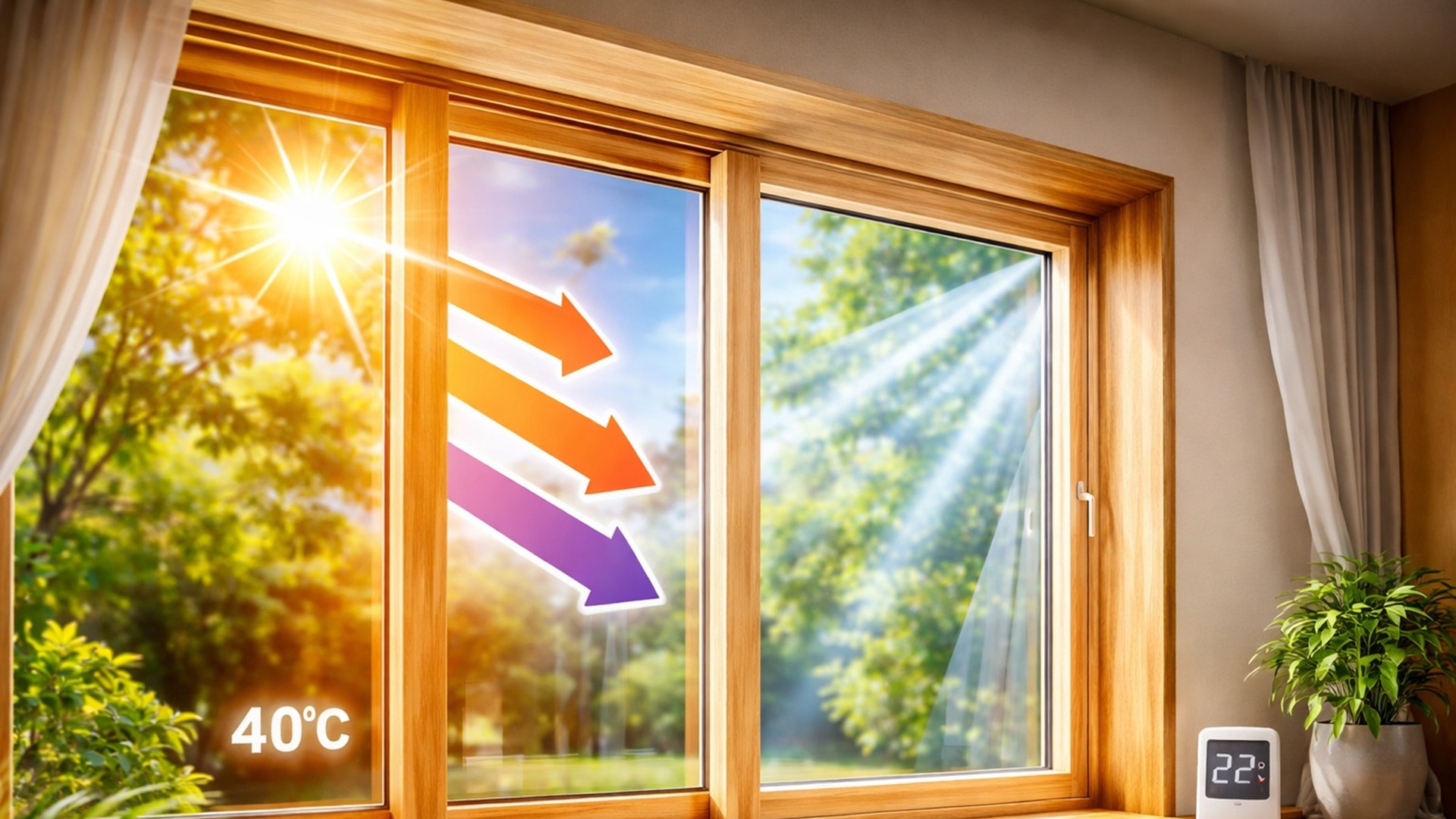


Developed By South Korean Universities, The Transparent Wood Smart Window Combines Modified Balsa And Liquid Crystals To Adjust Light Passage According To Temperature, Blocking Almost 100% Of Ultraviolet Radiation And Offering Thermal Insulation Up To Five Times Greater Than That Of Glass, Without The Use Of Electricity
Researchers From South Korea Have Developed A Transparent Wood Smart Window That Adjusts Light According To Temperature, Blocks Almost 100% Of Ultraviolet Radiation, And Improves Thermal Insulation Without Using Electricity, Offering A Passive Alternative To Motorized Smart Glass In Buildings.
Energy Challenge And Limits Of Conventional Smart Windows
Energy-efficient Buildings Remain A Significant Challenge, As Heating, Cooling, And Lighting Contribute To A Relevant Portion Of Global Energy Consumption. In This Context, Smart Windows Are Often Pointed Out As A Solution To Control Light And Heat, Reducing Internal Thermal Loads.
However, Most Of These Technologies Depend On Electricity, Sensors, And Control Systems. This Dependence Increases Costs, Adds Complexity To Installation And Maintenance, And Limits Widespread Adoption, Especially In Projects Seeking Passive And Low-Energy Consumption Solutions.
-
Apple Raises MacBook and iPad Prices as Memory Costs Surge by Up to 98%, Losing Edge Over Rivals and Highlighting AI Boom’s Impact on Consumers

-
China Establishes State Centers to Train Humanoid Robots, While the West Lags Behind with Makeshift Solutions
-
The Trap of Modern Technology: How Screen Overload and Digital Connections Can Impact Your Mental Health and Well-being
-
Wyoming Couple Grows Tropical Fruits Year-Round in -40°C Using Geothermal Greenhouse, Demonstrating Earth’s Heat Can Produce Oranges and Lemons in Snow Without Traditional Heating





Passive Material Based On Transparent Wood
The Presented Solution Works Differently. It Is A Passive Smart Window That Adjusts Visible Light Transmission In Direct Response To Ambient Temperature, Without The Need For Electricity Or Electronic Components.
The Material Was Developed By Teams From Hanbat National University And Kongju National University. The Structure Combines Modified Balsa Wood With Liquid Crystals Dispersed In Polymer, Responsible For The Controlled Optical Response.
In Laboratory Tests, Researchers Observed That The Composite Changes From Opaque To Transparent As The Temperature Increases. At Room Temperature, The Window Allows Approximately 28% Of Visible Light To Pass Through. When Heated To 40 Degrees Celsius, The Light Transmittance Rises To About 78% At 550 Nanometers.
Light Control And Nearly Total UV Blocking
This Temperature-Dependent Behavior Allows For Automatic Management Of Natural Light. In Cooler Conditions, The Lower Transmittance Reduces Excess Brightness And Limits Thermal Losses. As The Temperature Rises, The Greater Transparency Improves Internal Lighting Without Requiring Active Control Systems.
In Addition To The Adjustment Of Luminosity, The Material Provides Strong Protection Against Ultraviolet Radiation. Researchers Report That The Transparent Wood Blocks Almost 100% Of UVA Rays Through A Molecular Arrangement Known As The J-Aggregation Effect.
This Protection Occurs Without Significantly Compromising Visible Light, Contributing To The Preservation Of Human Skin And Interior Furniture Exposed To Direct Solar Radiation Over Time.
Thermal Insulation And Performance Against Glass
Thermal Insulation Is Another Central Point In The Material’s Performance. The Wood-Based Composite Has A Thermal Conductivity Of 0.197 W m⁻¹ K⁻¹, Nearly Five Times Lower Than That Of Conventional Glass.
According To Dr. Jin Kim From Hanbat National University, This Characteristic Significantly Reduces Heat Loss Or Gain In Buildings. The Superior Thermal Performance Contributes To Reduced Dependence On Air Conditioning Systems, Directly Impacting Energy Consumption.
This Set Of Properties Positions Transparent Wood As A Direct Alternative To Glass In Architectural Applications, Without Requiring Additional Electrical Infrastructure To Operate Its Smart Functions.
Automatic Privacy And Potential Applications
The Material Also Addresses A Common Limitation Of Glass Windows: Nighttime Privacy. In Cooler Temperatures, Transparent Wood Continues To Scatter Light, Making It Difficult To See Inside When The Interior Lighting Is On At Night.
According To Kim, The Innovation Combines Nighttime Privacy, Daytime Natural Lighting, And Reduction Of Energy Costs Associated With Heating And Cooling Systems. This Combination Expands Its Usage Potential In Residential And Commercial Buildings.
Researchers Also Indicate Applications In Agriculture. In Smart Greenhouses, The Material Could Automatically Regulate Sunlight And Stabilize Internal Temperatures, Preventing Plant Burns And Avoiding Electrical Consumption For Environmental Control, Thus Expanding Its Utility In Rural Scenarios.
Possible Uses In Health And Next Steps
In The Health Sector, The Composite Could Function As A Flexible Skin Adhesive. In This Format, The Material Would Become Transparent When Body Temperature Exceeds 38°C, Providing An Immediate Visual Alert Without Batteries Or Embedded Electronics.
Although More Tests Are Needed Before Large-Scale Implementation, The Study Demonstrates How Engineered Wood Can Incorporate Intelligent Functions Passively. The Approach Offers A Simpler Path To More Energy-Efficient Buildings With Lower Cost And Operational Complexity.
The Results Were Published In The Journal Advanced Composites And Hybrid Materials, Highlighting The Potential Of Transparent Wood As A Functional And Sustainable Alternative To Traditional Glass In Multiple Sectors.