






 Portuguese
  Spanish
  2 min of reading
  0 comments


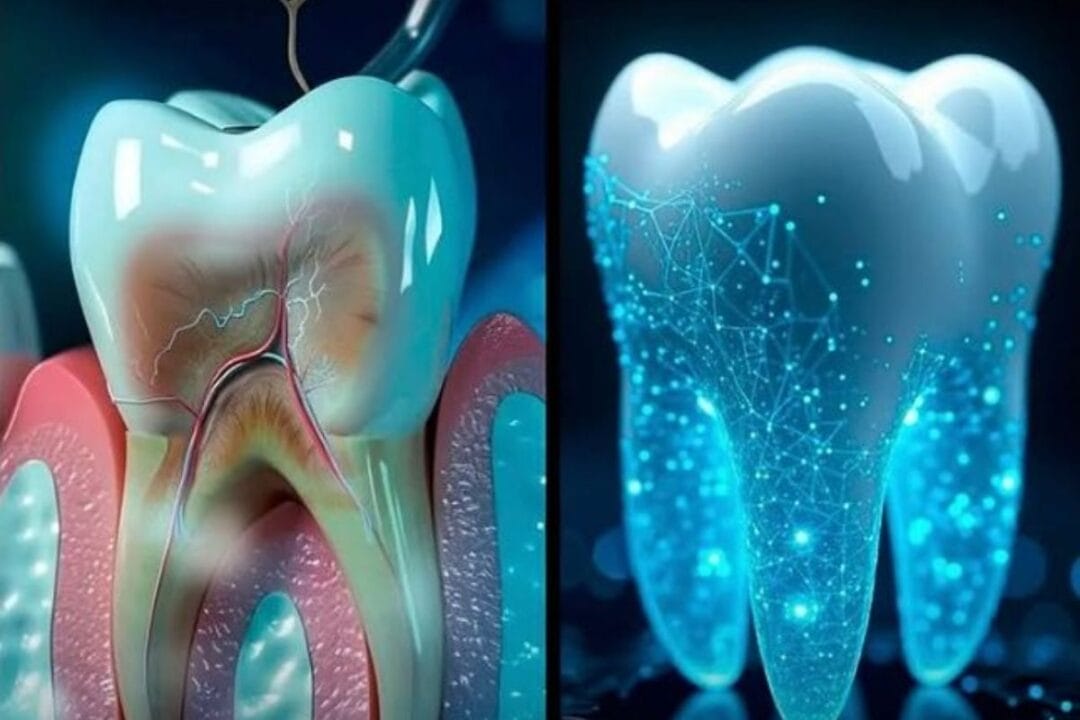
Researchers Block Protein That Prevents Dental Formation and Begin Tests on Humans With Forecast for Solution Launch in Up to Five Years
A scientific breakthrough could forever change dentistry. Japanese researchers are testing on humans a medication that promotes natural tooth growth, through regeneration facilitated by the body itself. The innovation is being developed by Kitano Hospital in Osaka and Kyoto University Hospital.
The treatment is based on blocking a protein called USAG-1, which inhibits tooth growth. By neutralizing it, scientists observed the spontaneous formation of new teeth in mice and ferrets. The encouraging results paved the way for clinical trials in adults and children.
Medication That Promotes Tooth Growth Has Already Passed Animal Tests
The medication that promotes tooth growth was initially applied to mice with dental agenesis, a genetic condition that prevents the birth of certain teeth. After treatment, the animals developed new functional teeth, with no adverse effects.
-
Helicopter Drops 180 Tons of Sand and Gravel on Swedish River to Revive Ecosystem Damaged by Decades of Exploitation

-
Brazilian Company Launches Retro Smartphone with 48 MP Camera, T9 Keyboard, and Privacy Features for Social Media-Free Use

-
Self-Taught Chinese Farmer Builds 5-Ton Submarine from Scrap, Launches It in Anhui River
-
Invisible Induction Technology Enables Wireless Power for Blenders, Coffee Makers, and Air Fryers, Reducing Countertop Cables





Subsequently, the same protocol was successfully tested on ferrets, animals closer to humans in dental structure. The positive response accelerated the start of clinical trials with humans in Japan, which began in October 2024.
Clinical Trials Are Already Underway and Advancing to Children


Trials with adults began in the second half of 2024 and, by August 2025, researchers plan to include children born with tooth absence. The goal is to assess the efficacy and safety of the medication that promotes tooth growth across different age groups and clinical conditions.
If the results are positive, the medication may hit the market by 2030. This advance represents a complete shift in the treatment of tooth loss, which is currently dominated by prosthetics and implants.
Implants May Become Obsolete in Less Than Five Years
Replacing lost teeth with titanium implants is currently an expensive and invasive solution. With the medication that promotes tooth growth, the process would become more natural, painless, and accessible, especially in cases of agenesis or early loss.
Experts believe that the new therapy could represent the greatest advancement in dentistry in the last 100 years. If approved, the medication could be recommended by dentists as a definitive alternative to prosthetic treatments.





-

-

-

17 people reacted to this.