






 Portuguese
  Spanish
  2 min of reading


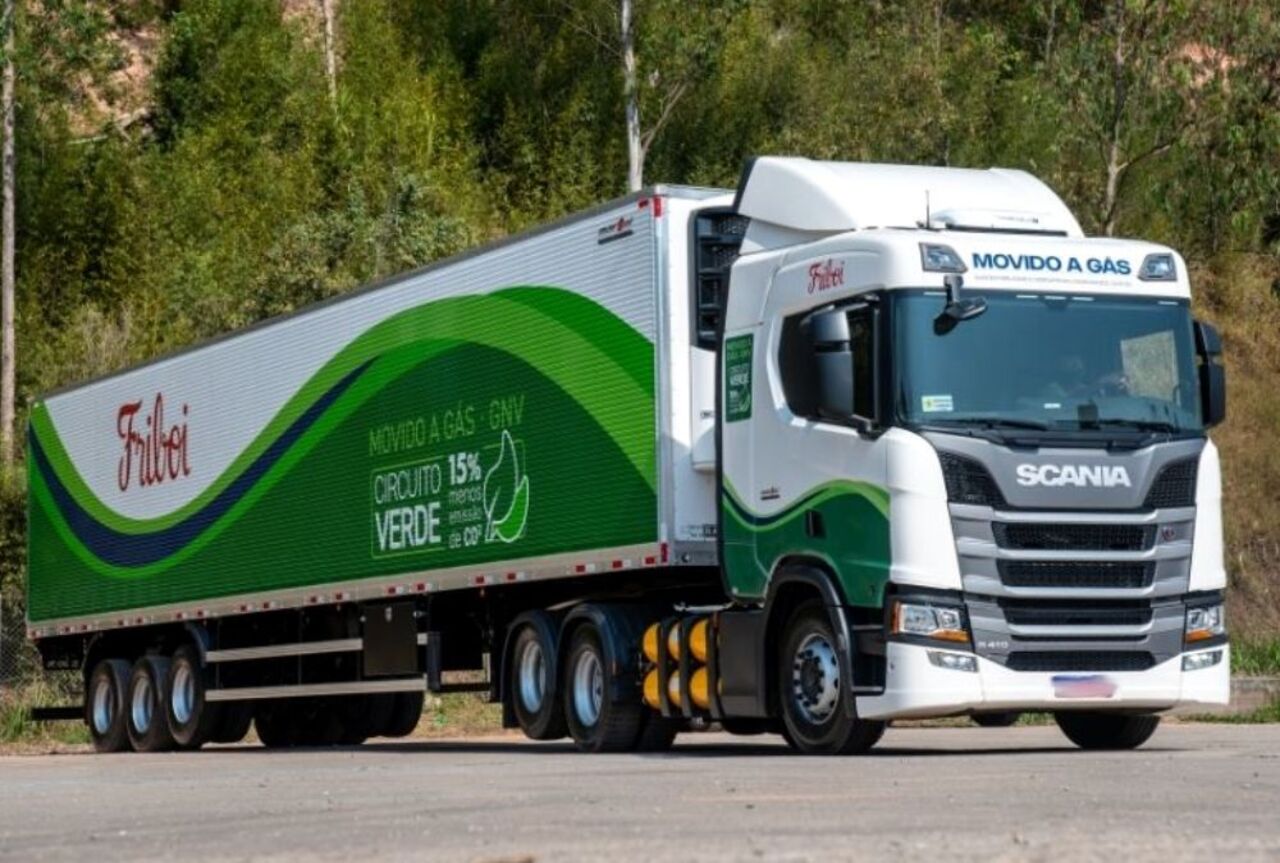
Market Leader JBS Begins Working with Its New Fleet of Gas-Powered Trucks
JBS subsidiaries, Friboi and Seara, have launched a pilot project for vehicles powered by compressed natural gas, known as CNG. Thus, JBS estimates that 15% of CO² will be reduced compared to diesel-powered truck models. Friboi’s truck travels daily between the towns of Andradina, Lins, and São Paulo, while Seara’s truck follows the route from São Paulo to Duque de Caxias.
Read Also
JBS Truck Powered by Natural Gas Will Reduce More Than 7,000 Tons of CO²
Annually, the gas-powered truck provides a reduction of 7.6 tons of greenhouse gases, equivalent to emissions generated by 4 passenger cars, or enough to circle the globe in a passenger vehicle. According to JBS, the truck is 100% powered by natural gas and has eight gas cylinders. It is the first fleet of its kind to arrive in Brazil.
In May, Scania will deliver the first fleet of trucks powered by natural gas and/or biomethane in Brazil. This truck, compared to JBS’s, has six gas cylinders.
-
Oil returns to the center of concerns with tension between the US and Iran

-
IEA reduces forecast for global oil demand in 2026 after impacts of the Middle East crisis

-
Bank of Japan raises interest rates to 1%, reaching the highest level in over three decades
-
ANP halts LPG reform, and Sindigás sees technical caution as a decisive point for safety, investments, and the future of the cylinder in Brazil.




JBS – Second Largest Food Company in the World
JBS is the second largest food company in the world and the largest in animal protein. With a globally diverse platform by geography and product types (poultry, pork, beef, and lamb), the Company employs more than 245,000 people in production units and offices across all continents, in countries such as Brazil, the United States, Canada, the United Kingdom, Australia, and China, among others – in Brazil, there are over 145,000 employees, making the company one of the largest private employers in the country.




Be the first to react!