






 Portuguese
  Spanish




Court Ruling Expands the Reach of Debt Collection and Involves Major Digital Platforms
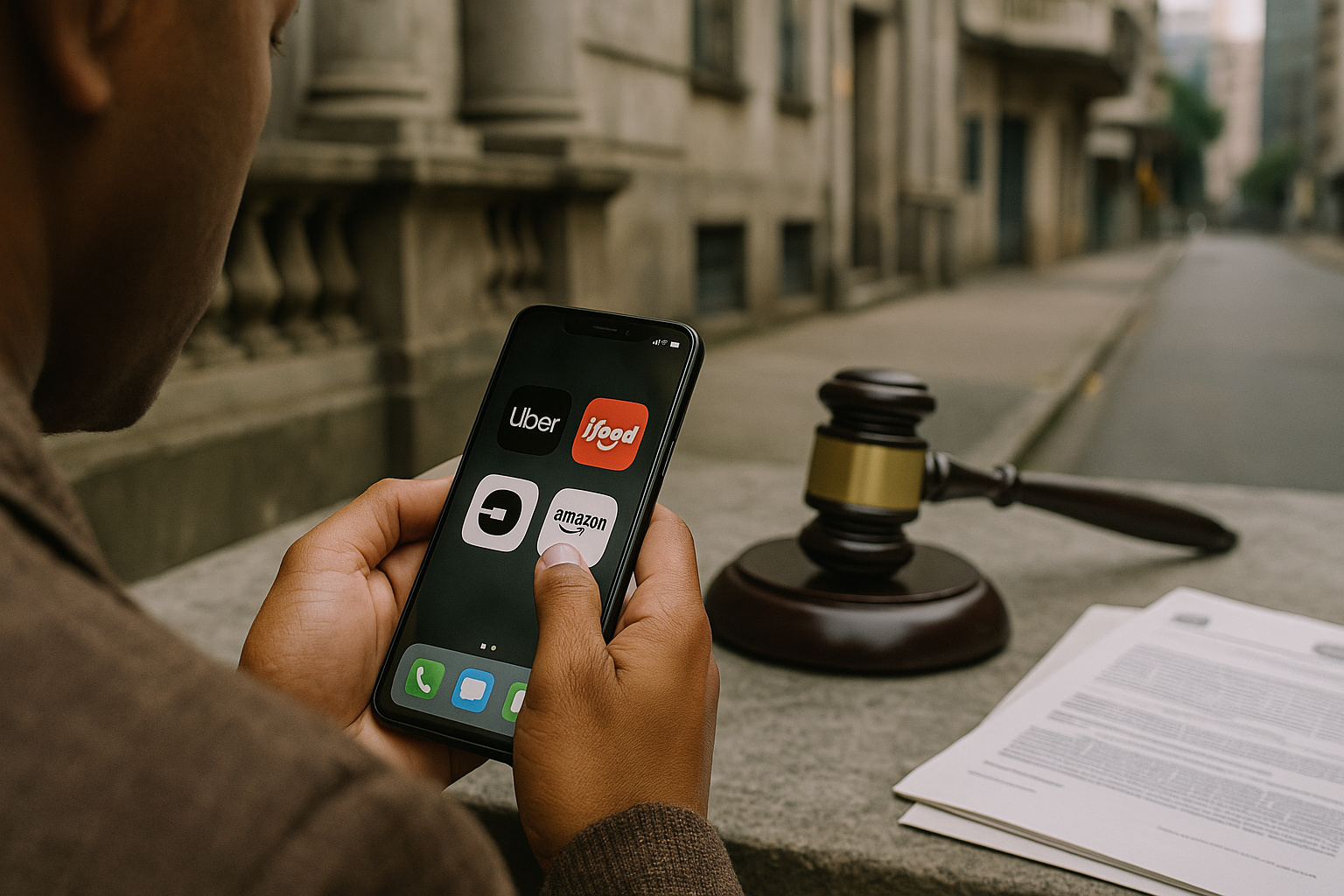
Technology and application companies widely used in Brazil, such as Uber, iFood, and Amazon, are now required to provide registration data, addresses, and payment information of users considered debtors in legal proceedings. The decision marks another advancement in the use of alternative mechanisms for locating assets and identifying wealth in enforcement actions.
The measure was determined by Judge Lucia Helena Bocchi Faibicher, of the 1st Civil Court of the Lapa District in São Paulo, after it was established that all traditional attempts to locate assets had failed. Among these was the use of the Sisbajud system, the Judiciary’s official tool for blocking funds in bank accounts.
The information was disclosed by court decision from the São Paulo Judiciary, as stated in the records of the case analyzed by the magistrate, and follows a growing trend observed in state courts across the country.
-
Are Companies Required to Release Employees During Brazil’s World Cup Matches? Understanding Workers’ Rights

-
Brazilian Family’s Homeschooling Success Sparks International Debate: Daughters Read 30 Books Annually and Speak Multiple Languages

-
Piauí Governor Enacts Law Requiring State Contractors to Reserve Jobs for Former Inmates with Minimum Wage and Verification Before Payment
-
Providing Your Tax ID at Supermarkets: A Routine Step That Can Unlock Discounts and Rewards but Also Reveals Your Shopping Habits




Frustration with Sisbajud Led to the Expansion of Searches for Digital Information
The request that led to the decision was made by a consumer seeking the enforcement of a judgment against a debtor already recognized by the court. However, after several unsuccessful attempts to locate seizable assets through conventional means, the party requested that the Judiciary resort to digital platforms used in the debtor’s daily life.
Given this scenario, the judge understood that, after exhausting traditional tools, it would be appropriate and proportional to adopt supplementary measures to ensure the effectiveness of the court decision. Thus, formal notices were issued to a series of companies operating in the digital space that maintain active registrations of millions of Brazilians.
The following platforms were notified: Uber, iFood, Spotify, Netflix, Rappi, Magazine Luiza, Amazon, and Americanas. All of them must respond to the Judiciary within the legal timeframe, under penalty of sanctions.
What Data Companies Will Need to Provide to the Court
According to the decision, the platforms must provide, in detail, a series of data related to the debtors investigated in the case. Among the required information are:
- Confirmation of the existence of the debtor’s registration on the platform;
- Account creation date and address provided in the registration;
- Payment methods used, including:
- Registered card data;
- Holder’s CPF;
- Address linked to the payment method.
This data can be used for cross-referencing information, identifying indirect wealth, verifying consumption patterns, and even locating the debtor physically, significantly expanding the possibilities for enforcing the debt.
Moreover, the magistrate emphasized that such information is considered relevant and proportional, since the objective is to ensure the compliance with a court decision that has already been finalized.
Decision Follows Understanding Already Adopted by Other Courts
Although it attracted attention due to the number of companies involved, the decision is not unprecedented. The São Paulo Court of Justice (TJ/SP) had already determined, in other cases, the provision of data by applications and digital platforms to assist in locating debtors, including in cases involving school fees.
In Rio de Janeiro, judges have also been adopting a similar understanding. In recent decisions, judges considered legitimate the request for data from digital companies after unsuccessful attempts to locate assets through traditional means, such as bank blocking and searches in official records.
According to this understanding, digital platforms are part of the financial and logistical daily life of citizens, being, therefore, legitimate sources of information when the debtor does not cooperate with the judicial process.
Impact of the Decision and Effects for Consumers and Companies
Experts believe that this type of decision represents a new level in debt enforcement in Brazil, especially in a context of increasing digitalization of consumer relationships. Transportation, delivery, streaming, and e-commerce applications have come to be seen as extensions of users’ financial lives.
For consumers, the decision reinforces the importance of maintaining compliance with court obligations, as digital anonymity is no longer an obstacle for the Judiciary. For companies, the challenge becomes balancing data protection and compliance with court orders, especially in light of the General Data Protection Law (LGPD).
The trend is for similar decisions to become increasingly common, expanding the use of digital data as a legitimate tool for ensuring Justice.


