Portuguese
  Spanish


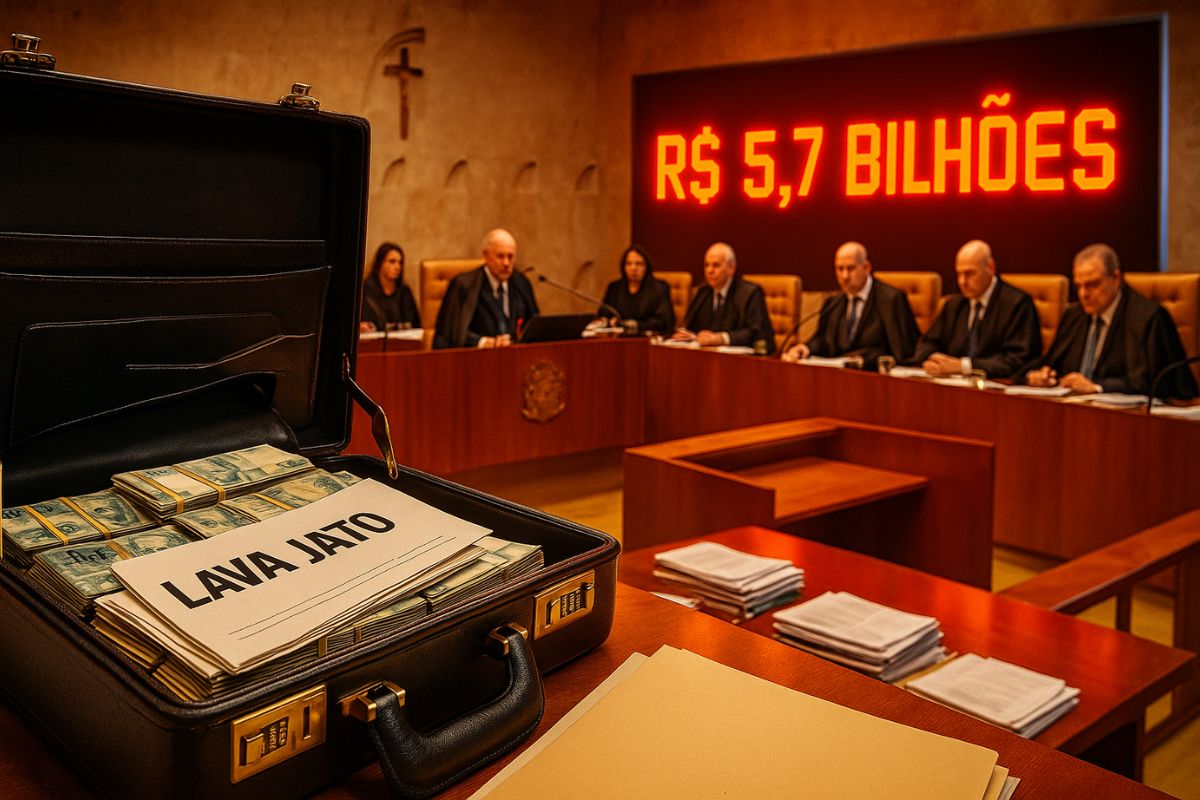


Court Evaluates Validating Discounts of R$ 5.7 Billion for Companies of Lava Jato. Decision May Set New Rules for Renegotiations and Leniency Agreements in Brazil
The Brazilian court began analyzing on Friday (15) the validity of discounts granted to Lava Jato companies, totaling R$ 5.7 billion. According to Folha de S. Paulo, the decision will also establish criteria for future renegotiations of fines and define under which circumstances these benefits can be applied to other investigated companies.
The case involves contractors who reached leniency agreements with the Union, a legal instrument that allows companies to collaborate with investigations, admit irregularities, and pay fines in exchange for legal benefits. The ruling may directly impact the construction industry and the landscape of large public contracts.
How Renegotiations Worked
The discounts to Lava Jato companies were the result of a process completed last year, involving companies like UTC, Braskem, OAS, Camargo Corrêa, Andrade Gutierrez, Nova Participações, and Odebrecht.
-
Family Quietly Transforms Old Sawmill into $700 Million Business, Opens 25 Stores in Two Years Across 22 Brazilian States

-
Couple Sold Their Home to Save Business, Now Run Platform Handling $180 Million Monthly and Managing Over 51 Million Listings
-
Brazil’s 2026 Tax Refund: Record 9.58 Million Filers in Largest Payout Ever, But a Key Detail on Priority Recipients Draws Nationwide Attention

-
Itaú Alters Hybrid Work Model, Increasing Office Days from 2028, Prompting Employees to Adjust to New Routine




Among the changes approved in the renegotiation, there is the replacement of Selic by IPCA as the index for correcting the amounts owed, the possibility of using tax loss credits to settle up to 50% of the debt balance, and changes to the payment schedule. These adjustments, according to the Office of the Comptroller General (CGU), aim to ensure the continuity of business activities and preserve jobs in the sector.
Origin and Legal Basis of the Discounts
The reduction in amounts was made possible by a provision on tax credits included in a 2022 law that dealt with student financing. This regulation opened the door for companies to renegotiate their debts under more favorable conditions.
According to the CGU, the aim was to strengthen consensuality as a tool for resolving conflicts in the Judiciary, avoiding lengthy and costly lawsuits. There was no change in the irregularities already acknowledged by companies in leniency agreements.
What Is at Stake for the Future
The ruling may determine whether the benefits granted to Lava Jato companies can be extended to other companies facing similar proceedings. If this occurs, companies from various sectors could renegotiate fines and payment terms, creating a new legal precedent.
For experts, the analysis brings two perspectives: on one side, the potential to provide financial relief to companies still in operation; on the other, the risk of reducing the punitive effect of corporate corruption cases.
Expected Market Impacts
If validation is confirmed, companies working on public works and large contracts may benefit from new discussions with the Union. This could stimulate investments and preserve jobs, but may also generate debates about the effectiveness of the penalties provided in anti-corruption legislation.
And you? Do you believe that validating these discounts for Lava Jato companies is a necessary measure to preserve the economy, or do you think it weakens the fight against corruption? Leave your opinion in the comments.