






 Portuguese
  Spanish


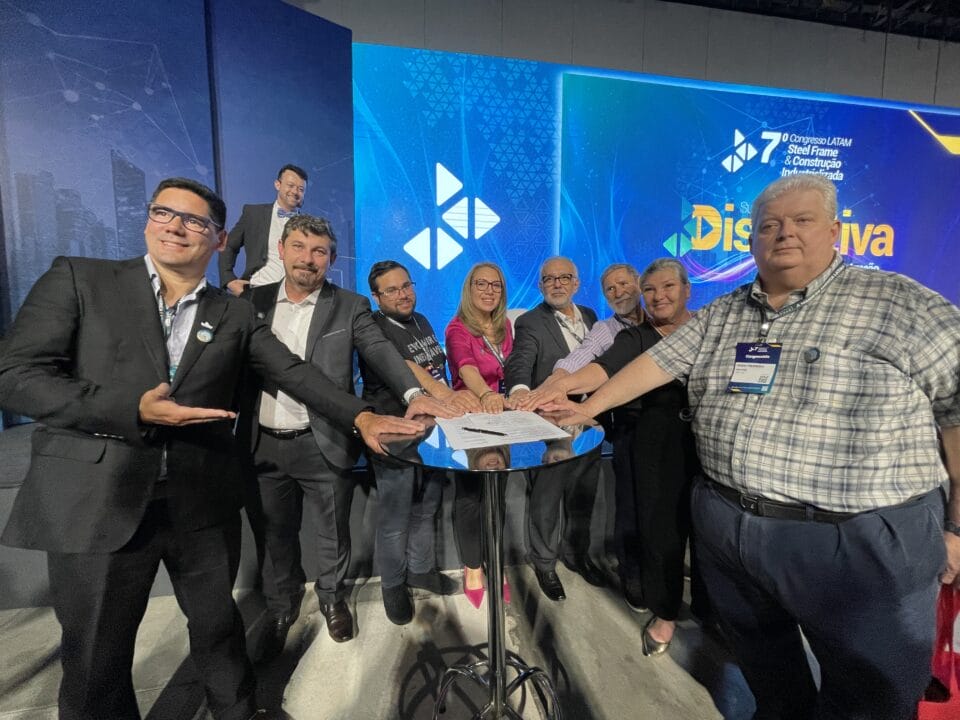

ALACOS Is Launched at the Steel Frame Congress in SP to Strengthen Cooperation Between Entities and Promote Dry Construction in Latin America.
The city of São Paulo was the stage for the launch of the Latin American Alliance for Dry Construction (ALACOS) during the 7th Steel Frame Congress. This event stood out for bringing together important representatives from international entities, aiming to promote cooperation and the development of the sector in Latin America. Dry construction has been gaining momentum in the region, presenting itself as an innovative and efficient alternative for civil construction, seeking more sustainable and faster.
During the congress, relevant topics about the application of dry construction and its integration with industrialized construction were discussed, highlighting the advantages of this approach for the industry. In addition, emphasis was placed on the need to strengthen regional collaboration so that technologies and practices become increasingly accessible and widespread. The new trends in civil construction promise to reshape the construction landscape, bringing both economic and environmental benefits. This transformation of the sector is a crucial step towards modernizing construction practices.
Launch of the Latin American Alliance
On Thursday, October 24, in the vibrant Anhembi District in São Paulo, a significant milestone for the dry construction sector occurred: the official installation of the Latin American Alliance for Dry Construction (ALACOS). This significant event brought together various leaders from international entities, all united by the purpose of consolidating international cooperation among Latin American countries. This union aims to promote joint actions that foster development and modernization of civil construction in the region, encouraging sustainable and innovative growth.
-
U.S. City Builds Tiny Home Village on Water Company Land to House 136 Homeless People: Inside the Social Housing Units

-
Woman Turns Shipping Container into Home, Embraces Rural Life to Cut Monthly Expenses to Just Over $330
-
France Revamps 530 Social Housing Units with Large Balconies and Glass Facades Without Demolishing Existing Buildings

-
Facing high rent, couple transforms parents’ garage into a fully functional apartment, creating a complete home at a fraction of the market cost.




Entities and Regional Integration
Among the founding members of this initiative are INCOSE from Argentina, the Asociación de Construcción en Seco from Colombia, the LATAM Steel Frame & Industrialized Systems Congress from Brazil, the Brazilian Association of Lightweight and Sustainable Construction, the Institute of Technology for Building Industrialization, Construy Chile, and IUCOSE from Uruguay. The initial ceremony kicked off activities with the panel ‘Latin American Alliance for Construction: cooperation and actions for sector development,’ highlighting the importance of regional integration for the ongoing evolution of dry construction.
Leadership and Visions for the Future
Paola Velasco, who leads the Dry Construction Association (ACS) and presides over the newly established ALACOS, emphasized in her speech the crucial value of regional integration as a key factor for the sector’s advancement. According to her, ‘we are committed to promoting dry construction as an innovative and responsible solution that has the potential to transform the future of construction in Latin America.’ Another important voice present was Gilberto Freitas, General Director of the Institute of Technology for Building Industrialization (ITIE), who added his expertise by highlighting Modern Methods of Construction (MMC).
Education and Research in the Sector
Freitas underscored the imperative need to train qualified professionals to handle the innovations that the market demands. He emphasized that ‘the market requires constant innovation, and that depends on the preparation of professionals who not only keep up with the future but recreate it every day.’ Furthermore, the event also served as a backdrop for the launch of the second edition of the off-site construction research in Brazil, led by ITIE. This research provides a comprehensive overview of the industrialized construction landscape in the country, offering valuable data for companies and specialists in the field of dry construction.
Source: © MARCELO MATUSIAK








