






 Portuguese
  Spanish


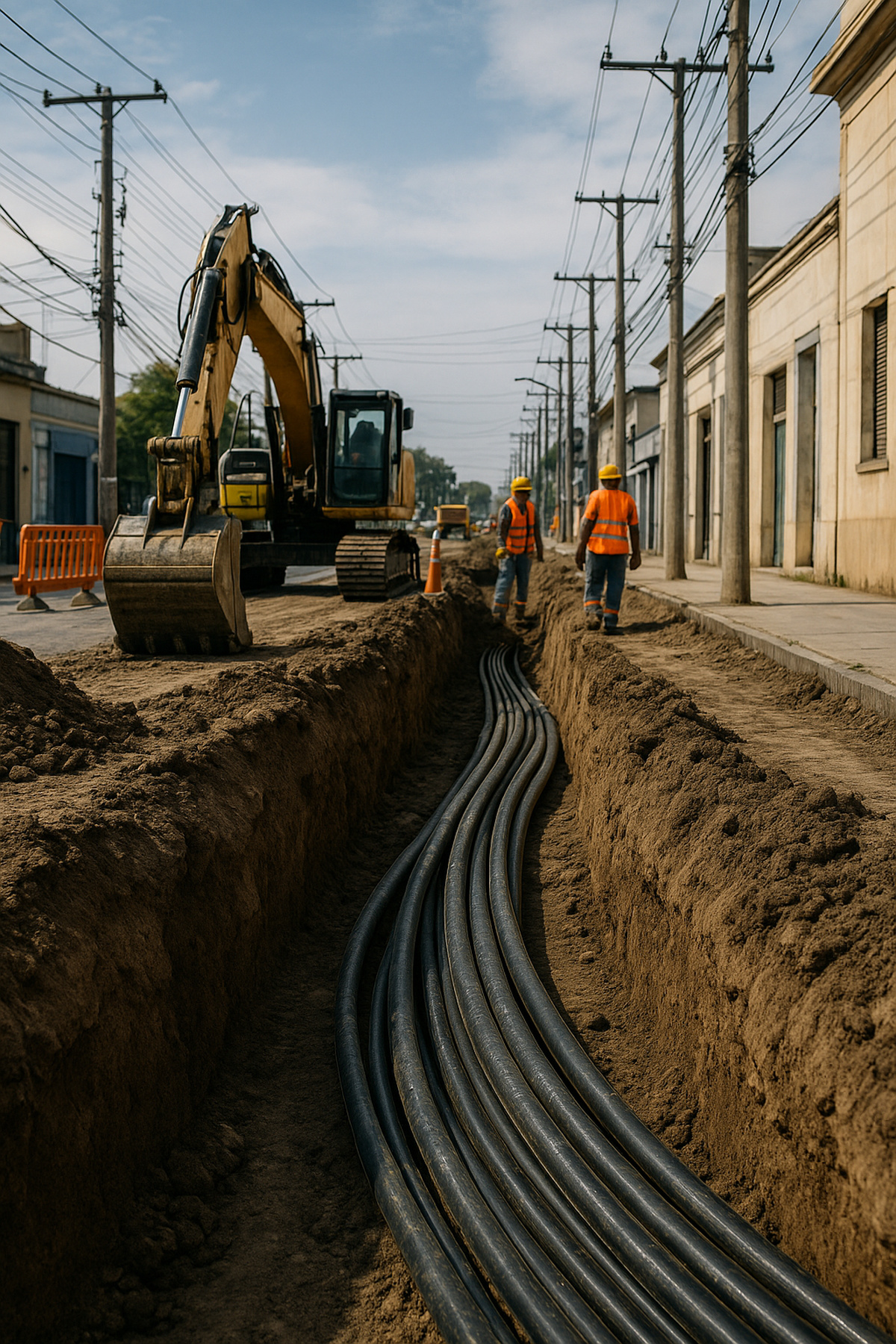


Decision Published on November 6 Determines Underground Cabling and Heralds a New Urban Phase with Roadway Reorganization and Enhanced Security
A large-scale structural change with significant urban impact was recently approved in Brazil, and has consequently begun to attract national attention.
It garnered interest because it completely transforms how cities manage overhead cabling.
The sanction occurred on November 6, when authorities determined that all overhead cabling must be installed underground, according to an official publication.
This directive was confirmed through a note published in the Official Journal, which reinforces its immediate validity.
The measure transforms the electric and telecommunications models, thus gradually eliminating the visual pollution caused by exposed wires.
According to technical teams, the change opens up space for a safer reorganization.
It also improves the sustainability of the infrastructure and, in addition, increases urban efficiency over the coming years.
Technical Survey Reveals Urban Potential for Structural Transformation
The change arises from a legislative project created to reduce risks and modernize urban space, highlighting its strategic importance.
The proposal explored various solutions and, therefore, concluded that removing power, telephone, internet, and cable TV lines from overhead areas would be essential.
These cables will then be replaced by standardized underground networks.
-
Viral Video of Giant Gold Nugget in Brazil’s Oiapoque Revealed as Painted Rock by French Guiana Miner

-
18th-Century Treasure Uncovered in Brazilian Amazon: 20 Réis Coin and Dutch Pipes Found at Construction Site
-
New York Resident Uncovers Complete Mastodon Jawbone in Backyard After Spotting Teeth Emerge from Ground
-
Young Treasure Hunter from Brazil’s Balneário Camboriú Finds $22,000 in Jewelry with Metal Detector, Aims for $1 Million, and Returns iPhone Found in Ocean


The law was deemed strategic as it reduces accidents involving exposed wires.
It decreases recurrent thefts and consequently protects the urban landscape.
According to technical information, the underground installation will begin in regions with the highest density of cables.
The process will gradually expand, and therefore cover the entire planned perimeter.
The responsible administration stated that this reorganization enhances areas of intense circulation.
It increases the safety of residents and, in addition, improves roadway flow.
Urban Impacts and Operational Challenges of the Change
The new model follows standards already established in countries in Europe and the United States, where, furthermore, the use of underground networks increases the stability of services.
In these locations, this approach reduces failures, improves safety, and, above all, better organizes the urban visual landscape.
The Institute for Applied Economic Research (Ipea) highlighted in a technical note that underground infrastructure requires a higher initial investment.
However, it reduces future maintenance and operation costs and, therefore, brings savings in the medium to long term.
The assessment shows that the model improves energy efficiency, decreases interruptions, and, in addition, produces a positive environmental impact.
Experts assert that the structure creates a favorable environment for technological modernization.
It strengthens territorial ordering and thus consolidates a safer urban standard.
Technicians emphasize that the transition requires coordination among concessionaires.
It demands rigorous planning and, above all, constant oversight.
The responsible companies will have between two and five years to replace all overhead cabling.
The administration will have 180 days to define technical criteria and organize oversight with municipal departments.
The regulation provides for a fine of R$ 4,630 for those who fail to comply with the requirements.
Reoffending will automatically double this amount, consequently increasing the companies’ liability.
Social Reaction and Expectations Regarding the Change
The decision sparked discussions among residents, who view the measure as a necessary advancement.
They believe that overhead cabling directly impacts safety and therefore needs to be replaced.
Although the approval was well received, technical sectors warn of the need for careful execution.
It should avoid common issues in underground works, such as simultaneous interventions and difficulties in accessing networks.
The public administration stated that the execution will follow strict environmental criteria.
It will comply with urban parameters and, thus, avoid structural damage.
The objective is to preserve natural resources while simultaneously ensuring efficiency.
The Change in a Global Context
The transformation follows a global trend of urban modernization.
It is based on compact, organized infrastructure, and moreover, a visually cleaner approach.
In various countries, underground systems have reduced electrical risks.
They have increased road safety and therefore enhanced the efficiency of essential services.
These interventions reinforce the importance of planned urbanization.
They reconcile modern infrastructure with environmental preservation, creating more efficient cities.
What Does the Future Hold After This Decision?
Experts assess that the country could experience a significant transition after the adoption of underground cabling.
Modernization depends on constant oversight, meeting deadlines, and consequently, efficient governance.
It requires technical alignment among authorities, concessionaires, and the population.
Meanwhile, expectations are rising among residents and visitors.
They are following the structural reorganization that promises profound changes in the urban landscape and security.
With so many changes anticipated, an inevitable question arises:
Will the country be able to consolidate this new urban phase with efficiency, organization, and lasting sustainability?





Fake.
Existe apenas uma PROPOSTA de Lei tramitando na Câmara dos Deputados, obrigando as concessionárias de energia a instalar redes subterrâneas em cidades de mais de 300 mil habitantes.
Agora, quero ver aprovar.
Não adianta o legislador criar, p. ex., uma lei para cada casa ter uma torneira com uísque 12 anos sem prever a fonte de recursos para tal. Mesma coisa para as redes subterrâneas. As concessionárias vão querer repassar o custo e o contribuinte 0TÁR10 não aguenta mais novos tributos e taxas.
Vai ficar tudo como está.
Esse pais nao tem lei nenhuma .isso é mentira
Não tem nenhuma Lei aprovada nesse sentido no Brasil.