






 Portuguese
  Spanish
  3 min of reading
  0 comments


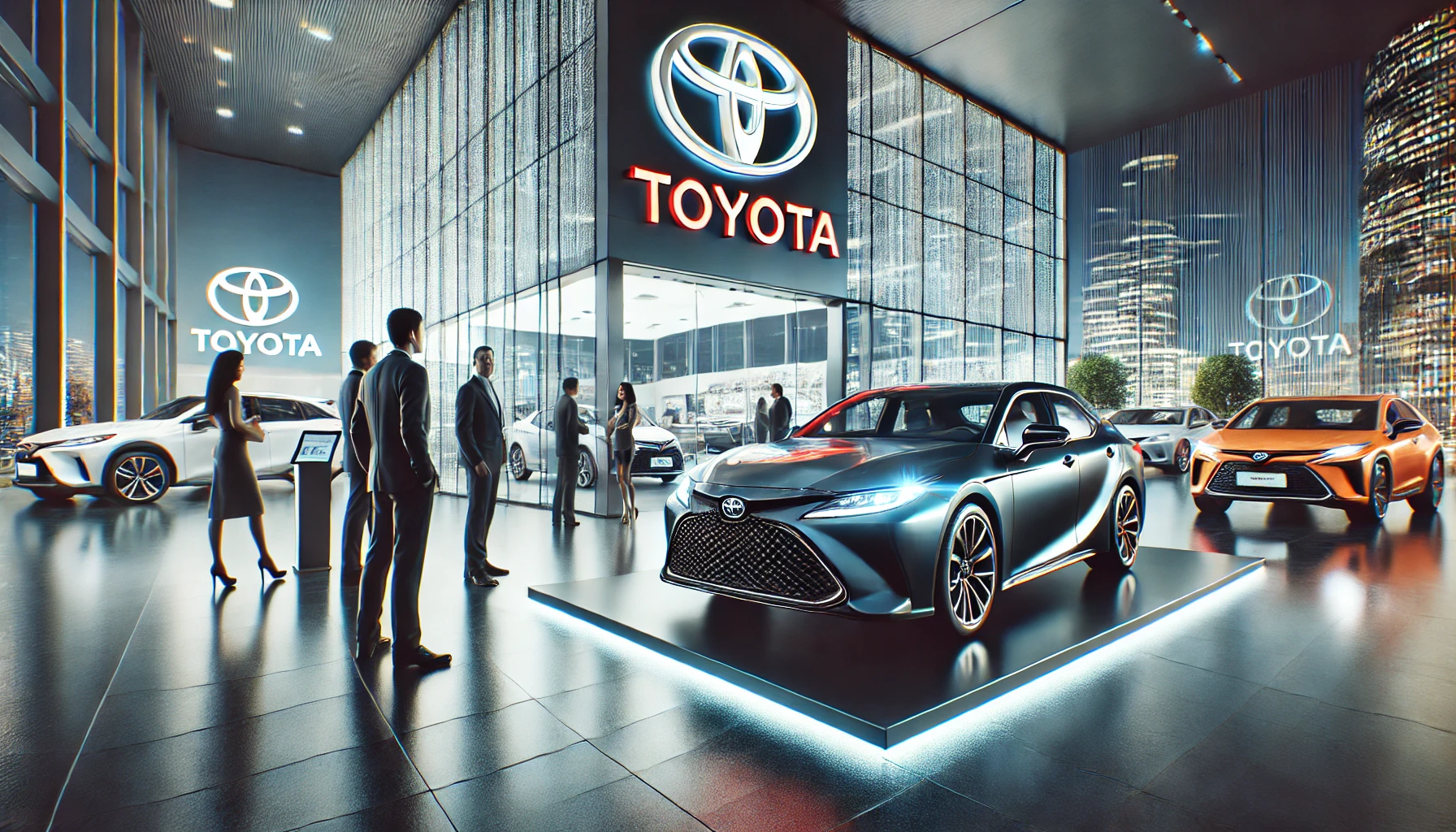
Toyota Reveals Impressive Increase In Profits Per Car Sold, Even With Declines In Sales. The Japanese Manufacturer Overcame Challenges In The Automotive Market By Adopting An Intelligent Pricing Strategy And Rigid Cost Control.
While the global automotive market faces intense challenges, a Japanese automaker surprises the world with a significant increase in its profits per vehicle sold.
But what really drove this turnaround, and what secrets lie behind Toyota’s high profitability?
This growth in profit margin occurred right at the time when the company reported a decline in the total number of units sold.
-
Uber Faces Shareholder Scrutiny as Board Accused of Ignoring Safety, Compliance, and Harassment Warnings Amid Over 3,500 U.S. Lawsuits

-
Ferrari’s First Electric Car Divides Fans, Priced at $630,000, Amid Concerns Over Limited Editions; Brand Clarifies It’s Not Just for Future Perks
-
BYD Dolphin Mini: The Electric Car That Defies Depreciation, Losing Only 3.58% in a Year and Becoming the Best-Selling Retail Model Under $22,000

-
Electric Car JAC E-JS4 Loses $19,000 in Value in One Year, Leading Record Depreciation of Used Cars in Brazil Due to Expensive Battery and New Models


If you believe that fewer sales mean less profit, the numbers prove that reality is much more complex and interesting than it seems.
The Profit and Sales Decline Scenario
Toyota Motor Corporation revealed its financial performance for the first fiscal quarter of 2025, covering the months from May to July 2024.
During this period, the Japanese company accumulated total revenue of US$ 78.813 billion, reflecting a growth of 12.2% compared to the same period last year.
However, while revenue was rising, the number of vehicles sold declined.
In 2023, the company sold 2.751 million cars, a number that decreased to 2.636 million in 2024, a drop of 4.27%.
Even with this decline in sales, Toyota managed to raise its operating profit, which reached US$ 8.714 billion, marking an increase of 16.7% compared to the previous year.
According to data from Toyota itself, the company’s ability to maintain high profits reflects specific and adaptive strategies in response to the market.
This approach resulted in an operating profitability of 11.05%, surpassing the 10.63% achieved in the same period last year.
Profitability Per Car Sold: A Surprising Jump
Despite the drop in sales, the profit per car sold rose significantly, reaching US$ 3,305 per unit, equivalent to approximately R$ 18,701.
This represents an increase of 21.8% compared to last year.
According to industry experts, this rise was no coincidence: it reflects both an adjustment in Toyota’s pricing structure and detailed attention to cost control.
Additionally, the average revenue per car also increased, reaching US$ 29,909 or about R$ 169,232.
This growth of 17.1% demonstrates how the automaker has been working to maximize the value of each unit sold.
The increase is attributed to a bolder pricing strategy and ongoing investment in production processes and efficiency.
The Pricing Structure And Effects On The Market
Toyota has been implementing adjustments that go beyond traditional price increases.
The brand has adopted an aggressive policy of cost optimization, thereby significantly increasing operational profitability.
According to industry analysts, the company does not limit itself to just cutting costs; it also enhances the technology applied to vehicles and processes, which allows for expense reductions without compromising quality or brand image.
These measures are particularly important in a scenario where automakers face a difficult economic environment, largely due to component shortages and fluctuations in input prices.
However, Toyota has demonstrated that it is possible to continue growing and gaining ground even in an uncertain environment, highlighting its adaptability and resilience.
The Numbers Table Of Toyota
Below is a detailed table with the key results from Toyota for the first fiscal quarter of 2024 and 2023:
| Period | Total Revenue (US$) | Operating Profit (US$) | Sales (Thousands of Units) |
|---|---|---|---|
| May-Jul-24 | 78.813 billion | 8.714 billion | 2.636 |
| May-Jul-23 | 70.217 billion | 7.465 billion | 2.751 |
Long-Term Strategies And Resilience Of Toyota
Another important factor behind Toyota’s strong results is the ongoing investment in innovation and efficiency.
The company constantly seeks to improve its processes and develop new technologies to meet the demands of an increasingly demanding market.
According to internal information from Toyota, these actions allow the Japanese brand to stand out even in times of adversity.
Investment in innovation and efficiency is also reflected in rigorous cost control.
This stance has allowed Toyota to maintain its competitiveness and remain profitable, as well as ensure that the company is prepared to face future challenges.
And you, do you believe that Toyota’s strategies are sufficient to maintain its success in such a competitive market? Share your thoughts!





Be the first to react!