






 Portuguese
  Spanish
  6 min of reading
  0 comments


In male-dominated construction sites, women quarry workers of Bolivia transformed discrimination, lower wages, and invisibility into collective organization to fight for respect, recognized work, and more safety in construction
Women quarry workers of Bolivia created an association after years of lower wages, prejudice, harassment, and lack of recognition on construction sites. The organization was born in a sector where many female workers were seen as helpers, even when they carried materials, plastered walls, painted, laid floors, and participated in construction as a profession.
The information was published by The Guardian, a British newspaper with international development coverage. The case shows how construction can also become a struggle for respect, fair wages, and safety for women who depend on construction work to support their own homes.
In Bolivia, the wage gap between men and women in the sector reached 38%. This number helps explain why the creation of ASOMUC, the Association of Women in Construction, became a form of pressure against inequality within construction sites.
-
Near Amsterdam, residents buy land and discover they must also build streets, manage drainage, handle waste, and grow food on half their plot.

-
Brazil’s WEG to Open New Factory in China by 2027, Expanding Production of Large Rotating Electric Machines and Low to Medium Voltage Motors in Rugao

-
Chinese Shipyard Secures $1 Billion in Orders for Low-Carbon Container Ships Amid Global Fleet Renewal Efforts
-
Brazilian Planned Community Provides Housing for Over 420 Formerly Homeless, Aims to Reach 1,900 Residents


Bolivian quarry workers faced prejudice on sites where they were seen as helpers
Construction is often associated with physical strength. Therefore, women entering this sector face a barrier even before they can show what they can do. On many sites, they need to prove that they can also work with tools, materials, finishing, and heavy tasks.
The story of Reyna Quispe, a construction worker, illustrates this reality. While still young, she experienced verbal abuse and discrimination from male colleagues. The problem was not just the heavy work, but the hostile environment created by those who did not accept women on the site.
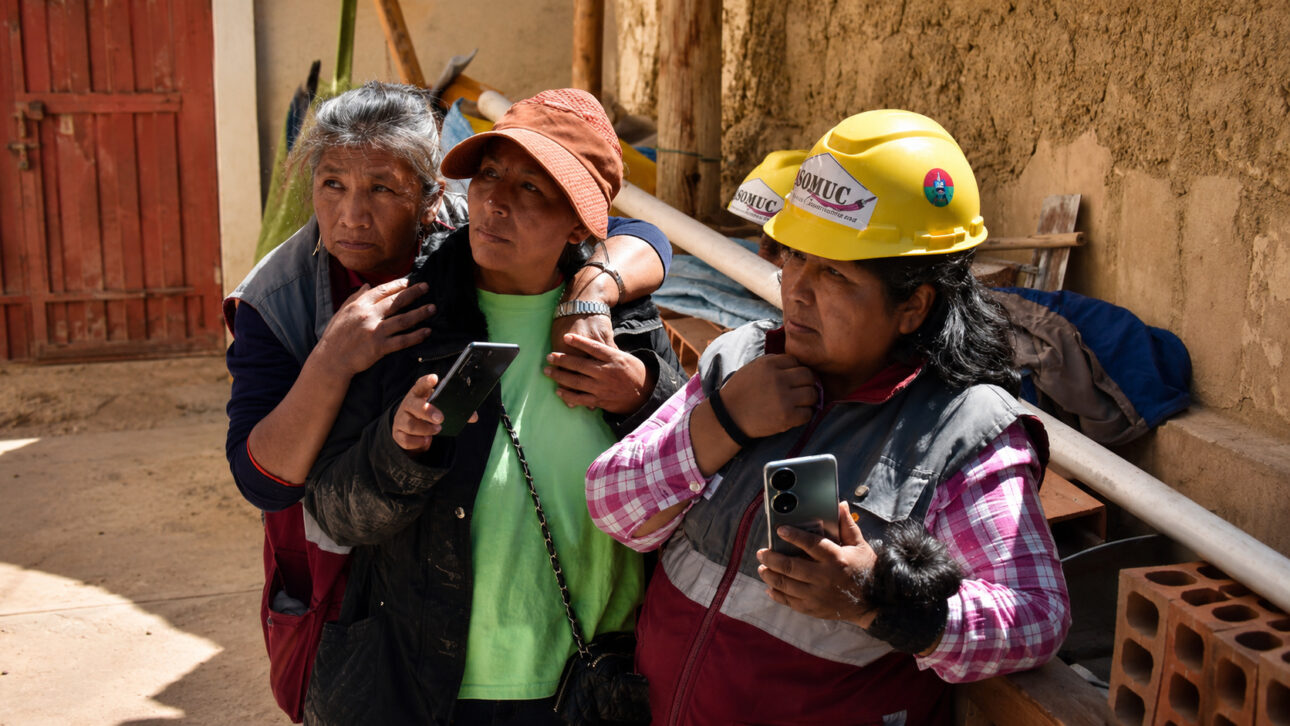
This type of prejudice pushes many women into roles considered lesser. Instead of being recognized as construction professionals, they end up being treated as permanent assistants, even when they accumulate practice and technique.
In many renovations, it is still expected to see men in charge of the work and women only as clients, residents, or helpers. The Bolivian case shows that this division also appears when a woman decides to make a living from construction.
Association created in 2014 became a response against lower wages and abuses on construction sites
The ASOMUC, Association of Women in Construction, was created in December 2014 by a group of women who met in training related to the urban and construction area. The organization obtained legal status in September 2017.
In practice, the association functions as a support and pressure network. It brings together women who want training, more recognition, and better working conditions. It also strengthens the idea that a female construction worker is not an informal helper but a professional in the construction industry.
The Guardian, a British newspaper with international development coverage, reported that the group had about 60 workers. The number shows a small but important organization in a sector where female presence was still low.
The association also advocated for practical goals, such as having its own headquarters, creating a tool bank, and forming a company to compete for larger contracts. This means moving away from dependence on bosses and middlemen, seeking autonomy within their own work.
38% wage gap exposed the extent of inequality in construction
The wage gap of 38% between men and women in Bolivian construction is the strongest data point of the case. It shows that the problem is not limited to jokes, offensive comments, or distrust of female capability.
When a woman earns less for the same work sector, inequality appears in the wallet, in household food, in rent, in transportation, and in the future of the children. For many female construction workers, earning less means accepting more shifts, more dependence, and less chance of advancing in the profession.
The construction industry in Bolivia had about 471,000 workers. Of this total, approximately 21,000 were women, which represented about 4.5% of the sector’s workforce.
This number helps to understand the loneliness of many female construction workers on the site. When women are a minority, it becomes more difficult to report abuse, demand correct payment, and compete for promotion. The association tries to reduce this isolation.
Harassment and lack of separate bathrooms also became part of the struggle for dignity
The problem experienced by Bolivian quarries was not limited to salary. The lack of basic infrastructure on the sites also weighs more heavily on women. The absence of separate bathrooms, for example, increases insecurity and creates situations of exposure.
Furthermore, reports of harassment and abuse show how the power dynamics within the site can be used against female workers. When payment depends on male bosses and women have little protection, reporting becomes a difficult decision.
Therefore, the association is not just about employment. It addresses issues of dignity, safety, and respect. In simple terms, this means being able to work without fear, without humiliation, and without relying on favors to get paid for the work done.
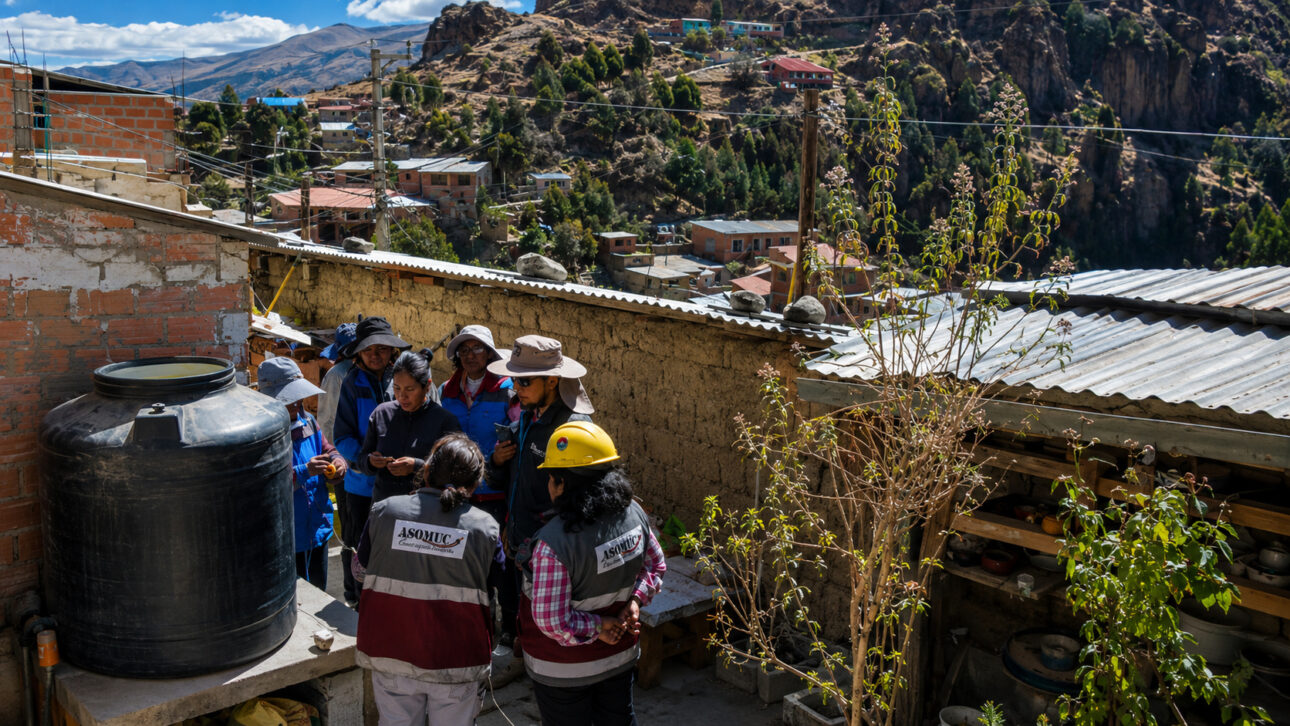
The presence of organized women also changes the image of the site. The construction site ceases to be considered a naturally male space and starts to be understood as a workplace, with rules, rights, and responsibilities.
Project presented on March 8, 2024, sought equality and fair payment
On March 8, 2024, International Women’s Day, members of ASOMUC joined Betty Yañiquez, president of the human rights and equal opportunities commission in the chamber of deputies, to present a bill.
The proposal sought greater equality and fair payment for women in Bolivia’s construction industry. As of the date of publication of the investigation, on October 11, 2024, the project was under review.
This point is important because it shows that the association moved from internal conversation among workers to the political field. The fight for respect on the site also began to involve public rules and institutional pressure.
Even without turning the story into a promise of immediate change, the progress reveals a concrete attempt to tackle inequality through formal channels. For women who have spent years being treated as assistants, bringing the issue to public debate already changes the weight of the complaint.
Training showed that construction also requires technique, attention, and finishing
The association’s quarry workers participated in training to enhance their skills. One of the examples cited involves the installation of rainwater tanks in the outskirts of La Paz. This type of activity requires attention, correct measurement, fitting, and practical knowledge.
Construction does not rely solely on strength. Painting, coating, flooring, finishing, and space organization are also part of the project. Many female workers argue that these areas showcase important skills of women in the sector.
This does not eliminate the physical weight of the work, such as carrying a bag of cement or heavy material. However, it helps dismantle the idea that construction is just brute force. A well-made house also depends on care, precision, and responsibility.
For those renovating in Brazil, this discussion makes sense. The good result of a project often lies in the details that appear later, such as well-laid flooring, well-finished walls, and clean painting.
Construction is also a gender dispute when women’s work is valued less
The history of the quarries in Bolivia shows that construction is not just a sector of concrete, brick, and cement. It also reveals who earns more, who is in charge, who appears as a professional, and who remains invisible.
When women do the same type of work and still need to prove their capability every day, the construction site becomes a mirror of inequality. The 38% wage gap shows that the problem has a direct effect on the income and lives of these workers.
The creation of ASOMUC gave a name, group, and voice to a struggle that was previously scattered in individual experiences. Instead of facing prejudice alone, the quarry workers began to organize to demand recognition.
The question that remains is simple and uncomfortable: if women also build walls, carry materials, and deliver finishing, why do they still need to prove that construction is also their work?





Be the first to react!