






 Portuguese
  Spanish
  4 min of reading
  0 comments


Archaeological evidence shows that dogs occupied spaces in the court, in trade, in food, and in religious ceremonies of the Mayan civilization.
The dogs in Mayan society played much larger roles than just accompanying humans.
These animals appeared alongside rulers, circulated among distant regions, and participated in dietary and religious practices.
Some dogs represented prestige and social status. Others were traded, consumed, or offered during ceremonies.
-
Maria Marli, a 15-Year Veteran Bricklayer, Helps Build Bahia’s Tallest Building and Realizes Her Own Dreams

-
British Lawyer Faces Up to Two Years in Prison After Organizing Volunteers to Clean Polluted River in Brazil

-
Unable to Afford a Traditional Home, Brazilian Woman Builds a Compact Mobile House Using Recycled Materials

-
Women in a Brazilian Community Empowered to Renovate Homes Independently Through Design and Planning Skills



Elizabeth Paris, an archaeologist from the University of Calgary, states that the Mayans dedicated time and effort to breeding dogs considered special.
Representations show dogs close to the Mayan elite
Colonial records from the 16th century offer some of the first descriptions of the presence of dogs in Mayan rituals.
Diego de Landa, a Franciscan bishop responsible for the destruction of various codices, reported the use of dogs as sacrificial victims.
His writings mentioned white dogs with dark spots during festivities related to cocoa production.
Practices observed during colonization cannot be automatically associated with earlier periods of the civilization.
Similar representations, however, appear on vases and other artistic pieces produced by the ancient Mayans.
At least four vases show dogs positioned below the nets used to transport rulers.
Some researchers interpret these scenes as funeral processions, in which the animals would guide the dead.
Elizabeth Paris presents another possibility. For the archaeologist, the images may depict common movements of the Mayan court.
In this context, the dogs would function as companions of the rulers or symbols of prestige. Some images show the animals wearing scarves and accessories.
Bones reveal trade between distant regions
Chemical analyses conducted on bones helped researchers identify the possible geographic origin of the animals.
Living beings absorb isotopes present in food. These chemical signatures allow comparison of the diet with the characteristics of different regions.
A study led by Ashley Sharpe analyzed, in 2018, remains found in Ceibal and Kaminaljuyu, in present-day Guatemala.
The two cities remained occupied between the Pre-Classic period, which began between 700 and 350 B.C., and the end of the Classic period, in 900 A.D.
Dogs buried in the plains of Ceibal originated from mountainous areas.
Animals found in the highlands of Kaminaljuyu, in turn, had characteristics associated with the plains.
The reduced size of the skeletons indicates that many dogs were likely transported by people during travels.
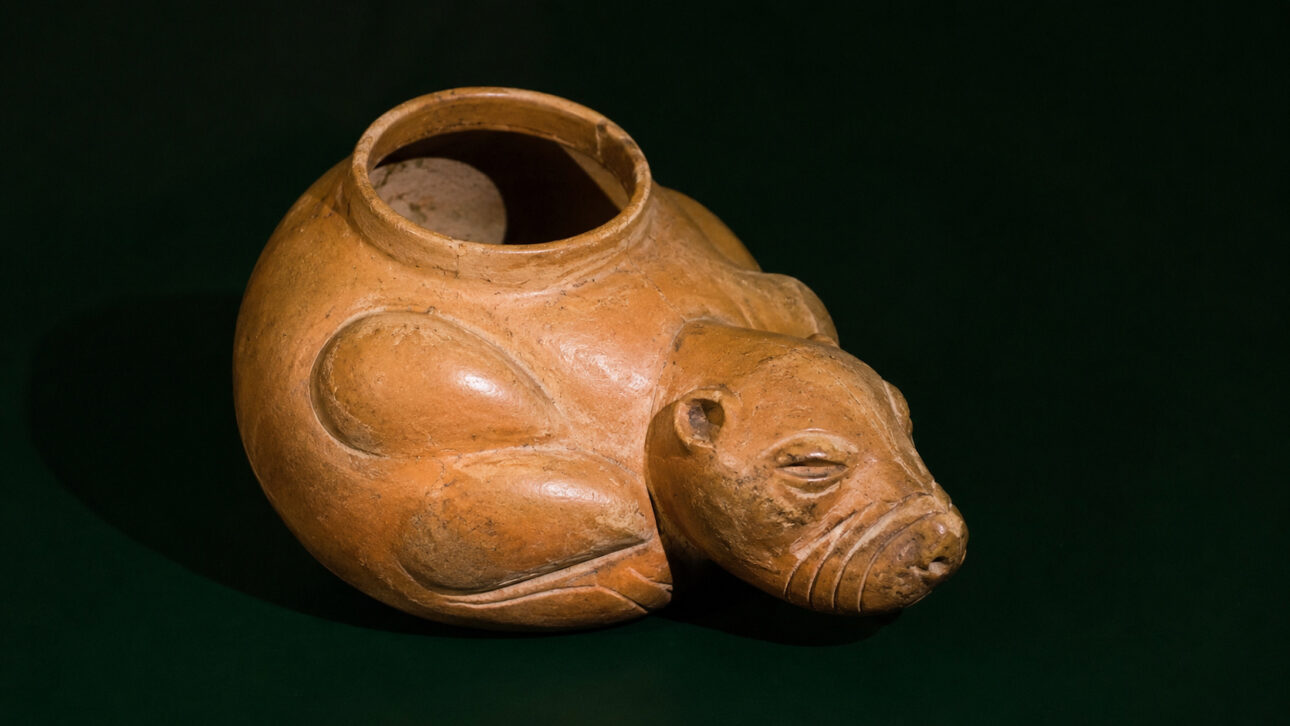
Animals traveled hundreds of kilometers
Elizabeth Paris and her team also examined bones found in Moxviquil and Tenam Puente, in southern Mexico.
Tenam Puente had more than 5,000 inhabitants, a ritual plaza, three ball courts, and a commercial area.
Moxviquil gathered approximately 1,000 residents and was surrounded by funerary caves with human and canine remains.
Four dogs found in Tenam Puente, dated between 500 and 800 A.D., came from regions near Campeche, Calakmul, and Becan.
Three animals from Moxviquil, dated between 422 and 691 A.D., showed connections with Tenam Puente, Mayapan, and Palenque.
Strontium analyses indicated movements of hundreds of kilometers between different kingdoms.
Paris believes that some communities may have specialized in breeding dogs to sell them in other regions.

Dogs were also part of the diet
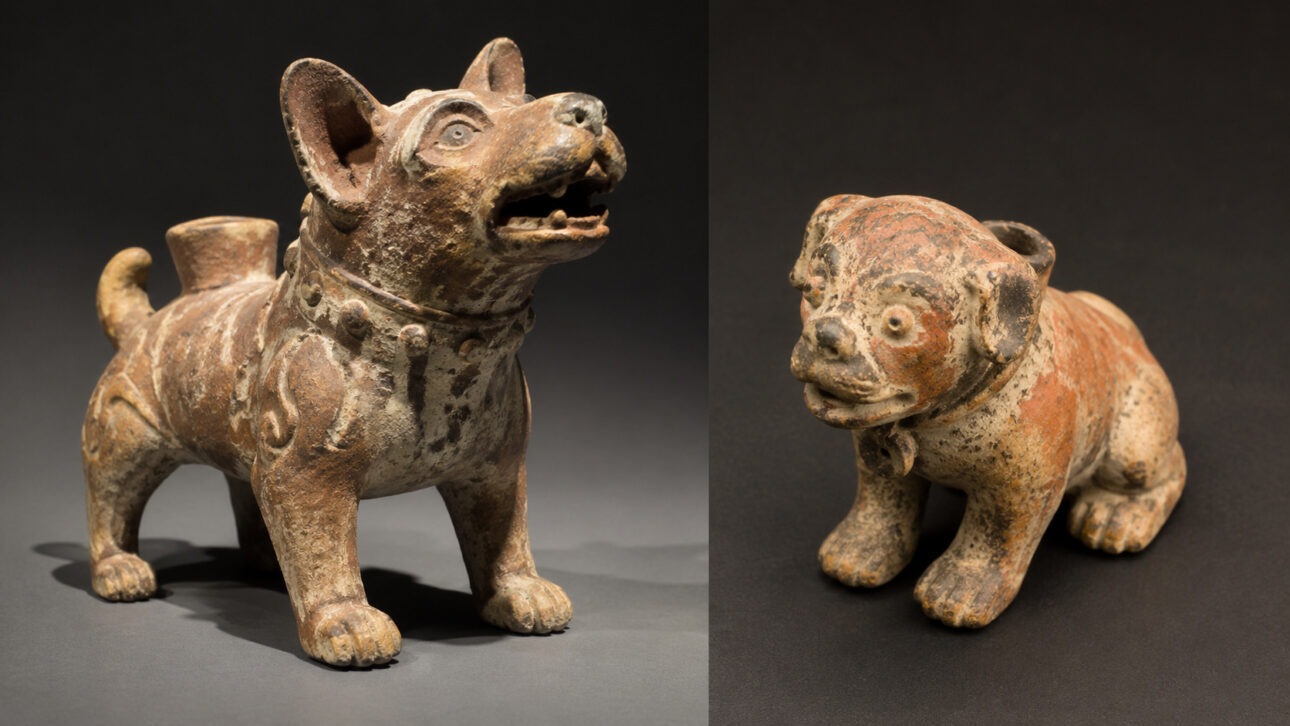
Many skeletons belonged to small animals, slightly larger than a chihuahua.
Ashley Sharpe compared their proportions to the clay figures from Colima and the bodies of dogs similar to today’s corgis.
All the animals studied by the archaeologist were between one and two years old at the time of death.
Systematic tool marks were also identified on the bones, indicating the processing of the carcasses.
These pieces of evidence support the hypothesis that some dogs were specifically raised for human consumption.
Sacrifices may have occurred during a water crisis
A collective grave found in Kaminaljuyu reinforced the religious importance of these animals.
The dogs were placed near a lake that had dried up, an essential water source for the community.
Incisions in the cervical region were found on the skeletons. Ceramic fragments were also distributed among the bodies and stones.
The arrangement of the remains indicates that the animals may have been sacrificed during an attempt to face the water scarcity.
New research may clarify the origin of these dogs
Future studies of ancient DNA may investigate possible relationships between these animals and modern lineages.
The Xoloitzcuintli, known as the Mexican hairless dog, appears among the breeds that may be compared in upcoming research.
The available evidence reveals a coexistence marked by affection, work, commerce, food, prestige, and religiosity.
Mayan dogs could act as companions, guardians, and hunting aids. At the same time, they served as merchandise, food, and ceremonial offerings.
Nominal sources: National Geographic, University of Calgary, Smithsonian Tropical Research Institute, Journal of Archaeological Science, and Scientific Data.
Which of these functions of dogs in Mayan society seems more surprising: presence at court, trade between kingdoms, or use in religious ceremonies?


Be the first to react!