






 Portuguese
  Spanish


Desenrola 2 to be presented on Workers’ Day with promise of extensive discounts, payment term of up to four years, and new focus on Brazilians trapped in the cycle of expensive personal and bank credit debts
Desenrola 2 will be announced by Luiz Inácio Lula da Silva on the evening of May 1st, in a radio and TV broadcast, during the speech honoring Workers’ Day. The new round of renegotiation primarily targets debts from credit cards, overdrafts, and unsecured loans, modalities that are currently at the center of the government’s proposal.
The proposal gained momentum after Lula met with seven ministers involved in drafting the program, whose final text was still being completed. According to the general guidelines anticipated by the Minister of Finance, Dario Durigan, the new design of Desenrola 2 should serve people with incomes of up to five minimum wages, with debts overdue for more than 91 days and less than two years.
What is Desenrola 2 and why is it on the radar of millions
Desenrola 2 is the government’s new proposal to renegotiate debts of individuals who have become trapped in expensive and rapidly multiplying credit lines. The focus is on debts that, according to Durigan, typically operate with interest rates between 6% and 10% per month, which helps explain why many families cannot escape the cycle of indebtedness.
-
Brazilian Startup Turns Coffee Grounds into Plant-Based Leather, Cutting Water Use by Over 50 Times for High-Impact Sustainable Fashion

-
Eco Invest Auction Aims to Unlock $10 Billion in Investments, Focusing on Green Fertilizers, Critical Minerals, Batteries, and AI for Clean Industry in Brazil

-
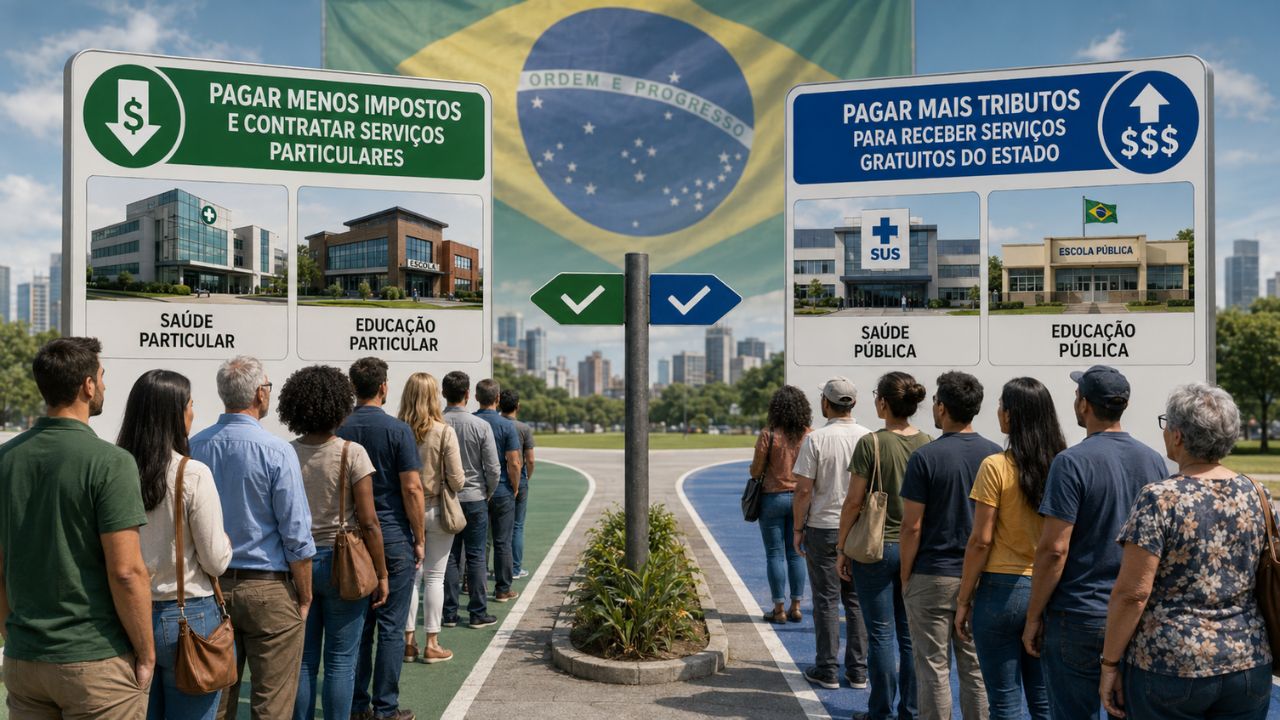
Half of Brazilians Prefer Lower Taxes with Private Health and Education, While 44% Opt for Higher Taxes for State-Provided Services, Datafolha Survey Reveals

-
Brazil’s Most Expensive Toll Rises to R$ 40.60 on Route from São Paulo to the Coast, Nearly Matching Bus Fare to Santos



The program’s logic is to try to reduce this burden through extensive discounts and longer payment terms. In practice, the government wants to offer an exit for consumers who continue to accumulate debt in credit modalities considered more aggressive for the monthly budget.
The numbers that explain the size of the promise
The percentages put on the table help explain why the announcement gained so much repercussion. The government is working with discounts between 40% and 90% on the total debt amount, in addition to a payment term of up to four years and interest limited to 1.99% per month.
Explaining the program’s rationale, Durigan gave a direct example: a R$10,000 debt in lines with interest rates of 6% to 10% per month can quickly rise to R$11,000 the following month and then increase even further, making it difficult for average-income families to get out. It is precisely this snowball effect that Desenrola 2 seeks to combat.
Who can join the new Desenrola 2
According to the anticipated general rules, Desenrola 2 will be available to people earning up to five minimum wages. In addition to income, there will be a cut-off based on the debt profile: the delay must be greater than 91 days and less than two years.
This design shows that the program aims to reach a wide range of Brazilians who have accumulated recent debts, but which are already heavy enough to compromise their budget. The focus is less on old long-term debts and more on financial liabilities that have grown rapidly and started to hinder the economic life of those who depend on short-term credit.
Which debts are targeted by the program
The main target of Desenrola 2 are debts from credit cards, overdrafts, and unsecured loans. These modalities were cited by the Minister of Finance as the core of the new renegotiation strategy.
This gives the program a very practical focus, because it is precisely these debts that tend to have rapid updates and higher interest rates. By concentrating efforts on these fronts, the government tries to tackle the type of indebtedness that most pushes consumers into a situation of recurring difficulty.
What changes in practice for those in debt
In practice, Desenrola 2 promises to combine three fronts that directly impact the lives of those in debt: high discount, lower interest rates, and a longer term. For the consumer, this can mean a less suffocating renegotiation than maintaining the original debt in very expensive credit lines.
The central point is that the program tries to transform a debt that grows month by month into a commitment with a reduced value and more predictable payment. For those who are currently pressured by installments and constant balance updates, this redesign can represent a concrete chance to reorganize their finances.
Who is left out in this stage
As in the first edition, the renegotiation of debts for **individual micro-entrepreneurs** and **micro-enterprises** will not be included at this time. According to the anticipated information, **legal entities** should be addressed at a later stage, outside of this initial phase.
This scope shows that **Desenrola 2** was designed, in this phase, for **individuals**. The government, therefore, separates the consumer debt renegotiation strategy from the discussion about debts of small businesses and companies.
The next steps after the May 1st announcement
In addition to the national address, a program launch event is planned at the **Palácio do Planalto**. However, as of the closing of the report used as a basis, the date of this event had not yet been defined.
This means that the announcement of **Desenrola 2** on Labor Day serves as the political kick-off of the program, while the complete institutional presentation still depends on calendar definition. Nevertheless, the government already indicates that the initiative is in its final design phase and ready to be presented to the public.
Why Desenrola 2 is drawing so much attention right now
The new program gains relevance because it appears in a scenario where **expensive credit** continues to pressure Brazilian families. By targeting debts from **credit cards**, **overdrafts**, and **unsecured loans**, **Desenrola 2** positions itself precisely where the burden of interest tends to grow fastest.
With **discounts of up to 90%**, interest rates of up to **1.99% per month**, and up to **four years** to pay, the program tries to present itself as a far-reaching solution for a portion of the population that can no longer escape the debt spiral on their own.
In your opinion, can Desenrola 2 truly relieve millions of Brazilians from the burden of the most expensive debts, or does the credit problem in the country require even deeper measures?








