






 Portuguese
  Spanish
  4 min of reading
  0 comments


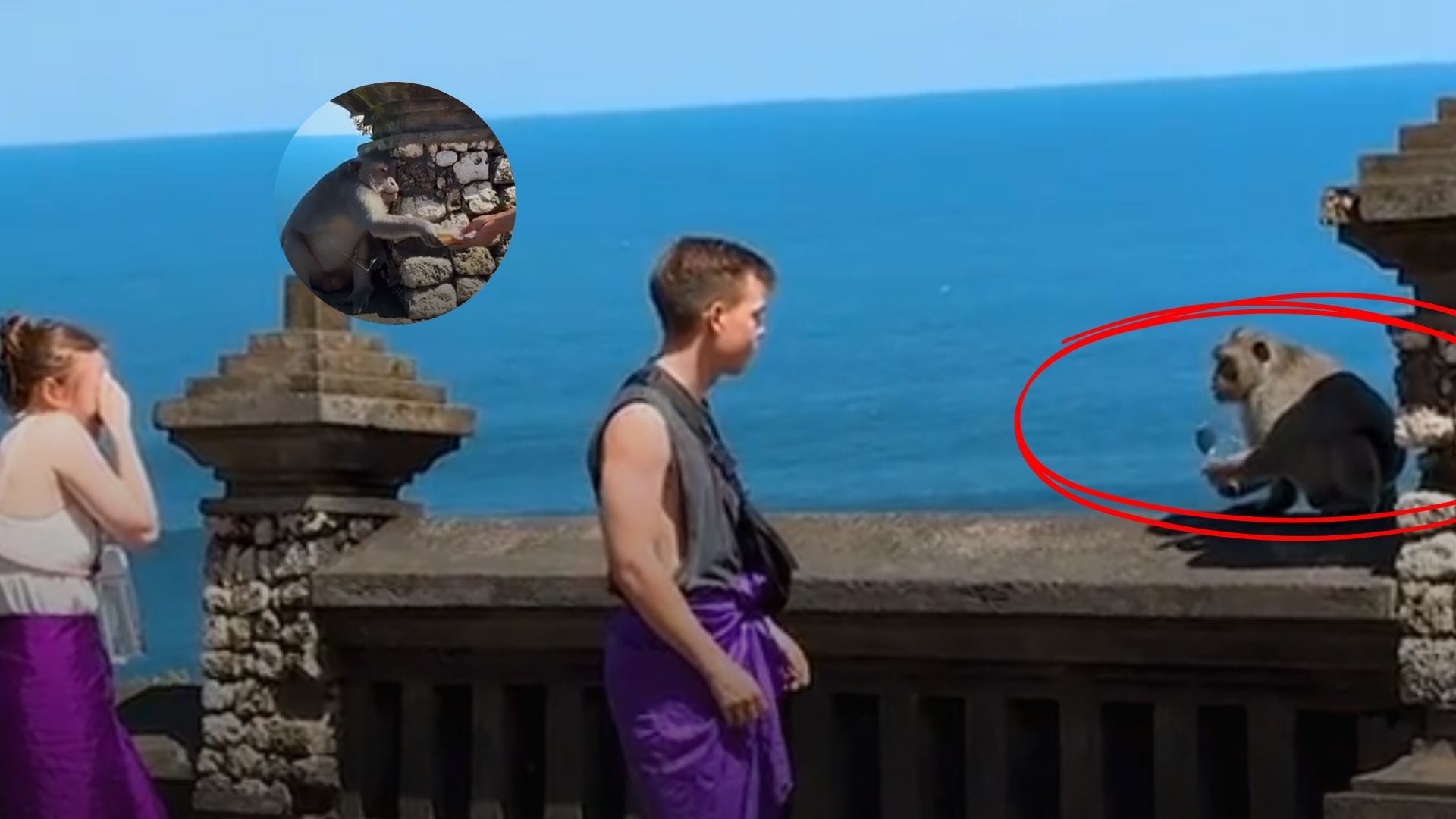
Bali Temple Coexists With Unusual Behavior of Monkeys that Steal Tourists’ Belongings. The Negotiation for Food Between Primates and Humans Draws Attention and Challenges Coexistence at the Sacred Site.
In southern Bali, Uluwatu Temple, known for its cliffside location and traditional sunset ceremonies, has an unusual phenomenon that attracts tourists’ attention.
There, a true long-tailed macaque (Macaca fascicularis) gang specializes in stealing visitors’ belongings and then negotiating them in exchange for food.
About 600 of these primates, considered sacred guardians of the site by the local population, have developed a behavior that combines stealth and bartering, surprising researchers and tourists alike.
-
Unable to Afford a Traditional Home, Brazilian Woman Builds a Compact Mobile House Using Recycled Materials

-
Women in a Brazilian Community Empowered to Renovate Homes Independently Through Design and Planning Skills
-
Man Builds Solar-Powered Tiny Home to Escape Rent, Faces Demolition Order in Expensive Australian Region
-
Facing a Shortfall of 83,900 Homes, Curitiba Considers Social Housing with Public Units, Reduced or Free Rent, Prioritizing Seniors, Victims of Violence, and the Homeless




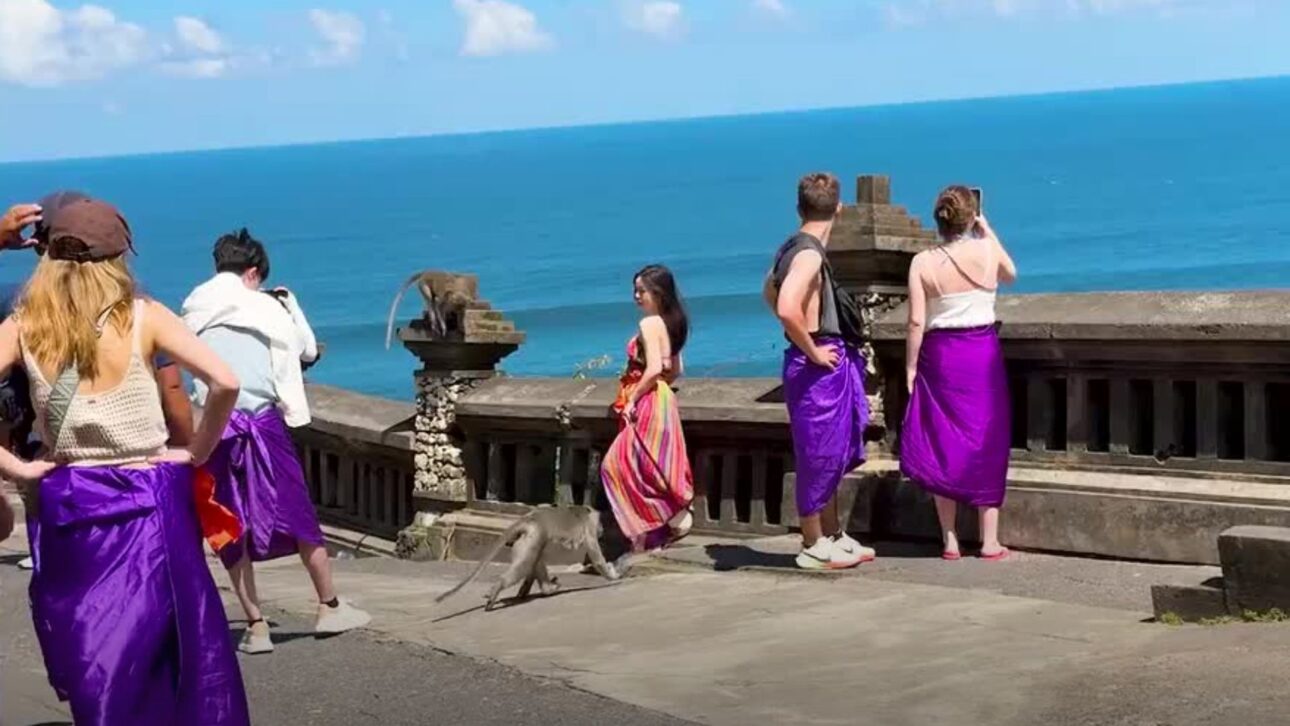
Behavior of the Thieving Monkeys
The dynamic is quick and efficient. The monkeys take advantage of tourists’ distraction to steal smartphones, sunglasses, wallets, and even earrings.
Within seconds, they snatch the item and climb nearby trees to play with the new “acquisition.” However, the return is not free.
To retrieve their belongings, tourists must offer fruits, cookies, or other food to the monkeys, who make the exchange a well-organized negotiation, sometimes lasting up to 25 minutes.
This behavior caught attention after being documented in detail by a report from the Wall Street Journal.
According to the article, the monkeys act in groups and exhibit a “strategy” reminiscent of a organized gang.
British tourist Jonathan Hammé, who had the experience, commented: “I was admiring the view when I felt something on my back. It was a monkey that stole my sunglasses. It climbed a tree and started playing with them as if nothing had happened.”
To get them back, it was necessary to offer Oreos to the animal, an exchange that reveals the intelligence and cleverness of the primates.
Data and Studies on the Practice
Studies conducted by researchers at the University of Lethbridge in Canada indicate that the monkeys display behavior akin to economic decision-making, something unprecedented in the animal world.
They choose which items to steal based on the value they perceive for humans, preferring cell phones and glasses over less valuable items like hats or caps.
The negotiation following the capture involves a proportional exchange between the stolen item and the food reward, which can vary from local fruits like mangos and rambutan to industrial cookies.
In addition to identifying and stealing the most valuable items, the monkeys demonstrate a social capacity for learning and adaptation.
New members of the group observe and learn the technique of stealing and trading, perpetuating this practice across generations of primates.
This social behavior confirms that it is not just instinct but a complex social interaction that strengthens over time, influenced by the constant presence of tourists and the offering of food as currency.
Cultural Importance of Uluwatu Temple
Uluwatu Temple holds significant cultural and spiritual importance for the Balinese people.
Founded in the 11th century, it is dedicated to the deity Sang Hyang Widhi Wasa, in the form of Rudra, and its monkeys are considered sacred protectors of the site.
The paradox of the situation is that these revered animals have also become a source of inconvenience for visitors, creating an ambiguous relationship between religious tradition and mass tourism.
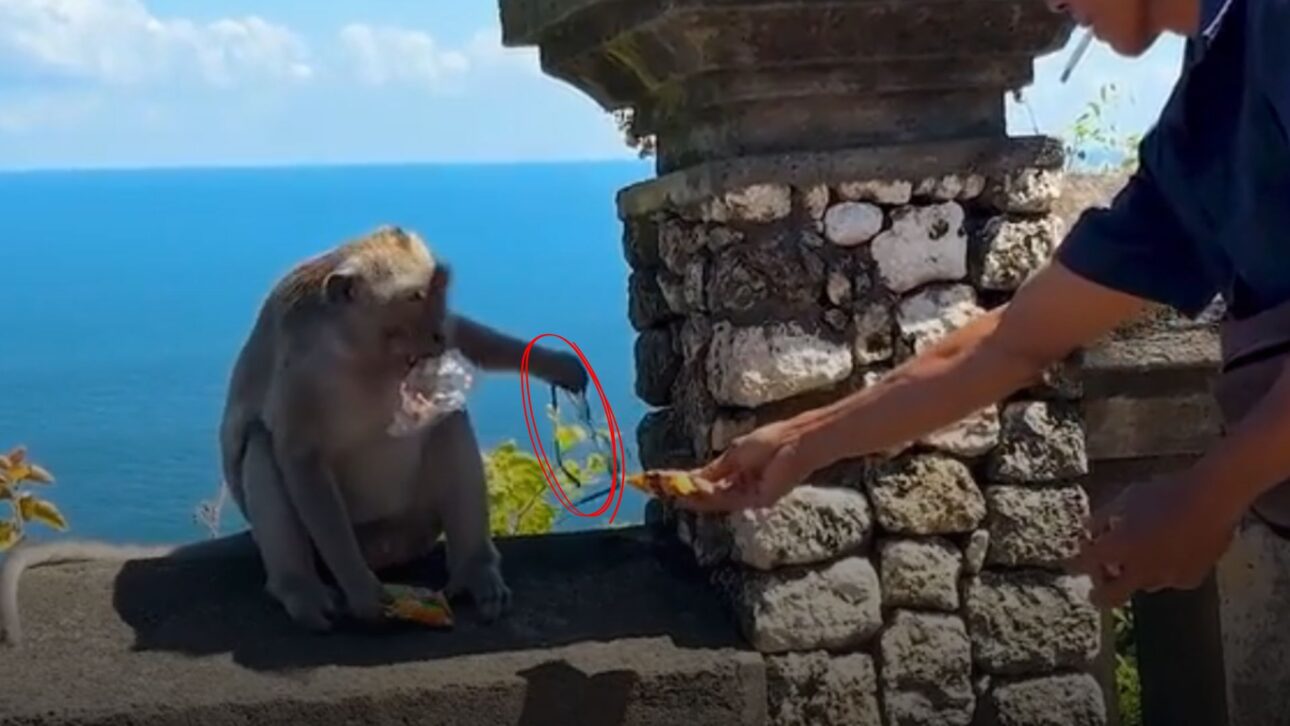
Attempts to Control and Adapt the Monkeys
Attempts by temple management to control the behavior of the monkeys have proven ineffective.
After prohibiting tourists from feeding the animals directly, the incidence of thefts increased, leading official caretakers, known as “pawang”, to intervene to negotiate and recover stolen belongings.
Kadek Ari Astawa, the coordinator of the caretakers, stated that the monkeys quickly adapted to this new dynamic, continuing to practice theft and exchange in an even more systematic manner.
Tourists’ Experience with the Negotiating Monkeys
Tourists who have experienced this phenomenon report a mix of fascination and frustration.
Taylor Utley, a visitor from the United States, recounted that a monkey snatched her phone from her hand and that the item was only returned after several attempts to negotiate with the animal, involving multiple portions of fruit.
The sensation, according to her, is like being in front of a “criminal organization of monkeys”, so sophisticated is the strategy adopted by the primates.
Adaptive Behavior and Social Learning
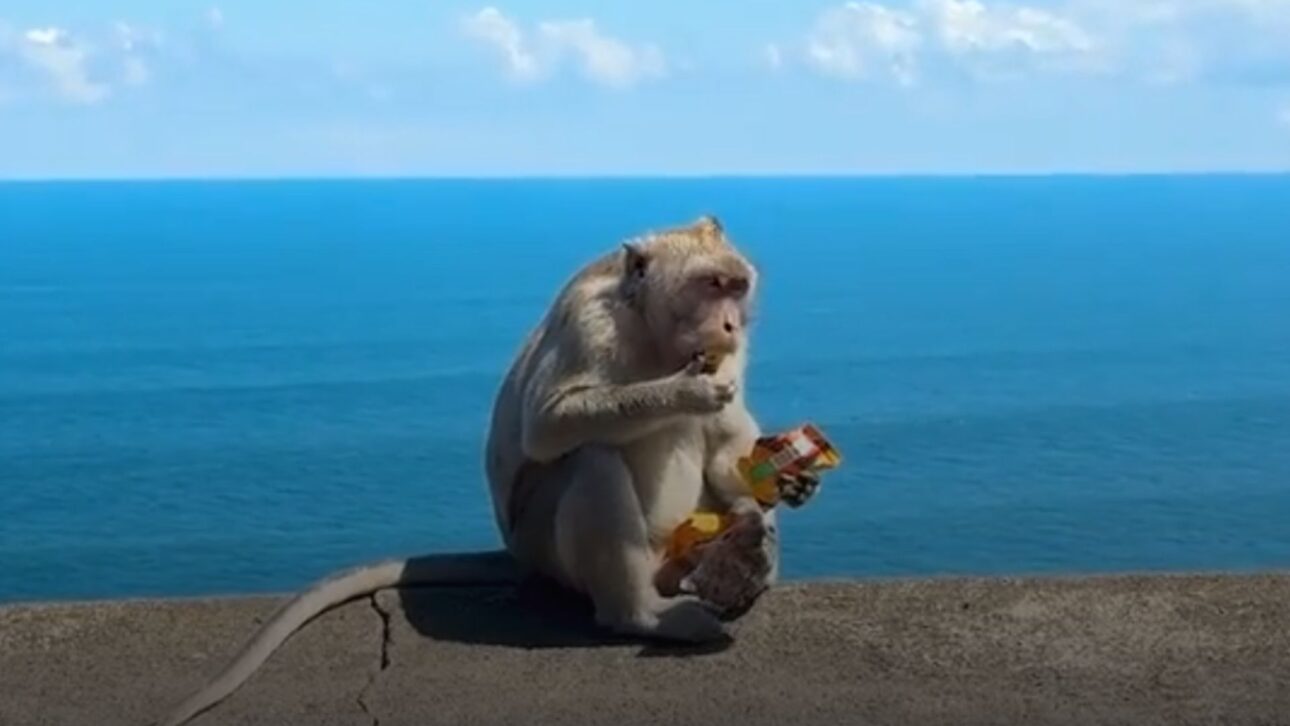
This phenomenon of thieving monkeys is not only a curious spectacle but also a clear example of how animal behavior can be shaped by interaction with humans and the cultural environment surrounding them.
The bartering done by the monkeys at Uluwatu temple indicates the primates’ ability to develop complex behaviors that include value recognition, exchange, and social learning.
Although the situation causes discomfort and concern for many tourists, it also sparks scientific interest.
The complexity of negotiations and the monkeys’ capacity for adaptation highlight the importance of studying these animals not only as wild beings but as active participants in the informal economy that arises around tourism.
The balance between cultural respect, environmental preservation, and visitor safety is an ongoing challenge for local authorities.
In the meantime, hundreds of visitors arrive at the temple daily, drawn by the natural and cultural spectacle, and many end up practically experiencing the unique situation of having their belongings stolen and negotiated by monkeys that have surprisingly become true specialists in bargaining.
And you, reader, how would you react if your phone were taken by a gang of monkeys and could only be retrieved by exchanging fruits or cookies?





Be the first to react!