






 Portuguese
  Spanish


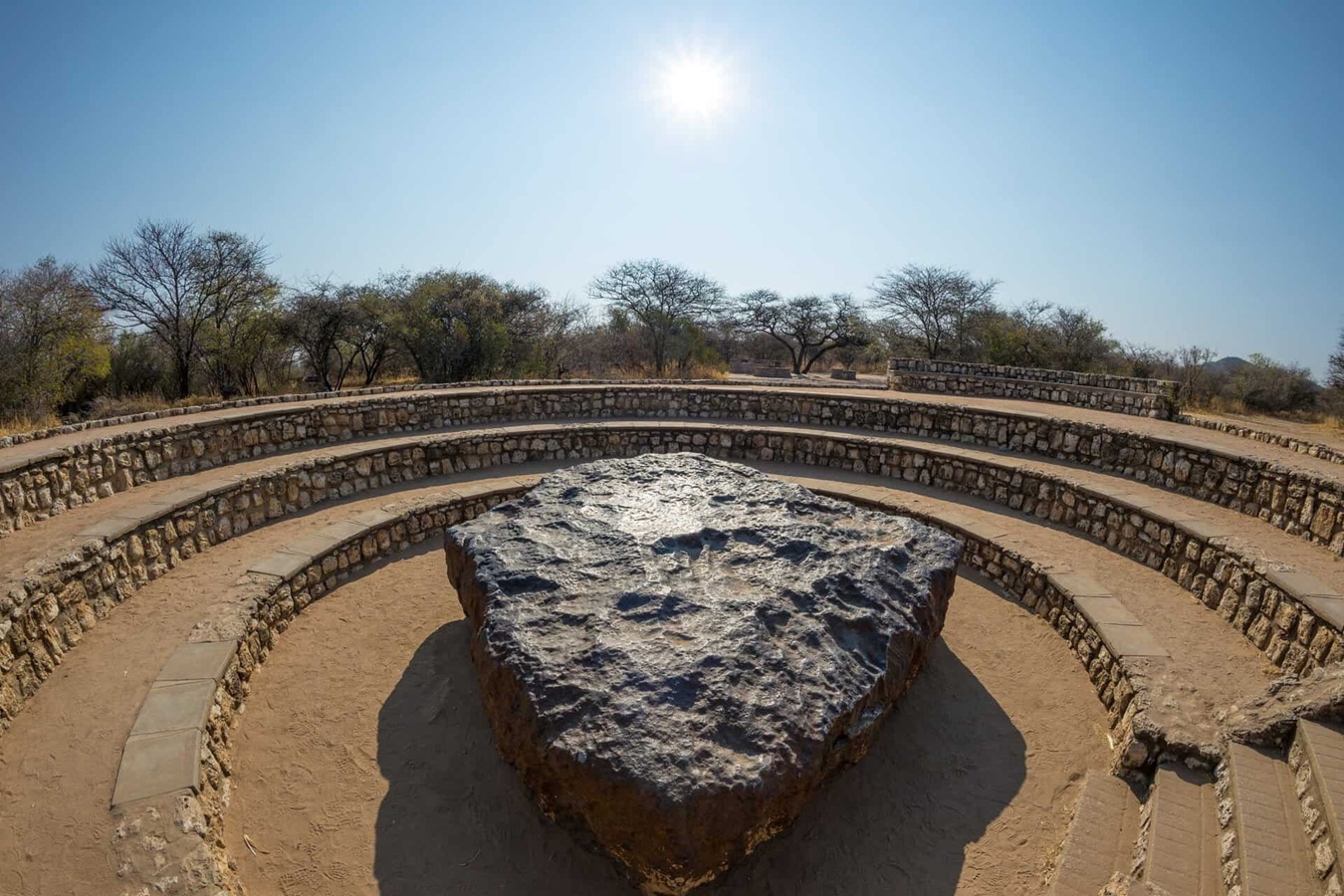


The Largest Intact Meteorite in the World Fell in Namibia 80 Thousand Years Ago and Remains Exactly Where It Landed, Without Leaving a Crater.
In the rural area of Namibia, near the town of Grootfontein, lies silently the largest intact meteorite ever found on Earth.
This is the Hoba meteorite, a block of iron and nickel weighing about 60 tons, which fell to the planet approximately 80 thousand years ago — and remains exactly where it landed.
The most impressive thing is that, despite its colossal size, the Hoba did not leave any visible crater. This intriguing characteristic defies common logic about cosmic collisions.
-
World’s Largest Particle Accelerator Begins Four-Year Hiatus for Magnet Overhaul, Aiming to Hunt Dark Matter by 2030

-
“Sahara Dust Turns Rain Red, Startling Residents Across Europe”
-
Stanford Scientists Develop 20-Cent Paper Centrifuge Inspired by Ancient Toy, Spins at 125,000 RPM Without Electricity, Separates Plasma in 1.5 Minutes, Aiding Diagnostics in Remote Areas

-
World’s Largest Vaccine Manufacturer, Immunizing Two-Thirds of Global Infants, Originated in a Pune Horse Farm





After all, when objects of this size hit the ground, it is expected that they cause large explosions and cavities. But the Hoba behaved differently.
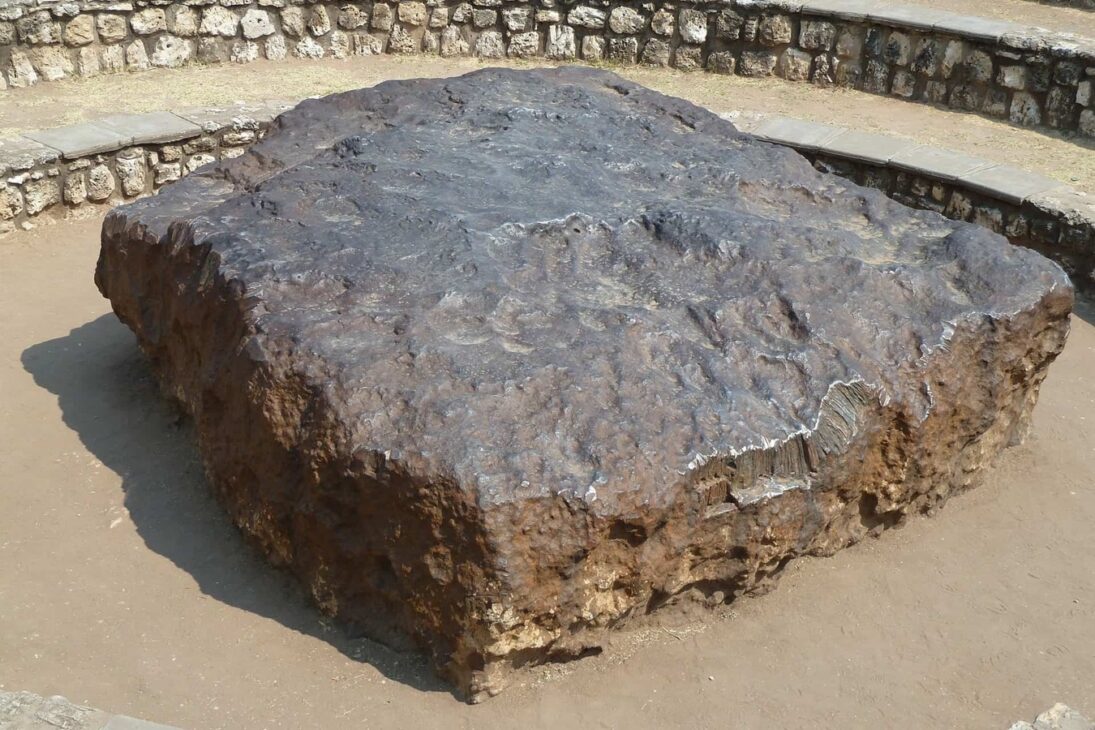
Why Did It Not Make a Crater?
Science believes that two factors explain this rare phenomenon. First, the meteorite has a flattened shape, resembling a wide and thick slab.
Second, it is thought to have entered the atmosphere at a very shallow angle, which helped to drastically reduce its speed.
This behavior caused the Hoba to lose speed due to friction with the atmosphere, and by the time it reached the ground, it was only at what is called “terminal velocity.”
In other words, it fell with the lowest possible speed for an object of that weight. The result was an almost controlled landing, without the typical violence of cosmic impacts.
This gentle fall, unusual for space objects, may have been crucial in preserving its original shape and location for thousands of years.
Discovered by Chance
The Hoba was discovered in 1920 by a local farmer named Jacobus Hermanus Brits. He was trying to plow the soil of his property when the plow blade hit something extremely hard. Upon digging, he came across the immense metallic rock.
Subsequent analyses revealed that it was a rare metallic meteorite, composed mainly of iron (84%) and nickel (16%), with small amounts of cobalt and traces of other elements.
Since then, the Hoba has become an object of international study and fascination.
In 1955, the Namibian government declared the site a National Monument, protecting the area and turning it into a tourist spot.
The Only One Still at the Impact Site
Today, the Hoba meteorite remains outdoors, without cover or large barriers. Visitors can walk around it, climb on its surface, and even touch it with their own hands.
It is a rare experience — after all, almost all large meteorites ever found have been removed to museums or scientific institutions.
The Hoba is, therefore, the only giant meteorite still at the exact location where it fell. This characteristic makes its preservation even more valuable from a historical, scientific, and educational perspective.
For those interested in space, geology, or natural curiosities, standing before the Hoba is like touching the universe itself. A piece of the cosmos that traveled for millions of years, survived the heat of the atmosphere, and now rests peacefully on African soil, like an eternal visitor of Earth.


