






 Portuguese
  Spanish
  5 min of reading
  0 comments



Industrial Complex in São Paulo’s Interior Brings Together Factory, Maritime Fleet, and International Terminals in Five Countries, Forming One of the Most Verticalized Chains of the Global Orange Juice Industry.
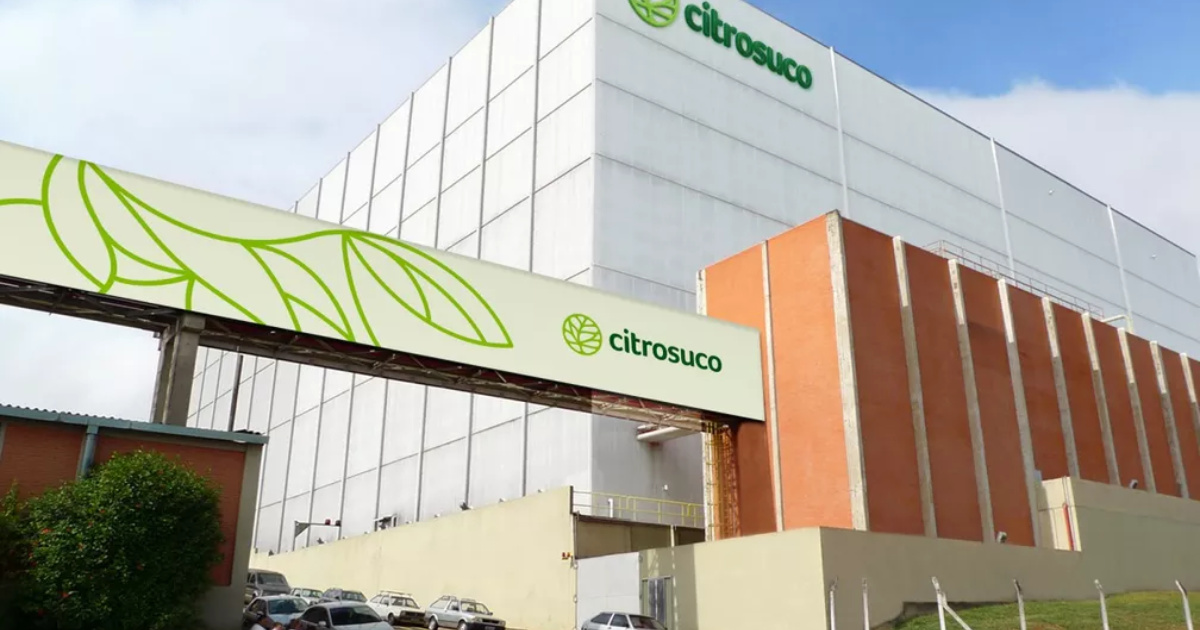
The Citrosuco unit in Matão, in the interior of São Paulo, is presented by the company as the largest orange juice processing plant in the world.
A verticalized chain revolves around it, extending from cultivation to international shipping, with four factories in operation — Matão, Catanduva, and Araras (SP) and Lake Wales (United States) —, own maritime terminals in five countries, and a dedicated fleet of ships.
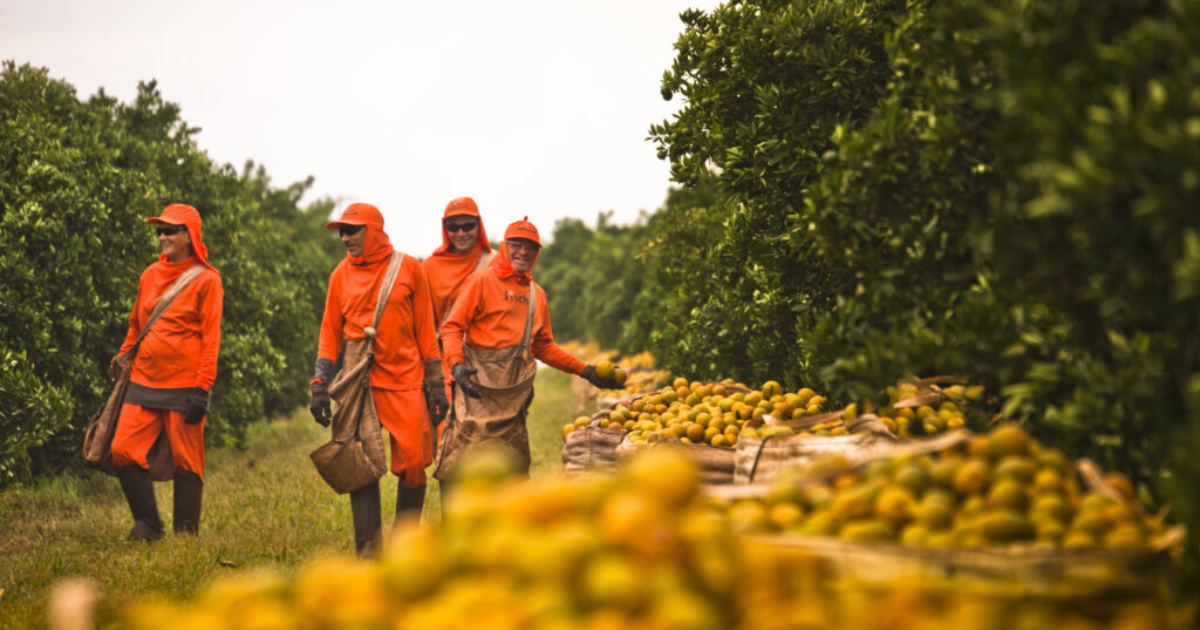
This setup employs about 5,500 people permanently and exceeds 12,000 workers at the peak of harvest.
-
Survivor of 1966 SS Daniel J. Morrell Shipwreck in Lake Huron Recounts 38-Hour Ordeal in Extreme Cold

-
The Greatest Hoax in World Cup History? The Film That Denied Brazil’s 1958 Victory and Exposed How Fake Evidence Can Seem Convincing on TV
-
Fake South Korean Online Stores Offer Shopping Thrill Without Spending Money or Receiving Products
-
The War of Jenkins’ Ear: How a Severed Ear Sparked One of the 18th Century’s Most Unusual Conflicts


Global Logistics and Own Fleet
The logistical machinery supports the global flow of the product.
According to institutional materials, Citrosuco operates terminals in Santos (Brazil), Wilmington (United States), Ghent (Belgium), Toyohashi (Japan), and Newcastle (Australia), connected by five dedicated ships and one multi-cargo ship.
This structure allows bulk shipping, preserves the cold chain of the juice from the origin, and reduces dependence on third parties in critical stages.
The Central Role of the Matão Plant
At the center of this arrangement is Matão.
The plant concentrates on fruit reception, juice extraction and filtration, pasteurization, and storage in temperature-controlled tanks.
The product flows in two directions, depending on demand: concentrated juice and not concentrated.
The design prioritizes thermal stability and traceability up to maritime transport, standardizing the batch from the processing line to departure for the port.
Full Utilization of the Orange
The total utilization of the fruit is another pillar of the model.
Besides juice, the factory separates and transforms essential oil from the peel and directs pulp, peel, and seeds to specific ingredients used by other industries.
The logic of minimal waste distributes value along the cycle, diversifying revenue and reducing waste in the process.
History and Energy Transition
The historical basis helps to understand the current scale.
The official timeline indicates that the construction of the Matão unit began in the 1960s and that, in the 1980s, the company replaced fuel oil with biomass for local energy generation.
This transition, which anticipates later environmental goals, was accompanied by changes in port logistics, with bulk shipping and expansion of the Santos terminal, a decisive step to consolidate the export vocation.
Shareholding Structure and Investments
The corporate control fuels investments.
Citrosuco has as shareholders the groups Votorantim and Fischer.
Recent corporate reports from Votorantim indicate 50% participation in the company and record strong results in a scenario of high international prices, in addition to diversification through Evera, its arm for natural ingredients.
Governance, goals, and audited sustainability reports make up the package of practices disclosed to the market.
International Presence and Regional Impact
The territorial dimension of the business appears in the network of assets.
In addition to the factories, the company maintains dozens of farms, seedling nurseries, and commercial offices spread across Brazil, the United States, Austria, Australia, Belgium, Japan, and China.
In the field, it reports conducting external audits on suppliers and implementing sustainability programs.
At the peak of the harvest, the total workforce — comprising both permanent and seasonal workers — exceeds 12,000 people, highlighting the sector’s regional impact in São Paulo’s interior.
Structure and Industrial Processes
Within the industrial perimeter of Matão, the operation is organized like a “juice city”.
There are specific areas for fruit reception and sorting, extraction and concentration lines, quality control laboratories, and utility stations such as industrial steam and cooling.
The management of loading yards and docks was designed to synchronize production with the shipping window, reducing the time between processing and transfer to maritime transport.
The Link with the Port of Santos
The own terminal in Santos is the link that connects the factory to the ocean.
The operational proximity to the port base shortens steps, enables the maintenance of proper temperature in transport, and synchronizes bulk loading with the availability of ships.
At the destinations, the terminals in Wilmington, Ghent, Toyohashi, and Newcastle connect Brazilian production to major consumer markets, where the juice goes to packagers and the food and beverage industry.
Exports and Global Relevance
Sector-wide, data from the Brazilian orange juice exporters’ association indicate Brazil as a global leader in beverage trade.
Europe and the United States rank among the top destinations, which helps to gauge the importance of Matão within an export-oriented chain.
In larger harvests, the ability to ship quickly and maintain quality becomes a competitive differential.
Innovation and Sustainability
Citrosuco’s institutional communication highlights the tripod of agriculture, industry, and logistics to cultivate, produce, and deliver naturally sourced foods, supported by technology and innovation.
The narrative emphasizes the global presence and full utilization of the orange, reflected in the asset arrangement: multiple plants, international terminals, dedicated fleet, and a network of offices.
The goal is to maintain a uniform quality standard, from orchard to customer.
Data Not Publicly Disclosed
Despite the scale, some detailed operational numbers are not present in official sources.
The company does not disclose the nominal daily or hourly capacity of the Matão plant, nor does it inform how many processing lines are in operation.
For methodological caution, this data has not been included.
Nonetheless, the Matão unit consolidates as the industrial core of a global chain that depends on continuity, refrigeration, and logistics efficiency.
Verticalization and Global Reach
The image that forms is that of a rare verticalized complex in the food and beverage sector.
Own agricultural production and third-party audited production, industrial processing at scale, port logistics under the company’s control, and dedicated ships shorten the path to the customer.
In a market sensitive to price, quality, and supply regularity, this standardization acts as a guarantee of stability and competitiveness.
Which aspect of this “juice city” would you like to explore further in the next report: the Santos terminal, the journey of juice from the tanks to the ship, or the full utilization of the fruit within the factory?





-

-

-

-

-

-

77 people reacted to this.