Portuguese
  Spanish


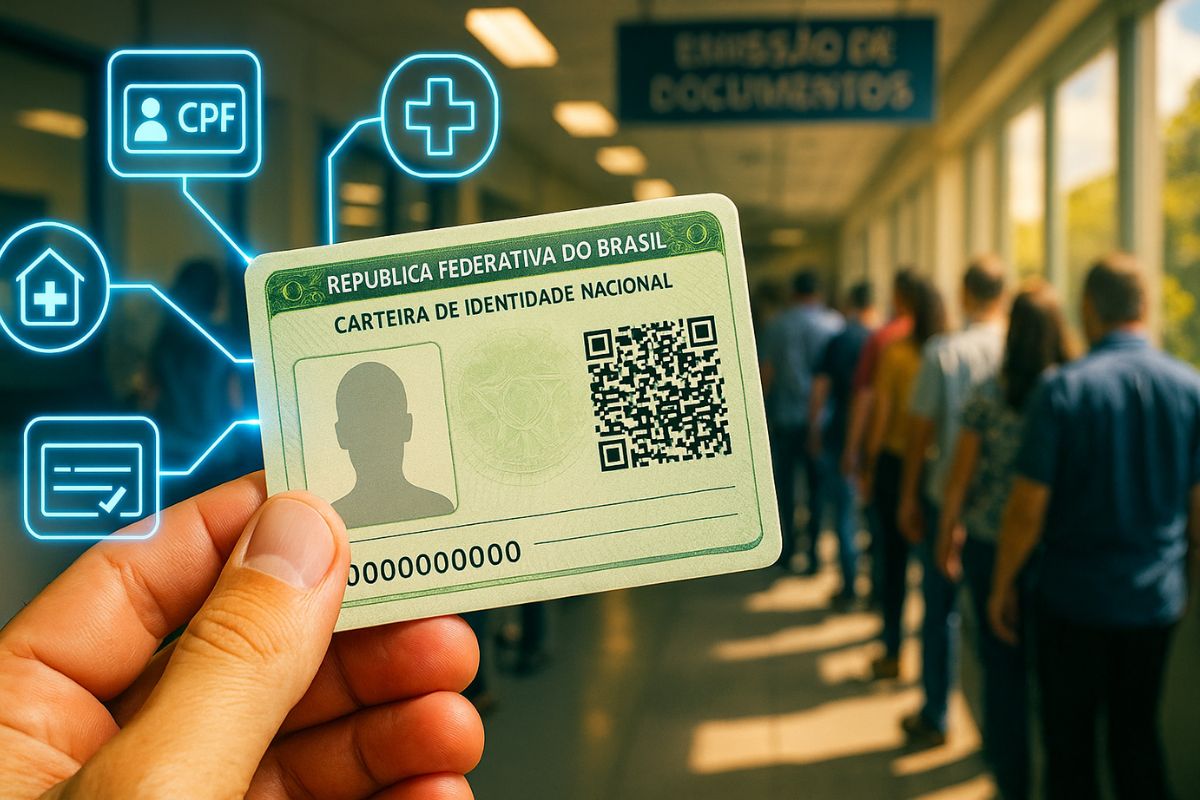


Secrets of the New Brazilian Document: What’s Behind the CIN and How It Will Change Your Day-to-Day. More Than 30 Million Brazilians Have Already Issued the New Brazilian Document; Government Goal Is to Reach 130 Million by 2026
The new Brazilian document, officially called the National Identity Card (CIN), has already been issued to more than 30 million people and promises to gradually replace the traditional RG by 2032. According to government data, the goal is to reach 130 million emissions by 2026, integrating into a single number the CPF data that is currently scattered among different records, such as CNH, voter registration, SUS card, and social security documents.
The central strategy is to create a unique national identity, simplifying access to public services and reducing fraud. Despite this, the issuance process faces queues and difficulties in some states, which may delay the progress of the project.
What Changes With the New Brazilian Document
Unlike the RG, which can have different numbers depending on the state of issuance, the CIN adopts the CPF as a unique identifier. This means that in the future, it will be possible to use only the CPF to vote, access health services, sign electronic documents, and even register for social benefits.
-
iFood Takes 99Food and Keeta to Brazil’s Antitrust Authority Over Aggressive Discounts and Prolonged Losses, Raising Concerns of a New Delivery Market War

-
Brazilian Brothers Transform Dairy Business into Latin America’s Best Cheese, Boosting Revenue from $80,000 to $4 Million

-
He Left Construction, Partnered with His Wife, and Turned a Homemade Gelato Hobby into Brazil’s Largest Chain with 240 Stores and $100 Million Annually
-
Brazil Faces Caregiver Shortage Despite Having 34.1 Million Elderly, Highlighting a Major Challenge for Families


The document is integrated with the gov.br platform, which already brings together almost 170 million users, and seeks to provide personalized services according to the citizen’s profile. This centralization also opens the door to controversial discussions, such as the use and potential monetization of data by the government itself.
Deadlines and Substitution of the RG
The traditional RG is on borrowed time: it is expected that it will stop being officially valid in 2032. Until then, it will be possible to use the CNH or other documents for identification, but the trend is that many services will start requiring the CIN before this deadline, especially social assistance programs.
The Minister of Management and Innovation, Esther Dweck, stated that the issuance of the new document will be a condition to access benefits such as Bolsa Família, unemployment insurance, and BPC. Together, these programs involve tens of millions of Brazilians and are expected to accelerate the adoption of the system.
How to Get the New Brazilian Document
The issuance of the CIN is free and should be done at the identification agencies of the states. It is necessary to present birth or marriage certificate, in addition to a valid CPF document. In some states, scheduling can be done online, but availability varies and there are reports of demand exceeding capacity.
Those who already have a CNH or recent passport with QR Code can have the process expedited, as part of the information is already integrated into government systems.
Government Strategy and Future Impact
The project for the new Brazilian document is part of a broader policy of integration of public data bases, connecting tax, health, social security, and property information. In the long run, the proposal aims to reduce bureaucracies, enhance digital security, and allow faster and more personalized services.
Still, there are criticisms regarding privacy, risks of data concentration, and inequality in access, especially for residents of regions with less infrastructure for services.
And you, have you obtained the new Brazilian document? Do you think this change will make life easier or increase government control over citizens? Leave your opinion in the comments; we want to hear from those who have already gone through this process and those who are still in line.