






 Portuguese
  Spanish


Unprecedented state plan launched in São Paulo gathers 45 goals to reduce solid waste in coastal and marine environments, prioritizes actions against single-use plastics, and foresees monitoring, reverse logistics, selective collection, eco-barriers, and Plastic-Free Zones over the next 10 years.
Marine litter will be tackled in São Paulo by an unprecedented state plan, launched this Wednesday (10), with 45 goals to prevent, reduce, and mitigate solid waste in coastal and marine areas over the next 10 years.
Plan gathers actions against marine litter
The strategy guides state action in waste management, environmental education, monitoring, innovation, circular economy, and public governance, after being presented at the World Environment Day celebrations.
Coordinated by the Solid Waste Directorate of Semil, the document was developed to tackle pollution from waste.
-
Brazilian Startup Turns Coffee Grounds into Plant-Based Leather, Cutting Water Use by Over 50 Times for High-Impact Sustainable Fashion

-
Eco Invest Auction Aims to Unlock $10 Billion in Investments, Focusing on Green Fertilizers, Critical Minerals, Batteries, and AI for Clean Industry in Brazil

-
Half of Brazilians Prefer Lower Taxes with Private Health and Education, While 44% Opt for Higher Taxes for State-Provided Services, Datafolha Survey Reveals

-
Brazil’s Most Expensive Toll Rises to R$ 40.60 on Route from São Paulo to the Coast, Nearly Matching Bus Fare to Santos




Data shows presence of plastic
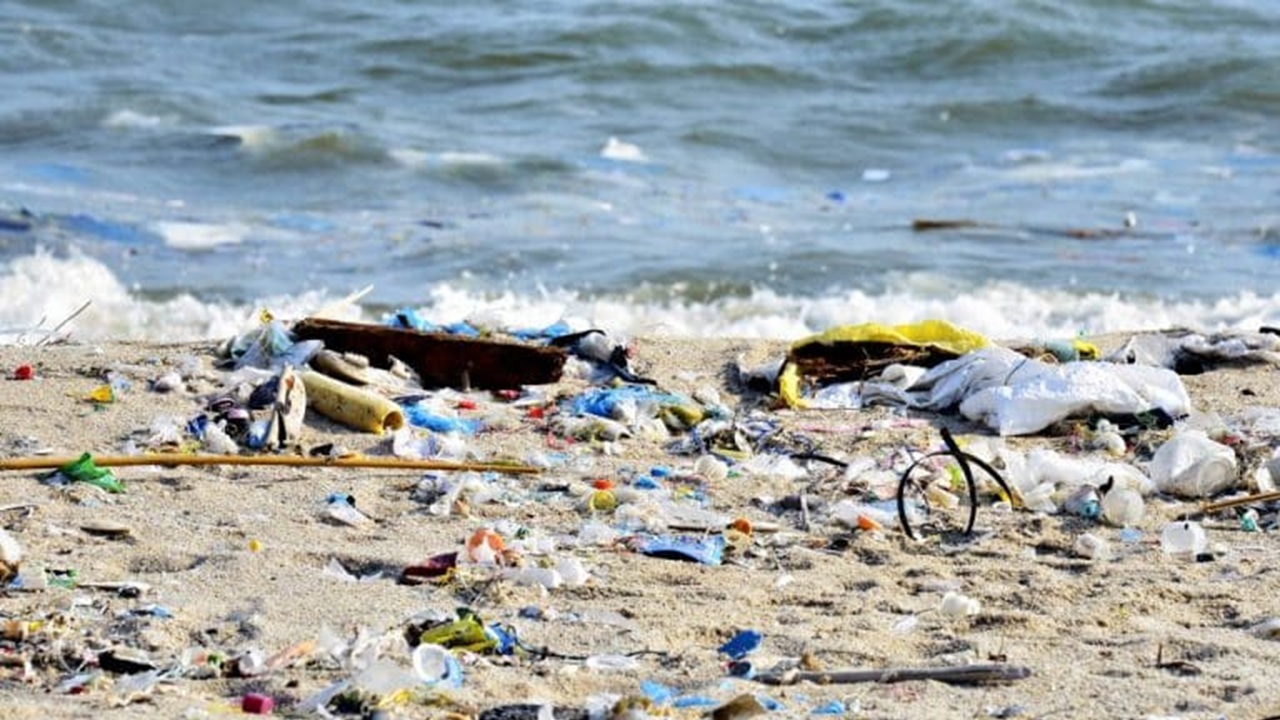
Surveys used in the plan indicate solid waste on 100% of the beaches analyzed on the Brazilian coast. Among the materials found, 91% were plastics, and about 60% were single-use plastics.
Information from the Mar Sem Lixo Program, from the Forest Foundation, indicates an average of 599 items per square kilometer on the seabed of São Paulo’s Marine Protected Areas.
In these areas, 93.8% of the waste was plastic, a fact that reinforces the focus on prevention, monitoring, and reduction of coastal and marine pollution.
First goals will have priority
Of the 45 planned goals, 13 will be prioritized in the first cycle. The measures include the gradual reduction of the production and commercialization of single-use plastics and the expansion of reverse logistics.
The plan also foresees the expansion of selective collection in coastal municipalities, strengthening of eco-barriers in rivers, and the creation of Plastic-Free Zones.
Another front involves monitoring microplastics and pellets on beaches and estuarine areas, as well as mapping escape points and waste accumulation.
The execution will be monitored by permanent governance coordinated by Semil, responsible for monitoring goals, articulating sectors, and updating actions.
Public consultation received contributions
Between April and May, the proposal received 173 contributions in a public consultation, with participation from the public sector, private initiative, research institutions, civil society, and citizens.
The topics addressed included waste generation prevention, circular economy, reverse logistics, shared responsibility, environmental education, monitoring, innovation, and municipal management.
Semil also held a public hearing in Santos, with 94 participants and online transmission, bringing together public managers, researchers, civil society, the productive sector, and the local community.
Leave your thoughts in the comments about marine litter, the announced goals, and the most urgent actions for beaches, rivers, and estuarine areas. It is also worth pointing out how residents, companies, governments, and researchers can collaborate to reduce waste on the São Paulo coast.
With information from agenciasp.








