






 Portuguese
  Spanish


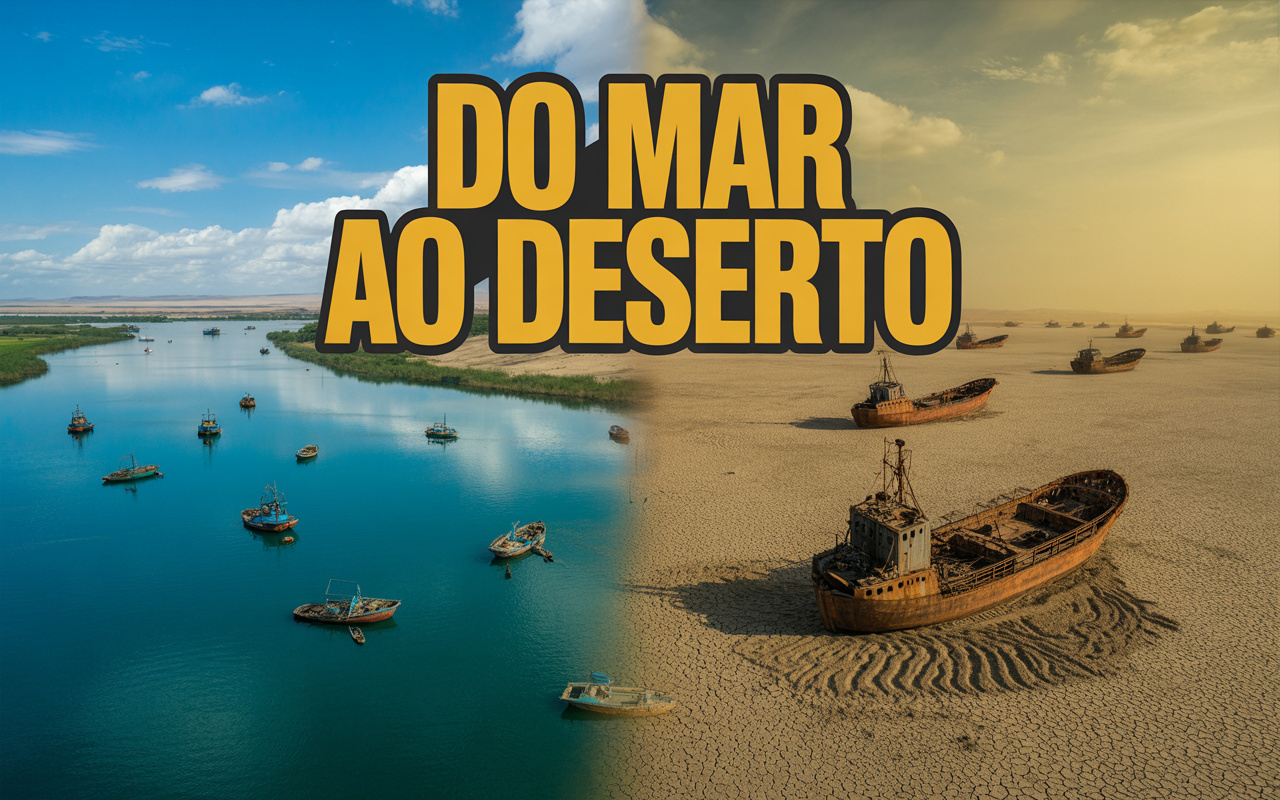


The Diversion of the Amu Darya and Syr Darya Rivers by the Soviet Union Dried Up the Aral Sea, Created a Toxic Desert, Collapsed Local Economies, and Became a Symbol of Environmental Disaster.
In the early 1960s, in the heart of Central Asia, the Aral Sea still ranked among the largest bodies of water on the planet. Located between present-day Kazakhstan and Uzbekistan, the lake covered about 68,000 km², sustained a thriving fishing industry, regulated the regional climate, and served as an economic and social hub for dozens of port cities. Within a few decades, this system collapsed. The trigger was a state decision of continental scale: the systematic diversion of rivers for agricultural irrigation promoted by the Soviet Union.
The policy had a clear date, location, and responsible parties. Starting in 1960, Soviet authorities decided to aggressively expand cotton production in the socialist republics of Uzbekistan, Turkmenistan, and Kazakhstan. To do this, they diverted the waters of the two rivers that almost exclusively fed the Aral Sea: the Amu Darya and the Syr Darya. The goal was simple and measurable: to transform deserts into irrigated fields, increase agricultural production, and consolidate the Soviet bloc’s self-sufficiency in textile fibers. The consequences, however, were catastrophic.
The Hydraulic Plan That Sacrificed an Entire Lake
The Soviet irrigation project was neither isolated nor improvised. It was a large-scale engineering strategy, executed over decades. Thousands of kilometers of canals, levees, and reservoirs were built to capture and redistribute the waters of Central Asia’s rivers. The most emblematic of these, the Karakum Canal in Turkmenistan, exceeded 1,300 km in length, diverting massive volumes from the Amu Darya.
-
The most ‘stingy’ millionaire in Canada? Bill Holland saved money to retire at 32, led the management company that now manages $140 billion, and still takes public transportation, in the same club as Warren Buffett and Elon Musk.

-
At 79 years old, the businessman who led Burger King’s arrival in Brazil announces an investment of R$ 380 million to create a “Gaucho Tuscany” on 370 hectares, with private vineyards, olive groves, a luxury hotel, and its own wine and olive oil production, along with about 200 properties.
-
SpaceX launch turned Falcon 9 into a giant jellyfish in the night sky, with a colorful plume illuminated by the Sun at high altitude, confusing observers and showing how a routine flight can become a rare spectacle of atmospheric physics over Earth.

-
Spain places 9 bison in a fenced area of 400 hectares to test a new barrier against fire, but scientists warn that, although they control the underbrush, there is no evidence that the animals can reduce large fires.



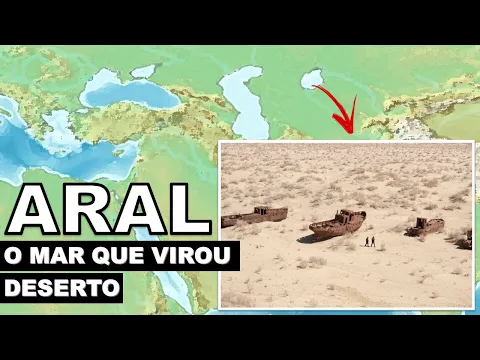

In practice, over 90% of the water that once reached the Aral Sea began to be consumed by irrigation. Additionally, much of this water was lost due to evaporation and infiltration due to open, poorly sealed, and technically inefficient channels. Subsequent studies estimate that up to half of the diverted water never reached the crops, evaporating along the way.
The result began to become visible as early as the 1970s. The lake’s level steadily dropped, salinity increased, and the shores receded by kilometers. Ports that once received ocean-going vessels became isolated in dry land.
The Transformation of the Aral Sea Into a Toxic Desert
Between 1960 and 2000, the Aral Sea lost about 90% of its water volume. Its surface shrank drastically, breaking up into small residual lakes. The exposed bed became the Aralkum Desert, today one of the most extreme examples of human-induced desertification.
This new desert is not just made up of sand. It concentrates salts, pesticides, and fertilizers accumulated over decades of intensive agriculture. Strong winds carry this toxic material for hundreds of kilometers, affecting villages, agricultural areas, and urban centers.
Medical research conducted since the 1980s documented a significant increase in respiratory diseases, cancers, kidney problems, and infant mortality in the region. The contaminated dust became a silent vector of health crisis.
Economic Collapse and Ghost Towns
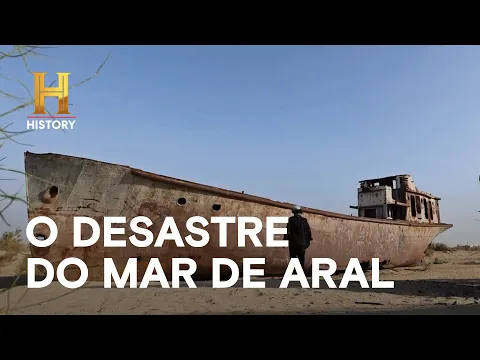
Before the disaster, the Aral Sea sustained a fishing industry that produced about 40,000 tons of fish per year, directly employing tens of thousands of people. With the increase in salinity, nearly all native species disappeared. Fleets were abandoned, shipyards closed, and port cities like Moynaq in Uzbekistan became symbols of collapse.

Moynaq, which in the 1950s was an active port, is now more than 100 km from the waterline. Rusting ships remain stranded in the desert, forming a scene widely documented by photographers, researchers, and international organizations as the ultimate example of environmental planning failure.
Regional Climatic Impact: Less Water, More Extremes
The Aral Sea also functioned as a thermal regulator. Its body of water softened the region’s summers and winters. With the lake’s disappearance, the local climate became more extreme: hotter summers, colder winters, and shorter growing seasons.
This effect fed back into the agricultural crisis. The intensive irrigation that motivated the diversion of the rivers began to face more salinized soils, lower productivity, and greater dependence on chemical inputs. The model that promised prosperity began to generate declining yields.
Late Attempts at Recovery
After the collapse of the Soviet Union in 1991, the new independent states inherited both the problem and the difficulty of regional coordination. Nevertheless, some concrete initiatives emerged.
In Kazakhstan, the construction of the Kok-Aral Dam, completed in 2005 with World Bank support, managed to separate the Small Aral from the rest of the lake. The result was measurable: the water level rose, salinity fell, and fish species began to return. Fishing resumed on a limited scale, demonstrating that partial recovery is possible when there is hydraulic control and efficient management.
However, the Great Aral, to the south, mostly located in Uzbekistan, remains in critical condition. Large areas remain dry, and total reversal is considered technically unfeasible.
Global Lessons from an Announced Disaster
The case of the Aral Sea has become a mandatory reference in hydraulic engineering, water resource management, and environmental planning studies. It concretely demonstrates how centralized decisions, oriented solely by short-term productive goals, can generate irreversible consequences on a continental scale.
International organizations, universities, and government agencies use the Aral as a case study to warn against similar projects in other parts of the world, especially in arid areas that depend on a few rivers for their survival.
A Lake That Became a Historical Warning
Today, the Aral Sea is not just a reduced lake; it is a historical landmark. It symbolizes the physical limit of human planning when engineering ignores ecosystems, natural cycles, and social impacts. What began as an ambitious agricultural project ended as one of the greatest environmental tragedies ever documented.
More than just a mistake of the past, the Aral remains a living warning to countries that still bet on large water diversions, intensive monocultures, and extreme control of nature as a simple solution to complex problems.


