






 Portuguese
  Spanish


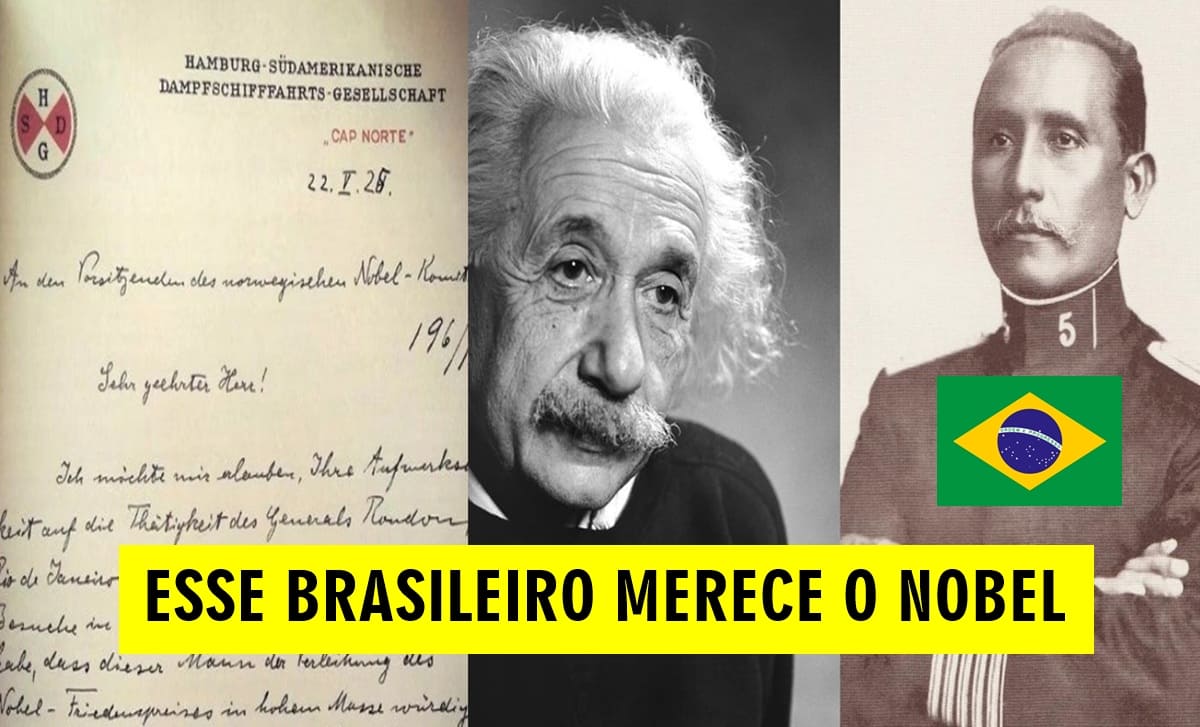


Rondon Traveled More Than 40,000 Km Across Brazil, Led Historical Expeditions, and Received a Nomination for the Nobel Peace Prize by Albert Einstein.
Few Brazilians carry a journey as remarkable as that of Marshal Rondon. So much so that it impressed Albert Einstein himself, who not only recognized his humanitarian work but also nominated him for the Nobel Peace Prize.
In the 20th century, while Brazil was still a territory with large isolated areas, one man traveled more than 40,000 kilometers through forests, rivers, and backlands. His name: Cândido Mariano da Silva Rondon, or Marshal Rondon.
His mission: to connect the country through telegraphs while simultaneously protecting indigenous peoples. In 1925, this journey earned Rondon a nomination for the Nobel Peace Prize — made by none other than Albert Einstein.
-
Adventurer Solo Climbs 20-Meter Giant Fig Tree in Costa Rica, Camped in Canopy, Explains Tree’s Unique Growth Strategy

-
Underground Fire Burns for Over 100 Years in New Zealand Forest Without Wood, Smoke, or Human Intervention

-
Brazilian Town Known for Its Steady Winds Impresses with Cutting-Edge Hospitals, Clean Air, and Peaceful Living Just Three Hours from São Paulo
-
Animal Thought Extinct for 130 Years Reappears in Brazil, Exciting Scientists with Rare Comeback


The Patron of Communications and the Defender of Indians
Rondon was born in 1865, in the village of Santo Antônio de Leverger, in Mato Grosso. Over time, he became an essential figure in the history of communications in Brazil.
He was responsible for bringing telegraphic lines to remote areas, on journeys made “on foot, in canoes, and on the backs of mules”. In recognition, he lent his name to the state of Rondônia, created in 1982.
But his most remarkable role was perhaps in defending indigenous peoples. In 1910, he founded the Indian Protection Service (SPI), later replaced by FUNAI.
He adopted a policy of peaceful and respectful rapprochement, even in the face of groups that had never had contact with non-indigenous people. His motto was straightforward: “Die, if necessary. Kill, never.”
This stance was evident when, in 1913, he was hit by a poisoned arrow from the Nhambiquaras and did not retaliate.
He preferred dialogue, asking for permission to build on indigenous lands, and involving the peoples themselves in the conservation of telegraphic lines.
Contact with Peoples and Respect for Cultures
Rondon not only entered villages but also participated in rituals and involved indigenous people in technical tasks. This was the case, for example, with the Parecis Indians, who began to maintain the telegraphic lines in the Utiariti region, in Mato Grosso.
Even with hostile tribes, such as the Nambikwara, Rondon sought alternatives for coexistence. He communicated through gestures, respected territories, and always avoided armed conflicts.
Einstein Recognizes the Greatness of Rondon
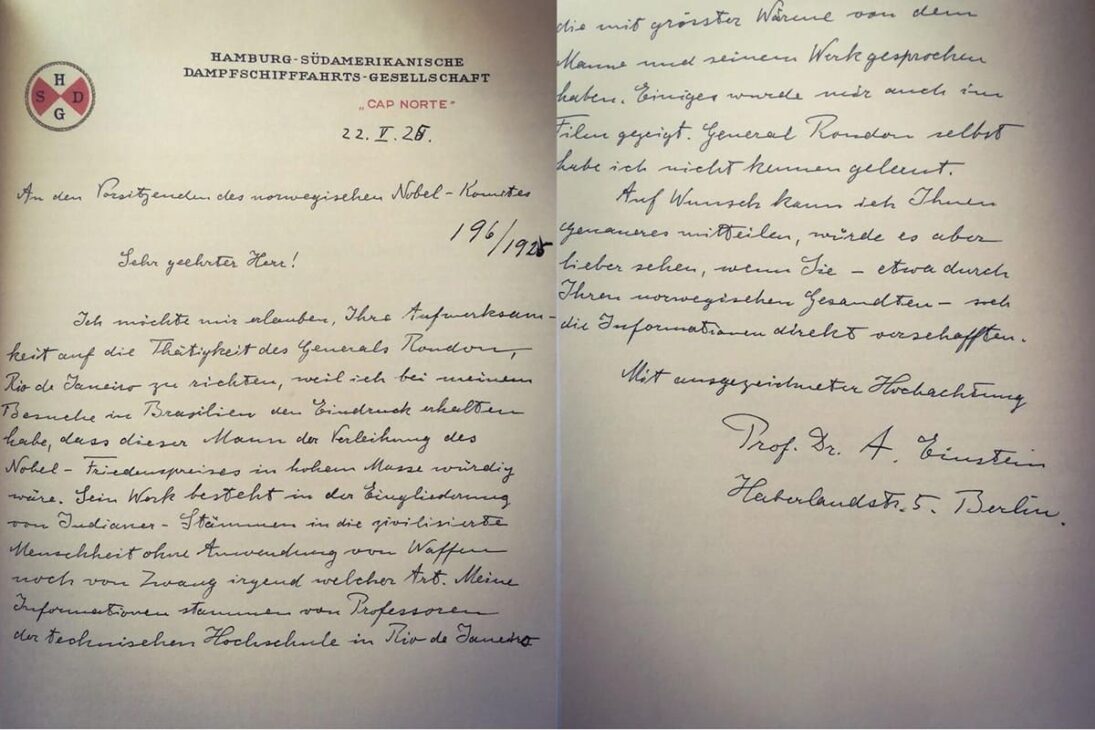
It was this journey that caught Albert Einstein’s attention. The physicist visited Brazil in 1925 and, while leaving Rio de Janeiro on his way to Berlin, wrote a letter to the president of the Nobel Peace Prize committee.
In the message, Einstein described Rondon as someone deserving recognition for his work with indigenous peoples. He stated that Rondon’s effort to integrate tribes into civilized society, without weapons or coercion, was worthy of the prize.
He suggested that the committee members seek more information through direct sources in Brazil. The letter is currently preserved at the Rondon Memorial in Porto Velho.
“Allow me to draw your attention to the activity of General Rondon, from Rio de Janeiro, because during my visit to Brazil, I had the impression that this man would be a deserving candidate for the Nobel Peace Prize. His work consists of integrating indigenous tribes into civilized society without the use of weapons or any form of coercion. (…) If you are interested, I can provide more details, but it would be better if you, through your Norwegian envoys, sought the information directly,” said Einstein.
Rondon was indeed nominated for the Nobel Peace Prize, although he never won. He was nominated for the prize in 1957.
The Expedition with Theodore Roosevelt
One of the most famous episodes in Marshal Rondon’s life was the Rondon-Roosevelt Scientific Expedition, between 1913 and 1914. The goal was to map the so-called “River of Doubt,” a waterway between Rondônia and the Amazon. The challenge was also accepted by Theodore Roosevelt, former president of the United States.
What seemed like a scientific journey turned into a saga of survival. There were five months of hardship: diseases, animal attacks, dangerous rapids, loss of boats, and improvised meals — like monkey meat and turtle soup. At times, the expedition members went up to 48 days without seeing another human being.
Of the seven canoes that started the journey, only two survived. The others were destroyed by the rapids, forcing the group to build new boats in the middle of the forest. When the river became impassable, they continued on foot, dragging the canoes over logs.
Roosevelt, accustomed to political and urban environments, was pushed to his limit. His account, later published in a book, described Brazil as a “weird” and “strange” land.
Meanwhile, Rondon, nicknamed “Tamer of the Backlands,” showed mastery over the environment, territory, and adverse situations.
Legacy of Respect and Communication
Marshal Rondon died in 1958, but his legacy remains.
Patron of communications and symbol of the fight for indigenous rights, he was one of the first Brazilians to unite science, infrastructure, and cultural respect.
Today, his story is recorded in books, museums, and memorials. And the letter written by Einstein is a reminder that the world paid attention to what this man did, without weapons, without violence, and with a deep sense of justice — in a land where almost everything was forest.





Existem pessoas que nascem para passar pela vida, e outras que veem para consertar e orientar o convívio entre as pessoas.
Duas personalidades brasileiras de todos os tempos que merece seus nomes imortalizado na história, Cândido Rondon e Juscelino Kubcheque!!…