Portuguese
  Spanish


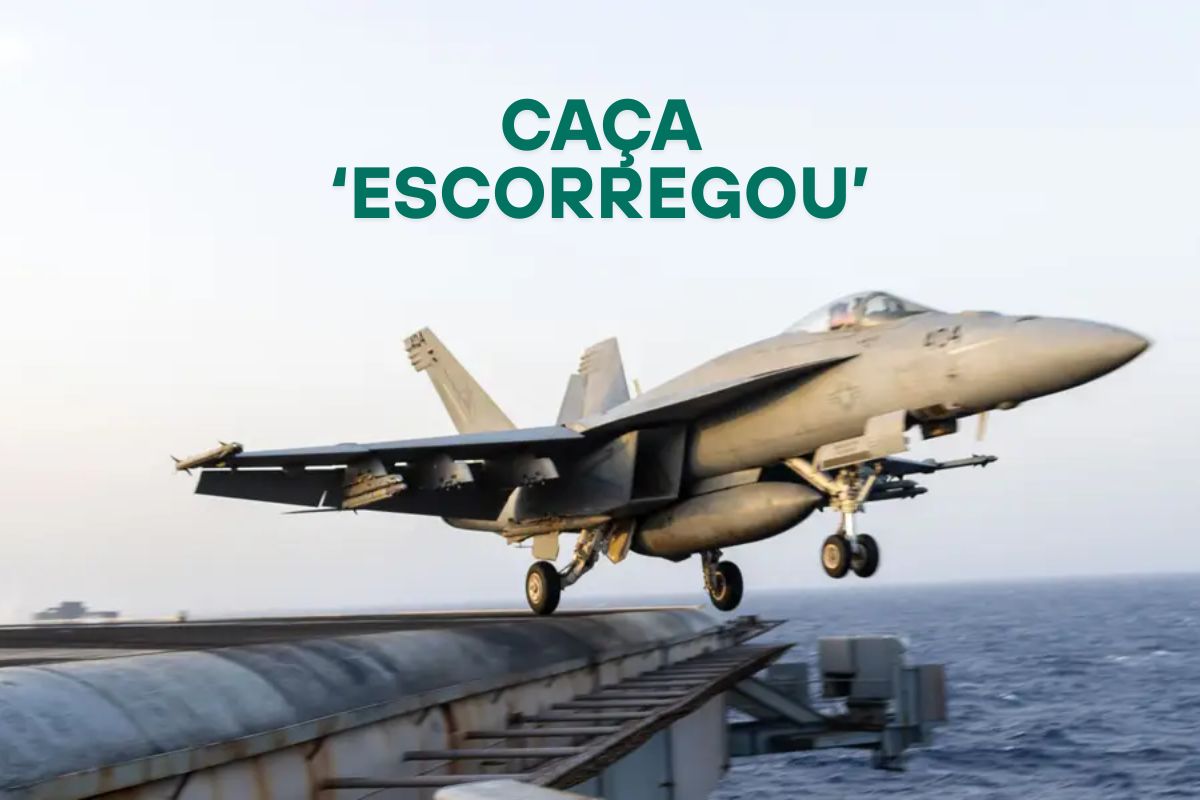

US Navy Loses F/A-18 Fighter Worth $67M in Red Sea. Aircraft Fell From Aircraft Carrier USS Truman During Maneuver to Avoid Houthi Attack.
An unusual incident occurred with the US Navy on Monday, April 28, 2025. A F/A-18E Super Hornet, valued at $67 million, fell into the sea. The aircraft was aboard the nuclear aircraft carrier USS Harry S. Truman, which was operating in the Red Sea.
The fall happened when the ship was performing a sudden maneuver to evade a missile and drone attack launched by Houthi terrorists from Yemen.
Super Hornet Fighter Falls Into Sea During US Navy Operation
The accident occurred while the Super Hornet was being moved. The aircraft was being towed by a small tractor inside the carrier’s hangar. During a sharp turn made by the USS Truman, the crew lost control. The fighter and the towing tractor ended up falling into the sea. According to official statements, all crew members involved are safe. Only one sailor suffered minor injuries.
-
Farewell to Toilet Paper? New Technology Sparks Debate on Bathroom Habits

-
Young Entrepreneur Who Started Recycling Bottles at Age 3 Becomes Environmental Icon in the U.S.

-
Nivea Blue Tin Cream: Popular Post-Beach and Pool, But Pharmacist Warns About Missing Ingredients and Common Summer Mistakes Regarding UVA and UVB Protection.
-
Archaeologists Recover Colossal Structure Lost for Over 1,600 Years Under the Sea, Including 22 Monumental Blocks Weighing Up to 80 Tons, Intriguing Experts.




The sudden maneuver of the aircraft carrier that led to the fall was not without reason. The USS Truman of the US Navy was conducting an evasive action. The goal was to avoid a combined missile and drone attack. The attack was launched by Houthi terrorists based in Yemen. The need to quickly move out of the danger zone resulted in the loss of control of the aircraft being towed.
The Lost Fighter: Meet the F/A-18E Super Hornet of the US Navy
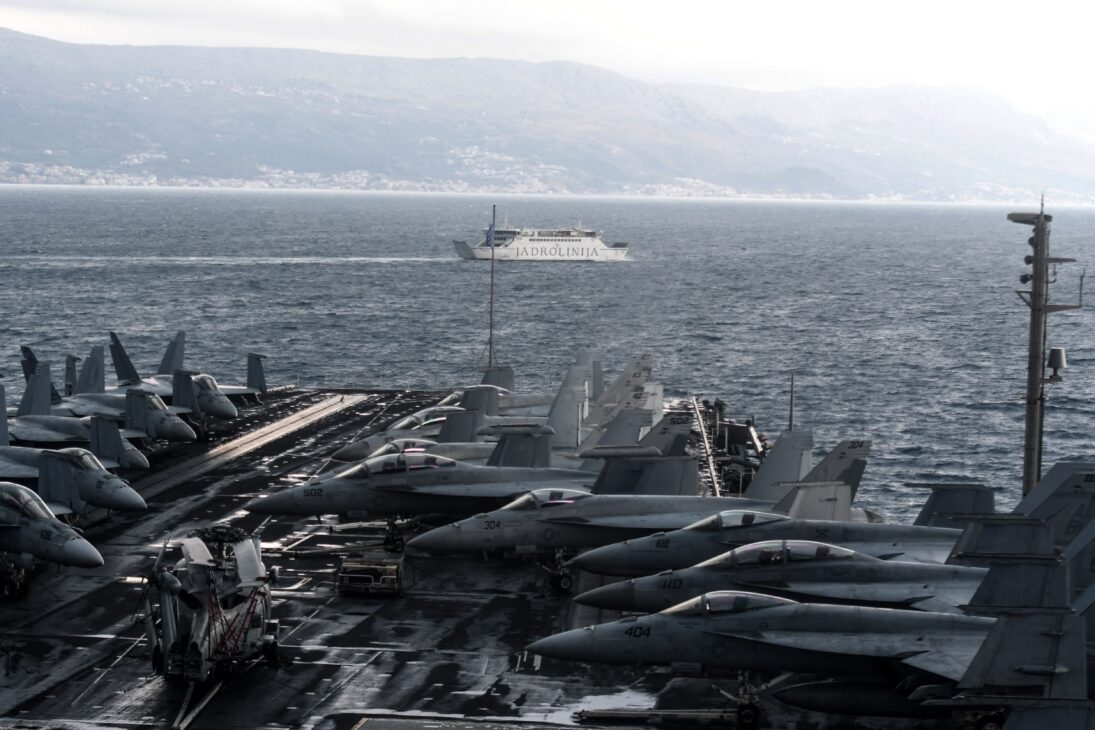
The F/A-18E Super Hornet is one of the main combat aircraft of the US Navy. It is a versatile and powerful aircraft. It conducts air superiority, ground attack, and close air support missions. It features advanced avionics systems and an AESA radar. It can carry a wide variety of armaments. It is considered the backbone of the United States’ carrier-based aviation. The loss of this unit represents an estimated financial loss of $67.4 million.
The Agility of the Aircraft Carrier and the Risks During Maneuvers
Nimitz-class nuclear aircraft carriers of the US Navy, like the USS Truman, are huge. They weigh nearly 100,000 tons and are over 330 meters long. Even so, they are incredibly fast and agile. They reach speeds above 55 km/h thanks to their nuclear reactors. This allows for complex evasive maneuvers, such as “zig-zagging.”
This technique involves sharp turns to confuse enemy missiles. During these turns, the ship can tilt 10 to 15 degrees. This tilting generates intense forces on everything aboard. Aircraft being moved, especially near the edges or in the lifts between hangar and deck, become vulnerable and can slip, as occurred in this case.
Houthi Attacks and Previous Incidents with the USS Truman
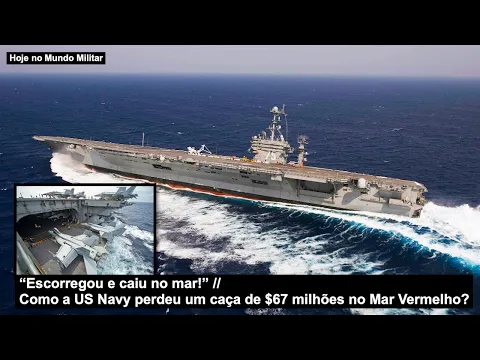

This incident occurs amid a campaign of attacks by the Houthi. The group has been attacking navigation in the Red Sea since late 2023. They justify it as a response to the war in Gaza by Israel. The US Navy intervened to protect commercial ships. Since then, the Houthi have intensified actions against American vessels.
The current administration has expanded military operations against Houthi targets. Two aircraft carriers (USS Truman and USS Carl Vinson) are assigned to this mission in the region. The USS Truman has faced other critical situations recently. In February 2025, it collided with a cargo ship in Egypt. The previous December, another Super Hornet from the ship was mistakenly shot down by an American cruiser (the pilots ejected safely). The current loss highlights the risks faced by the US Navy in the region.