Portuguese
  Spanish


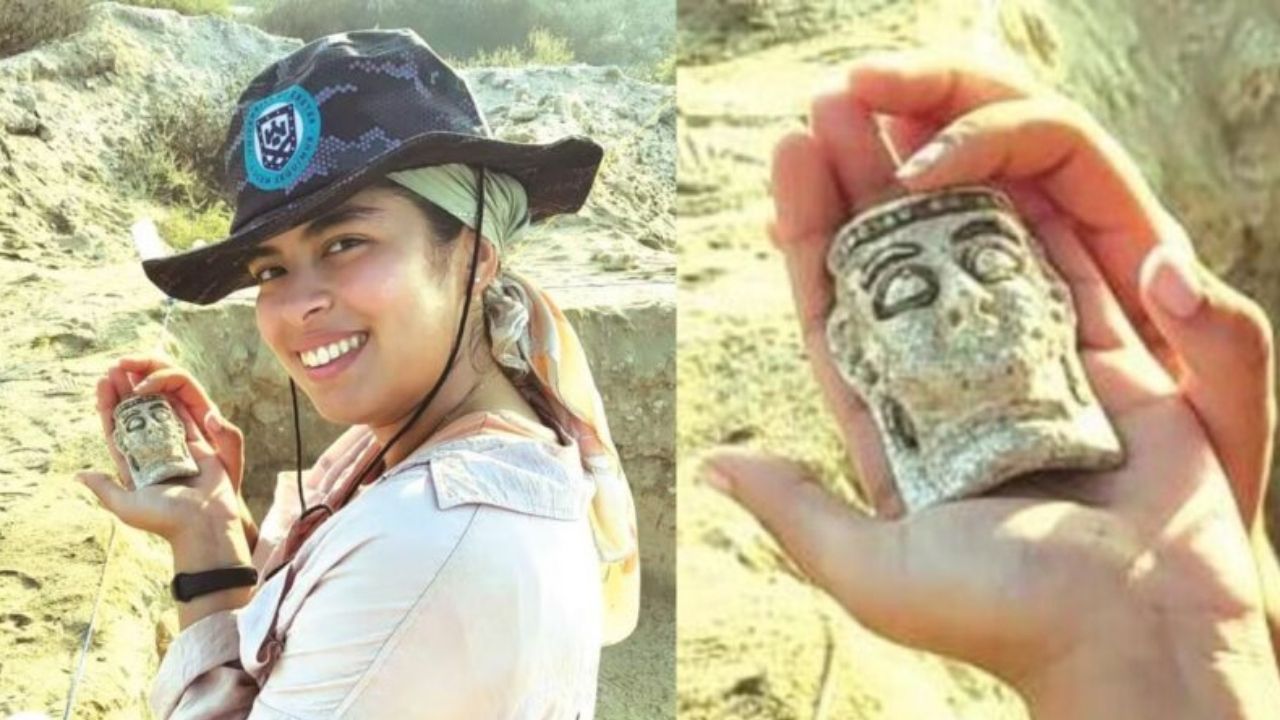


Funerary Ceramic Mask Around 3,300 Years Old Discovered in Mass Burial in Bahrain, Reveals New Clues About Dilmun Civilization Rituals and Becomes Only the Second Artifact of Its Kind Found in the Country.
A ceramic mask around 3,300 years old was identified by archaeologists in Bahrain during excavations at a burial site, bringing new clues about the funerary customs of the ancient Dilmun civilization.
The find occurred at the archaeological site of Hilla and was officially presented in January during a conference organized by the Bahrain Authority for Culture and Antiquities (BACA).
The piece is attributed to the Middle Dilmun period, which spans approximately from 1500 BC to 1000 BC, an important phase for the cultural consolidation of the region.
-
Ancient Ritual Circle, Hidden for 5,000 Years, Discovered in Scotland’s Machrie Moor Using Sensors, Revealing a “Phantom Stonehenge”

-
Engineers Develop Fridge-Sized Machine to Produce 95-Octane Synthetic Fuel from Air and Water, Aiming to Sustain Combustion Engines Without Oil
-
Two-Armed Robot Uses AI to Reassemble Destroyed Pompeii Frescoes, Solving an “Impossible” Puzzle
-
New Law in Brazil Requires Breaks for Type 1 Diabetes Management at Work, School, and Public Exams


Ceramic Mask: Rare Artifact Emphasizes the Significance of the Find
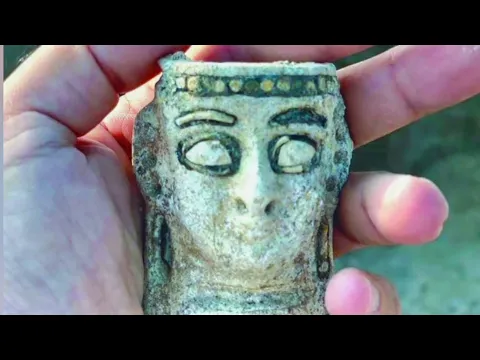
Produced in faience, a specific type of ancient ceramic, the mask was found within a mass grave.
At the site, researchers identified the remains of two women and a baby, indicating a shared funerary context.
This type of object is considered extremely rare in Bahrain. According to available archaeological records, this is only the second mask of its kind ever discovered in the country, raising the find to the status of one of the most relevant archaeological revelations in recent years.
The initial interpretation by experts is that the mask was used as part of funerary rituals, being placed with the deceased at the time of burial.
However, many aspects of the object remain unexplained.
The archaeologist Mashaal Al Shamsi from BACA, responsible for the excavation at Hilla, emphasized that the artifact still requires deeper analysis.
According to her: “More research needs to be conducted on the faience mask,” she stated.
Scarcity of Studies Increases Scientific Relevance
According to Al Shamsi, academic knowledge about this type of object is quite limited, especially in the context of Bahrain.
The archaeologist highlighted:
“It is one of those objects that haven’t been thoroughly researched, especially in Bahrain. There is only one academic article that briefly mentions it”.
This lack of references makes the discovery even more significant, as it can pave the way for new interpretations of funerary and symbolic practices of the Dilmun civilization.

Other Objects Found in the Burial
In addition to the ceramic mask, archaeologists identified several items associated with the burial, helping to reconstruct the cultural context of the time.
Among the objects found are shell rings, a sewing needle, a large ceramic vessel, and kohl applicators.
These materials suggest that funerary rituals included everyday objects and items with possible symbolic or ritual value.
The team responsible for the excavations reported that a detailed analysis of the material is underway.
According to Mashaal Al Shamsi, there are plans to eventually release new data about the mask and other artifacts associated with the burial.
The discovery reinforces the role of Bahrain as a key territory for the study of ancient Middle Eastern civilizations and shows how a single object can enhance the understanding of poorly documented cultural practices from Antiquity.
Source: Adventures in History