Portuguese
  Spanish


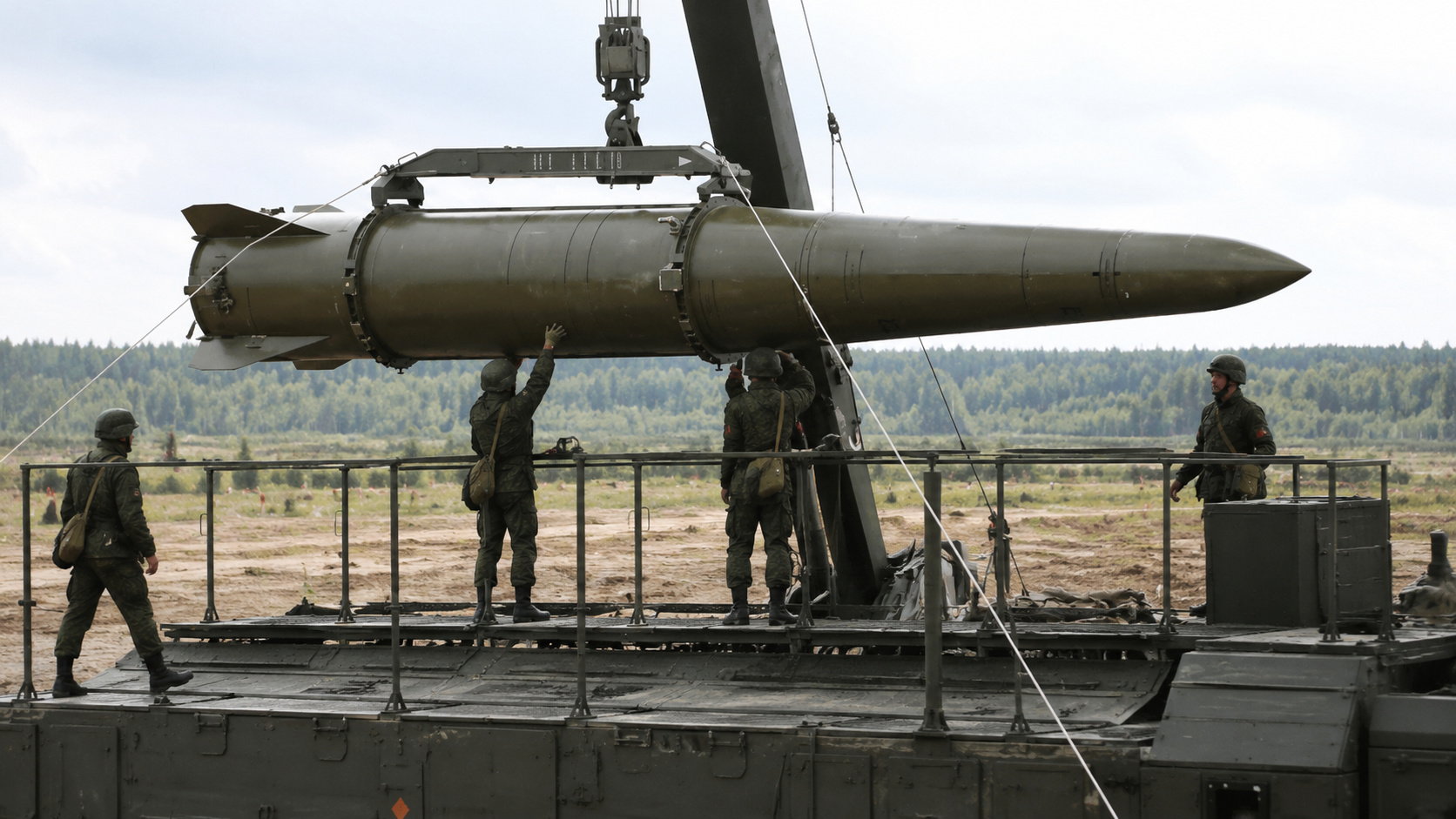

Russian nuclear maneuver mobilizes 64,000 people, involves Belarus, activates Iskander-M systems, and increases strategic alert in the Baltic
Russia sent nuclear munitions to field installations in Belarus this Thursday, during one of Moscow’s largest nuclear exercises in recent years.
According to the Russian Ministry of Defense, the operation mobilizes 64,000 people and trains forces for preparation and use of nuclear capabilities in case of aggression.
The move comes amid rising tensions between Moscow and European NATO countries, especially due to the war in Ukraine and drone activity in the Baltic.
-
Steam Machine Converts All Types of Plastic Waste into Durable Building Blocks, Processes Over 90 Tons Monthly, and Is Sold to Municipalities

-
John Deere’s Autonomous 9RX Tractor Uses 16 Cameras for 360-Degree Vision, Operates in Short Weather Windows While Monitored by Smartphone

-
Scientists Develop Needle-Free Insulin That Penetrates Skin, Reduces Glucose in Animals Within an Hour, Paving the Way for Diabetes Patches and Creams for Humans

-
After 40 Years of Research, Powdered Coconut Water to Be Produced in Brazilian Biorefinery, Aiming to Revolutionize Health for Children, Elderly, and Hospital Patients


Russian nuclear exercise expands military alert in Belarus
The operation began on Tuesday and takes place simultaneously in Russian territory and in Belarus, according to information released by Moscow.
During the maneuver, Russia displayed part of its strategic nuclear forces, including a Borei-class nuclear submarine and an anti-submarine aircraft Il-38.
The list also includes a MiG-31 fighter armed with Kinzhal hypersonic missile and RS-24 Yars intercontinental ballistic missiles.
According to the Russian Ministry of Defense, the nuclear munitions were delivered to field storage areas linked to a missile brigade in Belarus.
Iskander-M system enters the center of the operation
A missile unit in Belarus conducts training to receive special munitions intended for the mobile tactical system Iskander-M.
According to Moscow, the procedure includes loading these munitions onto launcher vehicles, as part of the nuclear exercise schedule.
Russian nuclear exercises typically use dummy warheads, although the symbolic weight of the movement has increased the strategic alert.
Videos released by the Russian Ministry of Defense showed military trucks covered with tarpaulin, nuclear submarines, aircraft, and warships.
Russian strategic forces participate in the maneuver
The exercise involves the Strategic Missile Forces, the Northern and Pacific fleets, long-range aviation, and units from the Leningrad and Central military districts.
Moscow seeks to demonstrate the ability to coordinate between different areas of its military structure during nuclear training.
The mobilization also reinforces the Russian narrative that the country is facing an existential struggle against the West because of Ukraine.
Since the beginning of the war, President Vladimir Putin has cited Russian nuclear power as a warning to Western countries supporting Kiev.
Tension with NATO grows in the Baltic
Moscow accused Baltic countries of allowing Ukraine to use their territories to attack northern Russia.
NATO denied the accusation made by the Russian government.
Baltic countries claim that Russia is redirecting Ukrainian drones to their airspaces.
This exchange of accusations has increased diplomatic pressure in one of Europe’s most sensitive regions.
Kaliningrad returns to the center of the military crisis
On Wednesday, the Kremlin criticized statements by Lithuania’s Foreign Minister, Kestutis Budrys.
Budrys stated that NATO needed to show Moscow the capability to penetrate the Russian enclave of Kaliningrad.
In response, the Kremlin described the comments as statements that were “bordering on insanity.”
Kaliningrad is located between Lithuania and Poland, both NATO members on the Baltic coast.
The enclave has about one million inhabitants, is heavily militarized, and houses the Russian Baltic Fleet.
What does the new military gesture indicate for Europe?
The Russian nuclear movement in Belarus occurs at a time of high geopolitical tension.
The display of submarines, fighters, hypersonic missiles, and strategic systems reinforces Moscow’s military message to the West.
Ukraine and some Western leaders treat these demonstrations as irresponsible bravado.
The deployment of nuclear munitions to field installations in Belarus increases the symbolic weight of the crisis.
Given this scenario, how far can the tension between Russia and NATO advance without turning military exercises into a new real escalation in Europe?